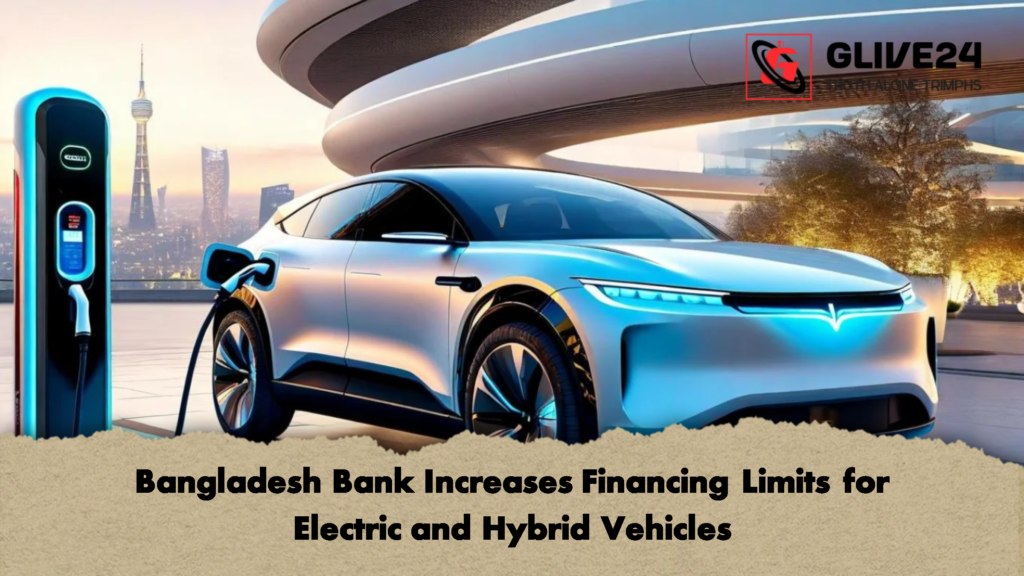
The Bangladesh Bank, acting as the nation’s central financial regulator, has issued a comprehensive circular on Tuesday, 5 May 2026, significantly increasing the credit ceilings for automobile financing. Under the new directives, customers are now eligible to secure bank loans of up to 8 million BDT (80 lakh) specifically for the procurement of electric and hybrid vehicles. This strategic shift is designed to incentivise the transition toward environmentally sustainable transport while addressing the evolving economic landscape of the automotive market.
Table of Contents
Expansion of the “Auto Loan” Framework
In a bid to modernize the domestic transport sector, the central bank has bifurcated the loan limits based on vehicle technology and environmental impact. The revised policy reflects the surging market value of modern vehicles and aims to make energy-efficient transport more accessible to the middle and upper-income segments.
The new credit limits and ratios are structured as follows:
-
Electric and Hybrid Vehicles: To actively encourage the adoption of eco-friendly technology, the maximum loan limit has been set at 8 million BDT. Furthermore, the central bank has introduced a highly favourable debt-to-equity ratio of 80:20. This means a buyer can finance up to 80% of the vehicle’s purchase price through a bank loan, requiring only a 20% down payment from their personal funds.
-
Conventional Combustion Engines: For traditional internal combustion engine (ICE) vehicles, the maximum loan ceiling has been increased to 6 million BDT. The financing ratio for these vehicles remains more conservative at 60:40, necessitating a 40% equity contribution from the borrower.
Adjustments to Personal Loan Ceilings
The circular also contains significant revisions to general personal credit limits. Recognising the inflationary pressures and the increased cost of living, the Bangladesh Bank has doubled the personal loan limit. A single customer is now eligible for a personal loan of up to 4 million BDT (40 lakh), a substantial rise from the previous threshold of 2 million BDT.
This adjustment is expected to provide greater financial flexibility for consumers, potentially aiding those who require supplementary funds for vehicle registration, insurance, or the installation of home-based charging infrastructure for electric vehicles.
Strategic Objectives and Economic Context
Central bank officials noted that the decision was predicated on several critical factors:
-
Environmental Sustainability: By providing preferential terms for electric and hybrid cars, the government aims to reduce the national carbon footprint and mitigate urban air pollution.
-
Energy Security: Amidst global and domestic fuel price volatility, transitioning the fleet toward electricity—which can be generated from diverse sources—is viewed as a method to reduce the national dependency on imported fossil fuels.
-
Market Realities: The price of vehicles in the Bangladeshi market has escalated due to global supply chain shifts and currency fluctuations. The previous loan limits were deemed insufficient for most modern, safety-rated hybrid or electric models.
Implementation and Regulatory Oversight
The pro-environment directive, issued under the authority of the central bank, has been dispatched to the Managing Directors and Chief Executive Officers of all scheduled banks operating within the country. The instructions are effective immediately.
A critical clause in the new regulation pertains to the calculation of a borrower’s total “credit exposure.” The pro-forma states that when determining the total debt limit for an individual, any auto loans taken by their dependent family members will be aggregated. This measure is intended to ensure financial stability and prevent over-leveraging within single households.
By streamlining the financing process and offering a superior loan-to-value ratio for green vehicles, the Bangladesh Bank expects a noticeable shift in consumer behaviour. The initiative aligns with broader national strategies to bolster “green financing” and supports the global trend toward the electrification of the automotive industry, ensuring that the domestic banking sector remains a catalyst for sustainable economic growth.