
Khabor Wala Desk
Published: 26th April 2026, 11:18 PM
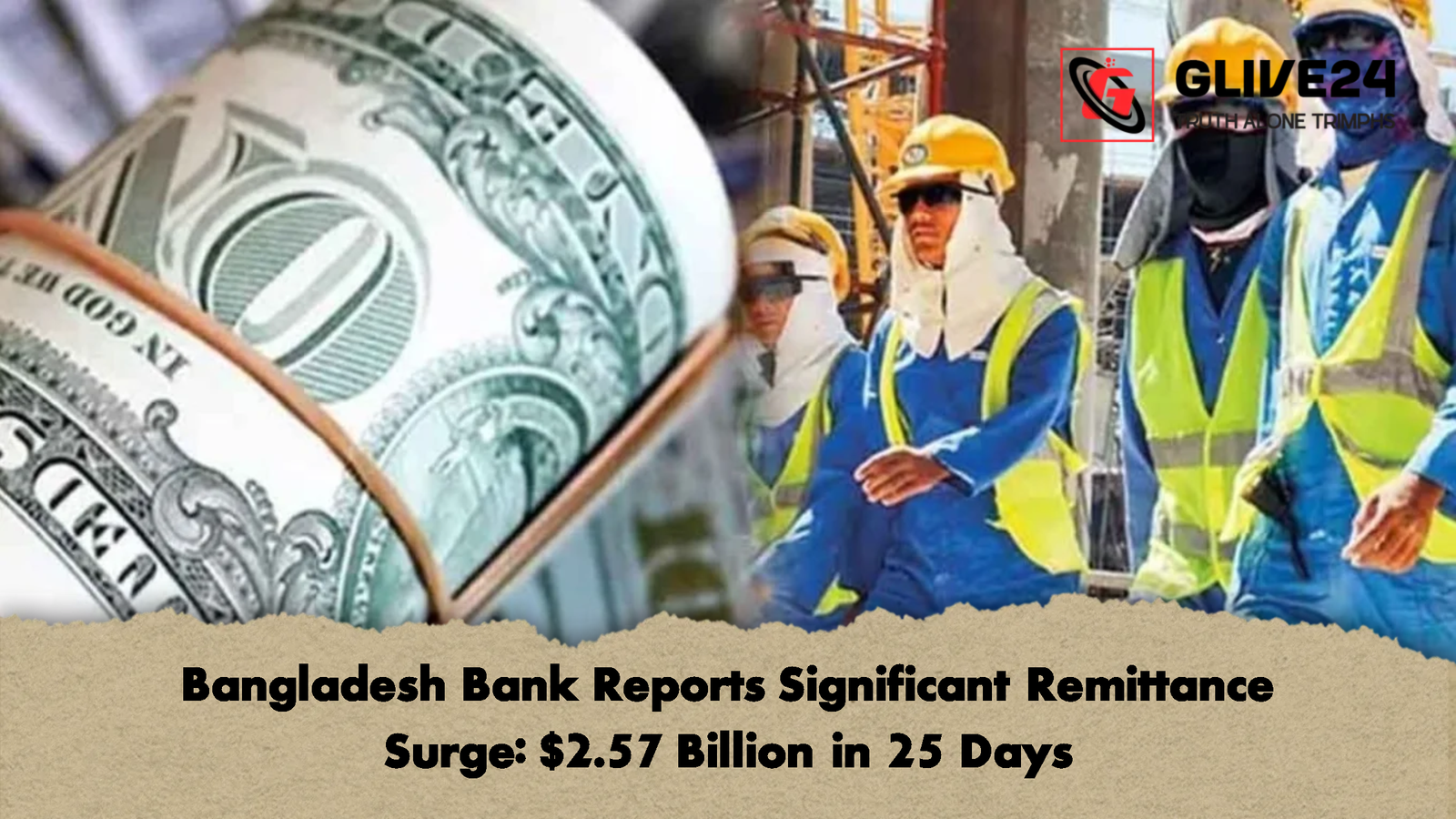
In a critical boost to the national economy, inward remittances to Bangladesh have maintained a robust trajectory throughout the current month. Official statistics released by the Bangladesh Bank on Sunday, 26 April 2026, indicate that the country received $2.578 billion (US dollars) during the first 25 days of April. This substantial inflow represents a daily average of approximately $103.1 million, underscoring a sustained preference for formal banking channels among the Bangladeshi diaspora for the repatriation of their earnings.
The data was officially disseminated by Arif Hossain Khan, the spokesperson for the central bank. These figures suggest that the month of April is sustaining the high momentum observed during the first quarter of the year, providing a vital stabilising effect on the nation’s external accounts and bolstering the value of the Taka against the US dollar.
The latest figures reveal a marked improvement when juxtaposed with the corresponding period from the previous calendar year. The Bangladesh Bank spokesperson noted that during the first 25 days of April 2025, the total remittance inflow was $2.251 billion. The year-on-year growth suggests an increasing shift away from informal transfer methods as expatriates leverage improved banking infrastructure.
This growth trend is further highlighted by the cumulative performance of the 2025–2026 fiscal year. From July 2025 to 25 April 2026, the total volume of remittances reached $28.787 billion. This represents a significant 19.80% increase compared to the same timeframe in the preceding fiscal year.
This sustained performance follows the historic peak recorded in March 2026, when remittance inflows reached an all-time monthly high of $3.755 billion. While the current April data indicates a slight cooling compared to that record-breaking month, the daily average remains significantly higher than the historical baseline for this period.
Central bank officials and financial sector analysts have identified several key policy interventions and market conditions that have contributed to this upward trend:
Cash Incentives: The government has maintained its 2.5% cash incentive on inward remittances, which remains a primary motivator for expatriates to avoid the informal “hundi” or “hawala” systems.
Market-Linked Exchange Rates: By narrowing the disparity between the official exchange rate and the kerb market rate, the Bangladesh Bank has made formal transfers more financially viable for migrant workers.
Technological Advancement: The integration of Mobile Financial Services (MFS) and enhanced digital banking apps has simplified the remittance process for workers in key regions, including the Middle East, South-East Asia, and Europe.
The surge in remittance is of fundamental importance to Bangladesh’s macroeconomic stability, particularly as the country manages its import bills and international debt commitments. As the second-largest contributor to foreign exchange earnings after the Ready-Made Garment (RMG) sector, these funds play a multifaceted role in the national economy:
Strengthening Reserves: The influx provides the necessary liquidity to maintain the central bank’s foreign exchange reserves at levels sufficient to meet international standards for import coverage.
Rural Economic Support: Remittances are primarily directed toward rural households, where they act as a direct stimulus for consumer spending, local trade, and the services sector.
Financial Stability: The consistent supply of dollars helps mitigate volatility in the foreign exchange market, easing the pressure on importers of essential commodities.
The Bangladesh Bank remains optimistic that the final quarter of the fiscal year will see a continuation of this trend. Spokesperson Arif Hossain Khan indicated that the bank would remain vigilant, ensuring that policies remain supportive of the expatriate community. Finalised figures for the full month of April are expected to be published in early May, with 2026 on track to become the most successful year for remittance in the nation’s history.




Comments