
Khabor Wala Desk
Published: 19th February 2026, 4:30 AM
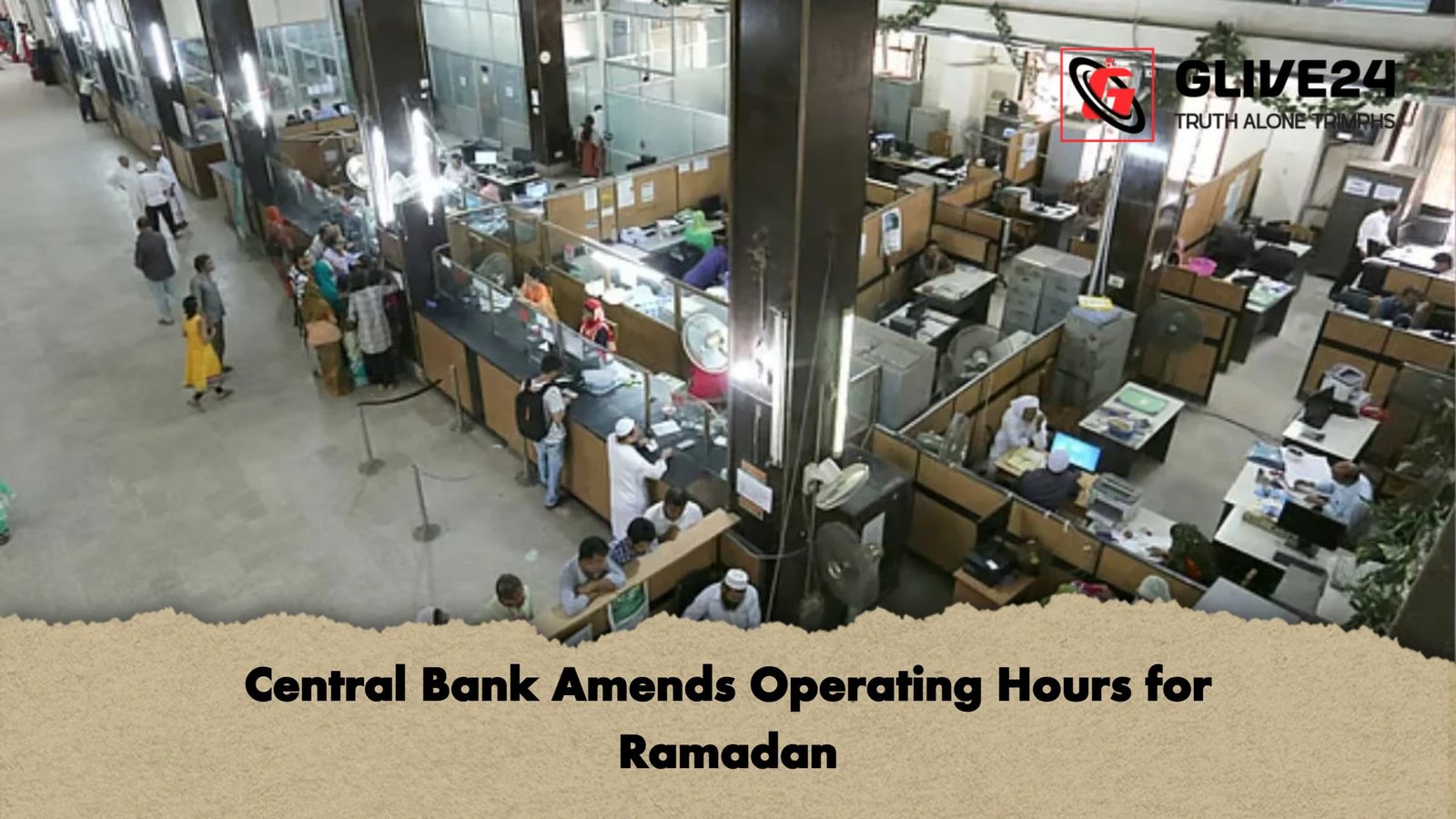
In anticipation of the holy month of Ramadan, Bangladesh Bank has officially formalised a revised operational schedule for all scheduled banks across the nation. The directive, issued by the central bank’s Department of Off-site Supervision, aims to accommodate the religious observances of both bank employees and the fasting public while ensuring that the country’s financial machinery continues to function efficiently.
Under the new guidelines, the standard banking day has been condensed. Banks will now open their doors for administrative and official duties from 9:30 am until 4:00 pm. However, the window for public counter transactions—including cash deposits, withdrawals, and clearing services—will conclude at 2:30 pm.
To facilitate the midday Zuhr prayers, a brief 15-minute interlude has been mandated from 1:15 pm to 1:30 pm. While formal transactions at the counters will be paused during this interval, the central bank has clarified that internal operations and back-office coordination must continue through rotating shifts to ensure seamless service once the break concludes.
The following table illustrates the shift from the standard “pre-Ramadan” schedule to the temporary timings designed for the holy month:
| Activity Period | Standard Operating Hours | Ramadan Revised Schedule |
| Official Workday | 10:00 am – 6:00 pm | 9:30 am – 4:00 pm |
| Public Transactions | 10:00 am – 4:00 pm | 9:30 am – 2:30 pm |
| Prayer/Lunch Break | 1:00 pm – 2:00 pm | 1:15 pm – 1:30 pm |
| Total Transaction Time | 6 Hours | 5 Hours |
This annual adjustment is a staple of the Bangladeshi financial calendar, reflecting a balanced approach between secular economic demands and the spiritual requirements of the populace. By starting the workday thirty minutes earlier than usual (at 9:30 am), the central bank intends to claw back some of the productivity lost to the earlier afternoon closure.
Bangladesh Bank has further stipulated that immediately following the conclusion of Eid-ul-Fitr, all banking institutions must revert to their original timings—typically an 8-hour workday with a 6-hour transaction window. In the interim, digital banking channels and ATM networks are expected to be monitored closely to handle the anticipated surge in retail transactions as the festival approaches.



Comments