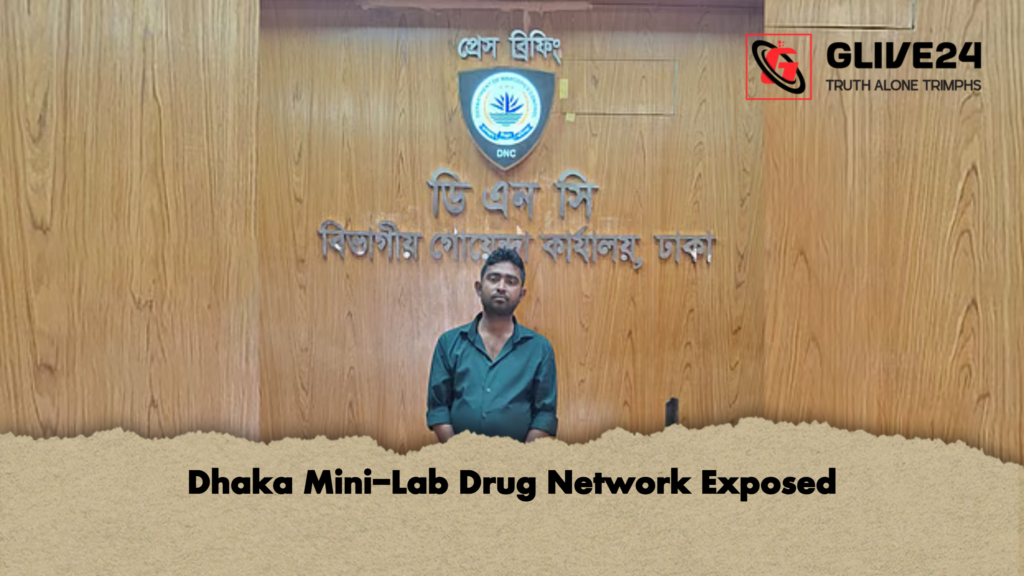
A series of clandestine miniature laboratories producing various illicit substances, including ketamine, synthetic cannabis (‘kush’), yaba, and counterfeit alcohol, has been uncovered in Dhaka and its surrounding areas. The operations, according to the Department of Narcotics Control (DNC), involved both local and foreign nationals and relied on advanced processing techniques, courier services, and digital payment systems.
Ketamine, a medically regulated anaesthetic used in surgical procedures, is legally restricted for sale without prescription. Authorities have reported that liquid ketamine is being chemically processed into powder form for illicit use. A significant breakthrough came on 25 March when a raid in Uttara led to the arrest of three Chinese nationals. Two pharmaceutical traders were also detained on allegations of supplying liquid ketamine to the network.
Officials stated that the group distributed manufactured drugs internationally using courier services, targeting destinations such as Malaysia, Dubai, and Sri Lanka. Orders were reportedly placed via the dark web, with transactions conducted through cryptocurrency, highlighting the network’s transnational and technologically sophisticated structure.
In addition to this case, the DNC has identified at least three more similar laboratory-based drug production networks operating within Dhaka and its outskirts. Over the past four months, investigators have discovered facilities producing kush, ketamine derivatives, modified yaba tablets, and counterfeit alcoholic beverages.
Key Drug Laboratory Cases Identified by DNC
| Date | Location | Substance | Key Arrests | Items Seized |
|---|---|---|---|---|
| 25 March | Uttara, Dhaka | Ketamine processing lab | 3 Chinese nationals; 2 drug traders | Liquid ketamine, processing materials |
| 19 February | Tongi, Gazipur | Yaba production unit | 1 suspect (Tohiduzzaman/Shimul) | 4,500 yaba tablets, raw materials |
| 7 January | Wari, Dhaka | Kush cultivation lab | 1 suspect, 1 female accomplice | Kush seeds, plants, cultivation equipment, foreign alcohol |
| 7 January | Vatara/Bashundhara area | Counterfeit alcohol lab | 3 identified, 2 arrested | Fake alcohol, chemicals, branded bottles |
In Tongi, Gazipur, authorities uncovered a yaba manufacturing facility in a residential building on 19 February. Approximately 4,500 yaba tablets, along with raw materials and equipment, were seized. The owner, Tohiduzzaman alias Shimul, was arrested. Investigators reported that he previously worked as a chemist in an Ayurvedic laboratory in Pubail, Gazipur, where he gained experience in tablet production. He allegedly used this knowledge to begin producing yaba after leaving his job and establishing an Ayurvedic shop. Officials believe he initially crushed 500 yaba tablets and remixed them with chemicals and colouring agents to produce approximately 5,000 tablets.
Earlier, on 7 January, another operation in Wari, Dhaka, revealed a kush cultivation laboratory inside a residential flat. The accused, 22-year-old Taufiq Hasan, allegedly set up the facility after gaining experience in California, United States. A female associate was arrested for assisting him. The lab contained imported kush seeds, cultivated plants, harvesting equipment, and consumption paraphernalia. Investigators also discovered a temperature-controlled rooftop installation used for plant cultivation.
On the same day, a separate raid in the Vatara and Bashundhara residential area uncovered a counterfeit alcohol production unit. The facility operated across multiple rooms of a flat, where fake alcoholic beverages were manufactured, bottled, and labelled as branded foreign products. Authorities seized large quantities of chemicals, raw materials, counterfeit alcohol, and containers, along with storage systems for fermentation liquid.
DNC Director General Hasan Maruf stated that criminals are increasingly adopting advanced technology and international networks to expand drug production and distribution. He noted that surveillance has been intensified and several organised groups, including foreign-linked networks, have been identified. Law enforcement efforts are ongoing to bring those involved under legal proceedings