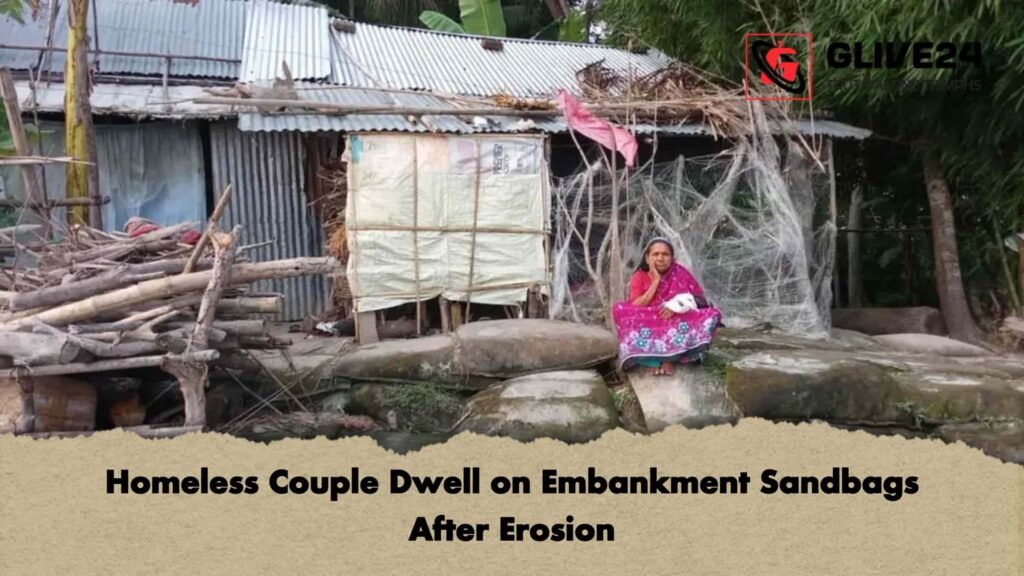
Continuous riverbank erosion along the Sandha River has left numerous families destitute in southern Bangladesh, highlighting the ongoing vulnerability of rural communities to environmental displacement. In Ramzankathi village, located within the Birshreshtha Jahangir Nagar Union of Babuganj Upazila under the Barisal District, the severe socioeconomic impact of this recurring natural hazard is exemplified by the current living conditions of an elderly couple, Nurjahan Begum and her husband, Habibur Rahman Fakir.
Land Loss and Displacement History
Habibur Rahman Fakir, formerly a financially solvent resident of the area, combined his earnings as a professional bricklayer with agricultural income. Over successive years, aggressive riverbank erosion completely submerged 65 decimals of his ancestral property. This loss encompassed their entire homestead, domestic orchards, and arable agricultural plots. The Sandha River breached and claimed their home on four separate occasions, erasing their assets and leaving them entirely landless.
Following the final destruction of their property, the government deployed geo-textile bags (geobags) along the riverbank to mitigate further erosion. For the past five years, the couple has been forced to reside in a small, precarious corrugated tin shack constructed directly on top of these protective sandbags.
Environmental Hazards and Health Complications
The geographic position of their makeshift dwelling exposes the couple to immediate environmental dangers. During the monsoon season, tidal surges from the Sandha River frequently flow underneath the elevated platform or flood the interior of the shack. In periods of severe storms, heavy rainfall, or wider flooding, the couple must abandon the structure to seek temporary refuge in the homes of neighbours.
The prolonged stress and physical hardship associated with losing their home four times have had severe consequences for Habibur Rahman Fakir’s health. He has suffered three separate cerebral strokes, which have left him partially deaf. Although he retains his mobility, he can no longer perform heavy manual labor or bricklaying work, causing a critical reduction in the household income. The couple has two adult sons who work as low-income daily-wage earners; both are married and live in rented accommodations elsewhere, leaving them without the financial capacity to support their parents.
Local resident Bhashai Molla verified their situation, stating:
“Habib Fakir’s house has broken into the river four times, and all his land is gone. He has no land left to build a home. They are living in a tiny tin shack built like a shop platform on top of the geobags. He cannot work as he used to, and they are living in extreme hardship.”
Administrative Responses and Assurances
The plight of the couple has drawn formal reactions from local administrative bodies, who acknowledged that institutional oversight had previously left the family unassisted.
| Official Authority | Institutional Acknowledgment | Pledged Remedial Actions |
|
Union Parishad Chairman (Kamrul Ahsan Himu) |
Admitted oversight; noted he passes the site daily but did not realise the shack was an active residence. | Committed to discussing rehabilitation with the UNO and seeking private affluent donors. |
|
Upazila Nirbahi Officer (UNO) (Asma Ul Husna) |
Defined the situation as a deeply affecting humanitarian issue requiring intervention. | Assured that the couple would be investigated and enrolled under state-sponsored social safety nets. |
According to union records and statements from local residents, the erosion of the Sandha River systematically affects the region, displacing more than one hundred families in the area annually. The local administration has committed to identifying other affected households along the embankment to implement broader relief and rehabilitation measures.