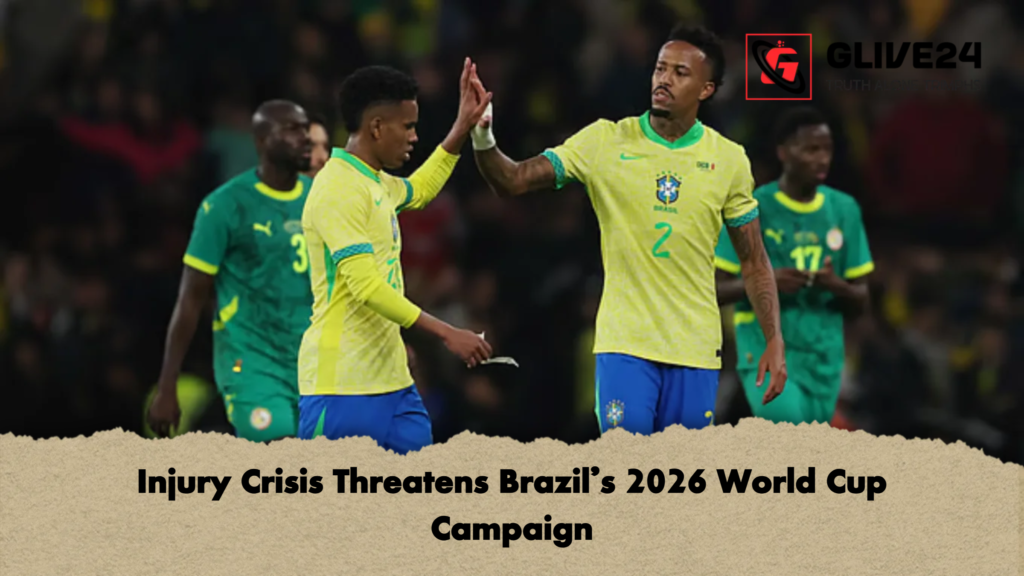
For Brazil, the FIFA World Cup is more than a sporting event; it is a national phenomenon that brings the country to a standstill. Representing the “Seleção” on the world stage is the pinnacle of a footballer’s career, yet for several high-profile players, the dream of participating in the 2026 edition has been derailed by physical setbacks. As the tournament approaches, statistical analysis and squad updates suggest that among the global footballing powerhouses, Brazil has emerged as the nation most severely impacted by injuries.
The five-time world champions are currently navigating a crisis that has seen several indispensable starters sidelined. This wave of misfortune presents a significant tactical challenge for head coach Carlo Ancelotti, who must now restructure his plans to reclaim the trophy.
Key Absences in the Brazilian Squad
The Brazilian casualty list includes three of the most prominent names in world football. Rodrygo and Éder Militão, both mainstays of the Real Madrid starting eleven and pivotal to Ancelotti’s tactical framework, have been ruled out. Their absence leaves substantial voids in both the defensive line and the attacking third.
Perhaps the most significant blow is the loss of Estêvão. The Chelsea winger was widely anticipated to be the breakout star of this World Cup. Under Ancelotti’s tutelage, Estêvão has been remarkably productive, recording 5 goals and 5 assists in just 7 appearances. This total represents the highest goal contribution of any Brazilian player during Ancelotti’s tenure. However, a hamstring injury has officially excluded him from the preliminary squad.
Furthermore, the fitness of Neymar remains a persistent concern. Even if the veteran forward is included in the final roster, his history of injuries—most notably his exit from the 2014 World Cup quarter-finals—remains a strategic liability for the coaching staff.
Comparative Analysis of Leading Nations
While other elite teams are facing fitness issues, the scale of the crisis in the Brazilian camp appears unmatched. The following table illustrates the major injury concerns among the top contenders for the 2026 World Cup:
| Nation | Key Player(s) Missing or Doubtful | Impact Assessment |
| Brazil | Estêvão, Rodrygo, Éder Militão, Neymar (doubtful) | Critical: Multiple starters and primary creators absent. |
| Spain | Samu Omorodion, Nico Williams (doubtful), Lamine Yamal (doubtful) | High: Missing a primary striker; wingers may return. |
| France | Hugo Ekitike | Moderate: Loss of depth, though squad remains deep. |
| Germany | Serge Gnabry | Moderate: Absence of an experienced attacking option. |
| Argentina | Juan Foyth, Franco Pamicelli | Low: Impact is limited to defensive and rotational depth. |
Global Impact on Other Contenders
Spain follows Brazil as the second most affected side. Manager Luis de la Fuente will be without the 22-year-old FC Porto forward Samu Omorodion. While wingers Nico Williams and Lamine Yamal are also recovering from injuries, there is optimism regarding their eventual return to the squad.
France and Germany have not been spared either. France has lost Hugo Ekitike, while Germany faces the tournament without Serge Gnabry. However, analysts suggest that due to the immense squad depth possessed by these European nations, they are better equipped to absorb such losses compared to Brazil.
Finally, the defending champions, Argentina, have seen Juan Foyth and Franco Pamicelli drop out of contention. For Foyth, this is a recurring disappointment after he missed the 2022 World Cup through injury. Despite these absences, the core of the Argentine squad remains intact, leading to the conclusion that Brazil stands alone as the team most disadvantaged by the current injury climate.