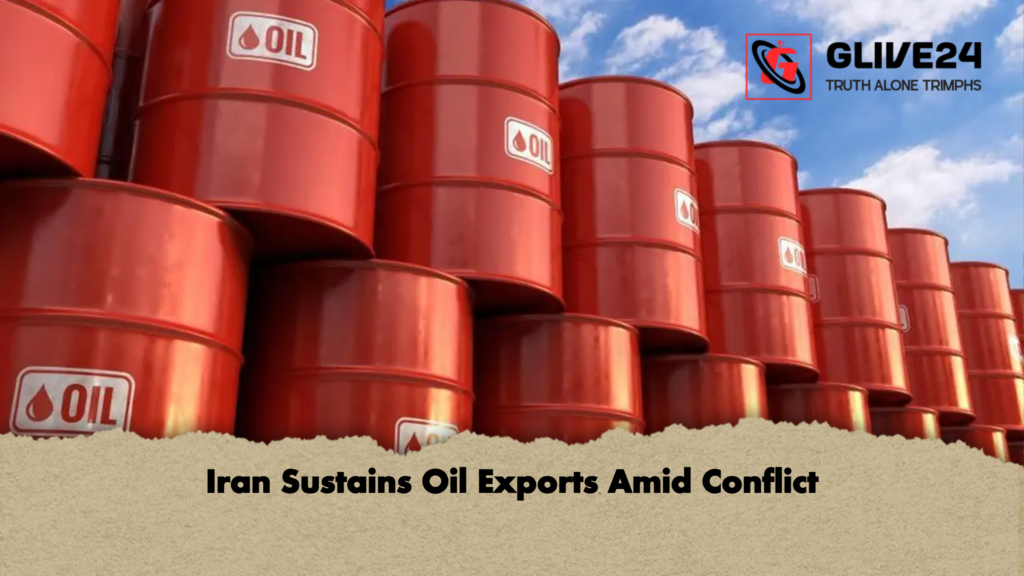
Despite ongoing conflict conditions and sustained international sanctions pressure, Iran reportedly maintained significant crude oil sales during March and April, according to the country’s Oil Minister, Mohsen Paknejad. He stated that export operations in the energy sector have remained broadly stable even in wartime conditions, with sales performance described by officials as “satisfactory”.
In an interview with the Iranian state-affiliated Fars News Agency, the minister emphasised that oil exports had not been substantially disrupted by the prevailing security environment. He further claimed that, in some instances, both international demand for Iranian crude and its market value had shown an upward trend. According to him, a portion of the additional revenue generated should be directed towards the reconstruction of oil infrastructure damaged during the conflict.
Earlier, the minister had also asserted that Iranian crude oil prices had increased notably, contributing positively to national revenue streams. Energy analysts suggest that, despite stringent sanctions, Iran has been able to sustain export volumes through alternative markets and intermediary trading routes, allowing it to remain active within the global energy supply chain.
At the same time, the United States has reportedly intensified maritime monitoring operations targeting commercial vessels bound for or associated with Iranian oil and petrochemical flows. These measures, which came into effect earlier this week, are widely interpreted by observers as an effort to further restrict Tehran’s ability to transport energy exports through key maritime corridors.
However, despite tighter enforcement, reports indicate that a Chinese tanker, named Rich Starry, successfully passed through the Strait of Hormuz, reportedly bypassing heightened surveillance measures. The vessel is said to have been carrying approximately 250,000 barrels of methanol from the port of Hamriyah in the United Arab Emirates before continuing its journey through the Gulf and into open waters without interception.
Maritime tracking organisations, including MarineTraffic and Kpler, have linked the vessel to Shanghai Xuanrun Shipping Co Ltd. Analysts argue that such incidents highlight the continued complexity of enforcing sanctions in heavily trafficked maritime zones and underscore the adaptability of global energy logistics networks.
Key Details of the Incident
| Category | Information |
|---|---|
| Reporting period | March–April |
| Oil export status | Described as satisfactory by Iranian authorities |
| Core claim | Exports continued despite conflict; revenue to support reconstruction |
| Enforcement actions | Increased US naval monitoring of shipping routes |
| Vessel involved | Rich Starry |
| Cargo | Approximately 250,000 barrels of methanol |
| Route | Hamriyah Port → Strait of Hormuz → Open sea |
| Vessel ownership | Shanghai Xuanrun Shipping Co Ltd |
Energy and geopolitical analysts note that the persistence of Iranian oil and petrochemical flows, despite sanctions and heightened maritime scrutiny, could have longer-term implications for Middle Eastern energy trade dynamics, global shipping security, and regional political tensions. Iran’s ability to sustain export activity under pressure is increasingly viewed as a key component of its broader economic resilience strategy, even as external enforcement efforts continue to intensify.