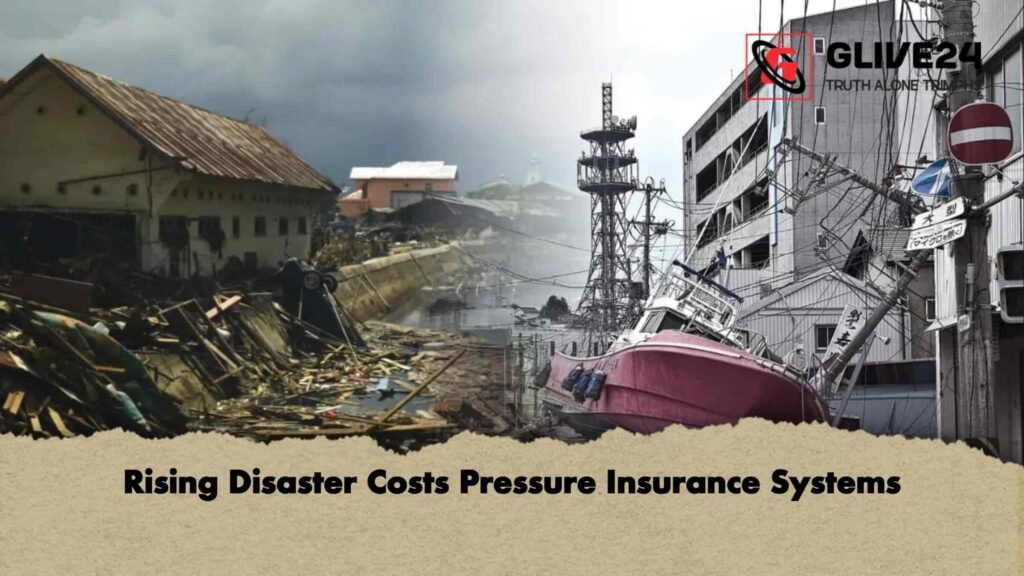
A new report from The Geneva Association has warned that increasing disaster risks are placing sustained pressure on public–private insurance frameworks worldwide, raising concerns about their long-term sustainability unless stronger emphasis is placed on risk reduction and resilience.
The study assessed 14 public–private insurance programmes (PPIPs) and found that, although many have played a role in stabilising insurance markets and broadening access to coverage, they are increasingly challenged by structural and financial constraints. These include rising contingent liabilities, the possibility of public schemes displacing private insurance participation, and insufficient incentives for individuals and businesses to reduce exposure to risk.
The report noted that both natural and human-induced hazards—such as floods, wildfires, cyberattacks, and pandemics—are becoming more frequent and severe. This trend is contributing to higher insured and uninsured losses, while also intensifying pressure on government-backed disaster relief systems and public finances.
Against this backdrop, the Geneva Association emphasised that well-designed PPIPs must achieve a careful balance between four core objectives: ensuring that insurance remains affordable and accessible, protecting fiscal stability for governments, maintaining active private sector involvement, and enabling efficient and timely claims settlement after catastrophic events.
The organisation stressed that many existing programmes still operate primarily as post-disaster compensation mechanisms, rather than fully integrated risk management systems. It argued that future frameworks should place greater weight on prevention, resilience-building, and reducing overall exposure to hazards.
Jad Ariss, Managing Director of the Geneva Association, said that public–private insurance arrangements must evolve beyond simply providing payouts after disasters. He highlighted the importance of improving incentives for risk reduction, strengthening societal resilience, accelerating recovery, and reducing long-term pressure on public budgets.
Hélène Schernberg, Director of Public Policy and Regulation at the organisation, said policymakers should adopt a structured methodology when designing such schemes. This should include evaluating existing protection gaps, prioritising risk mitigation measures and strengthening private insurance markets, as well as clearly defining the extent of risk that governments are willing to absorb.
The Geneva Association represents insurance companies headquartered in 26 countries, managing around US$21 trillion in assets and providing protection to approximately 2.6 billion people globally. The report concludes that integrating risk reduction more deeply into insurance system design will be essential to ensuring that disaster coverage remains both affordable and sustainable in the long term.
Overview of report findings
| Category | Findings |
|---|---|
| Scope of study | 14 public–private insurance programmes analysed |
| Market outcomes | Improved market stability and expanded insurance coverage |
| Key constraints | Rising liabilities, risk of crowding out private insurers, weak prevention incentives |
| Disaster environment | Increasing frequency and severity of floods, wildfires, cyberattacks, pandemics |
| Fiscal impact | Higher strain on public finances due to rising losses |
| Policy recommendation | Stronger integration of risk reduction and clearer government risk-sharing roles |