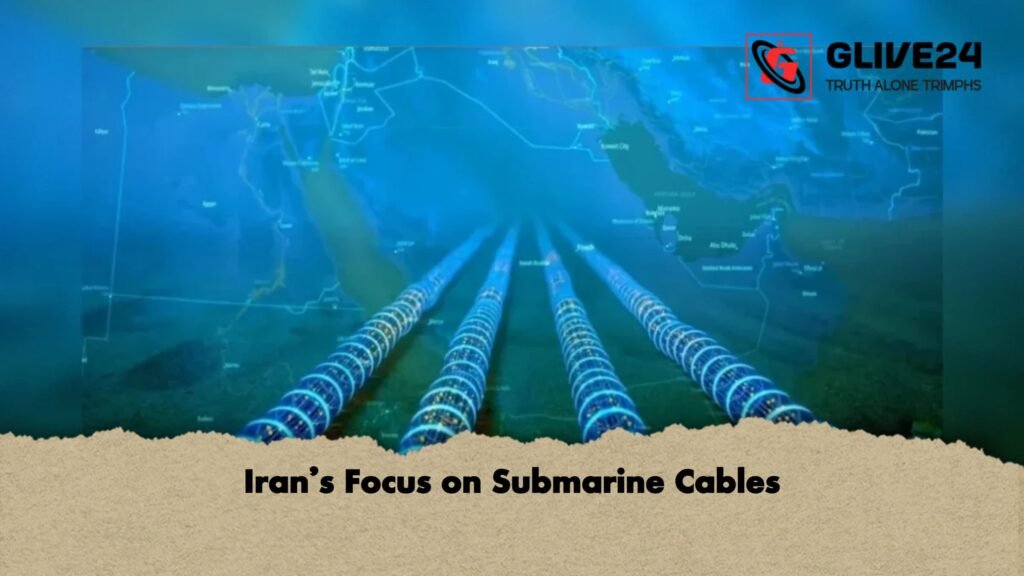
Iran is reportedly seeking to use submarine internet cables in the Strait of Hormuz as a new strategic instrument after claiming success in wartime blockade operations in the region. Tehran has indicated that it wants greater control over key undersea cables that carry vast volumes of internet and financial data between Europe, Asia and Gulf states.
The developments were reported by the American news outlet CNN on Sunday, 17 May.
According to the report, Iran is considering plans to impose fees on major global technology companies for the use of submarine internet cables passing beneath the Strait of Hormuz. At the same time, Iranian state-affiliated media outlets have suggested that disruptions to these cables could occur if payments are not made.
Iranian military spokesperson Ibrahim Zolfaqhari wrote on the social media platform X that Iran would impose fees on internet cables.
Media outlets linked to Iran’s Islamic Revolutionary Guard Corps stated that international technology firms including Google, Microsoft, Meta and Amazon would be required to comply with Iranian laws. They also indicated that operators of submarine cables would have to pay licensing fees, while repair and maintenance rights for the cables would be restricted to Iranian companies.
Experts say submarine cables form the backbone of the global internet system. Most international data transfers, banking transactions, military communications, cloud-based artificial intelligence services, online gaming and streaming services depend on these undersea networks. Any serious disruption to such infrastructure could therefore affect digital communications and financial systems on a global scale.
Mustafa Ahmed, a researcher at the UAE-based Al Habtoor Research Centre, said the Islamic Revolutionary Guard Corps possesses divers, small submarines and underwater drones capable of posing risks to submarine cable infrastructure.
He stated that any attack or disruption involving such cables could trigger significant digital disruption across parts of the Middle East and Asia.
According to analysts cited in the report, Gulf states could face serious impacts on internet connectivity and banking systems. India’s large outsourcing industry could also be affected. Financial transactions between Europe and Asia, as well as internet connectivity in East Africa, may face disruption if critical cables are damaged.
Data from telecommunications research firm TeleGeography shows that two submarine cables passing through the Strait of Hormuz — Falcon and Gulf Bridge International — cross Iranian territorial waters.
Key Details Mentioned in the Report
| Subject | Details |
|---|---|
| Region | Strait of Hormuz |
| Infrastructure | Submarine internet cables |
| Proposed Measure | Licensing and usage fees |
| Companies Mentioned | Google, Microsoft, Meta, Amazon |
| Cables Identified | Falcon, Gulf Bridge International |
| Potential Risks | Internet, banking and financial disruption |
Although Iran has not directly threatened to destroy submarine cables, officials and state-affiliated media have suggested possible measures against countries allied with the United States.
International legal experts noted that under the United Nations Convention on the Law of the Sea, coastal states may impose certain conditions regarding cables entering their territorial waters. Iran has cited this legal framework in support of its position.
Analysts believe Tehran is attempting to turn the geographical importance of the Strait of Hormuz into a longer-term economic and strategic advantage alongside its military influence in the region.