
Sabbir Ahmed
Published: 28th June 2026, 7:17 PM
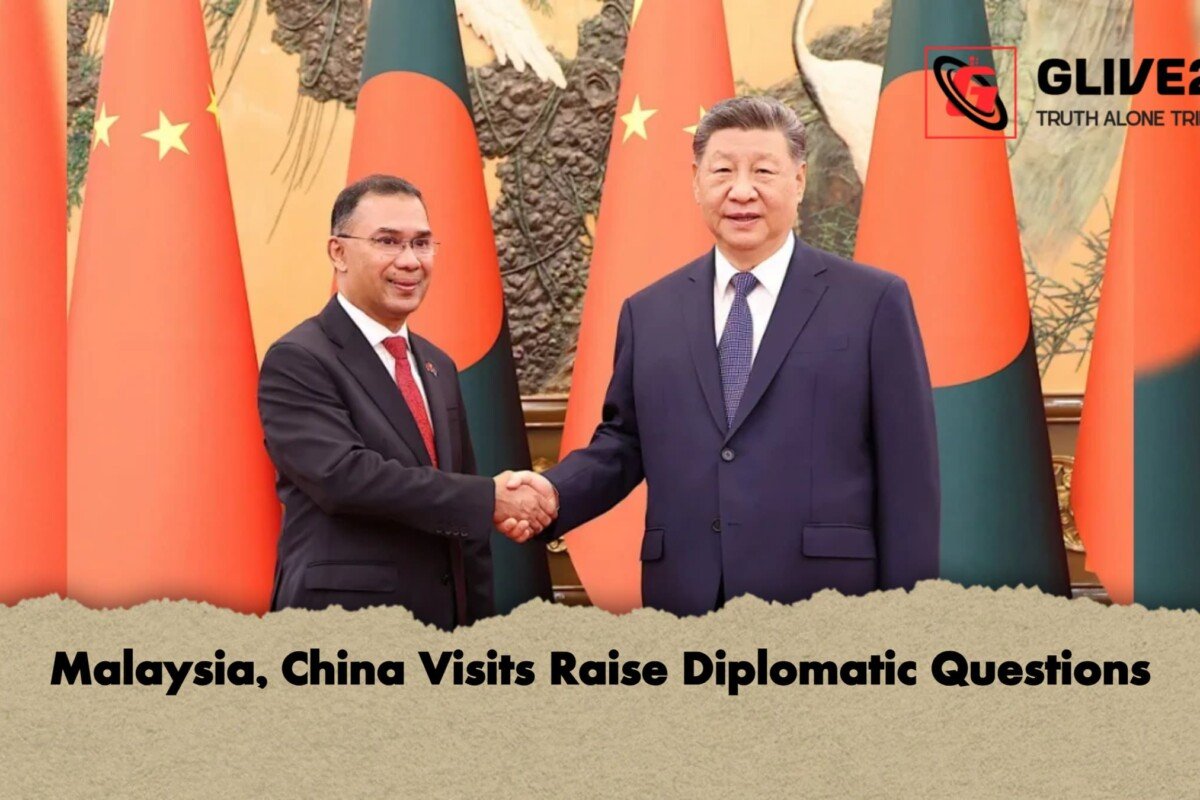
The recent visits by Bangladesh’s Prime Minister to Malaysia and China have prompted debate over the country’s foreign policy direction and diplomatic standing. According to political and economic analyst Sabbir Ahmed, the two tours failed to produce the tangible outcomes that many had anticipated, raising questions about the government’s regional engagement and international positioning.
Ahmed argues that it has long been customary for newly elected governments to make one of their earliest official overseas visits to a neighbouring country. Such visits are widely regarded as symbolic gestures intended to reaffirm regional partnerships and establish diplomatic priorities. He notes that several destinations were reportedly discussed following the formation of Bangladesh’s new government, including India, China, Nepal, Bhutan and Saudi Arabia, before Malaysia ultimately became the first foreign stop, followed by China.
The commentary examines Bangladesh’s recent interactions with India, referring to visits by senior Indian officials following the death of former Prime Minister Begum Khaleda Zia and the attendance of India’s Lok Sabha Speaker at the swearing-in ceremony of the new government. Ahmed suggests these developments had initially generated speculation that bilateral relations might improve after years of political distance.
He contends, however, that subsequent domestic political developments, including parliamentary decisions and legislation concerning historical and political issues, may have complicated relations with New Delhi. The article argues that this changing diplomatic environment could explain why an official visit to India did not materialise before the Prime Minister travelled elsewhere.
Turning to Malaysia, Ahmed observes that expectations centred on progress over the recruitment of Bangladeshi workers and discussions on a possible Free Trade Agreement. He notes that reports indicating Malaysia’s labour market would not reopen in the near future emerged during the visit, leading him to question the practical outcomes achieved.
The article also focuses heavily on the China visit. Ahmed writes that there had been widespread media speculation before the trip that agreements related to the long-discussed Teesta Barrage project would be signed. While meetings were held with senior Chinese leaders, no agreement on the project was announced.
According to the author, no new project financing or investment agreements were concluded during the visit. Instead, Bangladesh and China signed 16 memoranda of understanding, alongside an additional memorandum between the Communist Party of China and the Bangladesh Nationalist Party (BNP). Ahmed argues that memoranda of understanding generally express intentions for future cooperation rather than creating legally binding commitments, and therefore should not be viewed as equivalent to investment or development agreements.
The commentary contrasts the outcome of the latest visit with previous periods of Bangladesh-China cooperation. It recalls that during the Chinese President’s 2016 visit to Dhaka, numerous agreements covering infrastructure, investment and commercial cooperation were announced, describing that occasion as a benchmark against which the latest visit has inevitably been compared.
Ahmed concludes by arguing that Bangladesh’s broader foreign policy framework, particularly its trade relationship with the United States, may influence the country’s ability to pursue certain forms of economic cooperation with China and other major powers. He maintains that these factors have contributed to what he sees as a disappointing outcome from the Prime Minister’s visits to Malaysia and China.
The views expressed throughout this article are those of the original author and constitute political analysis and opinion rather than independently verified factual reporting.




Comments