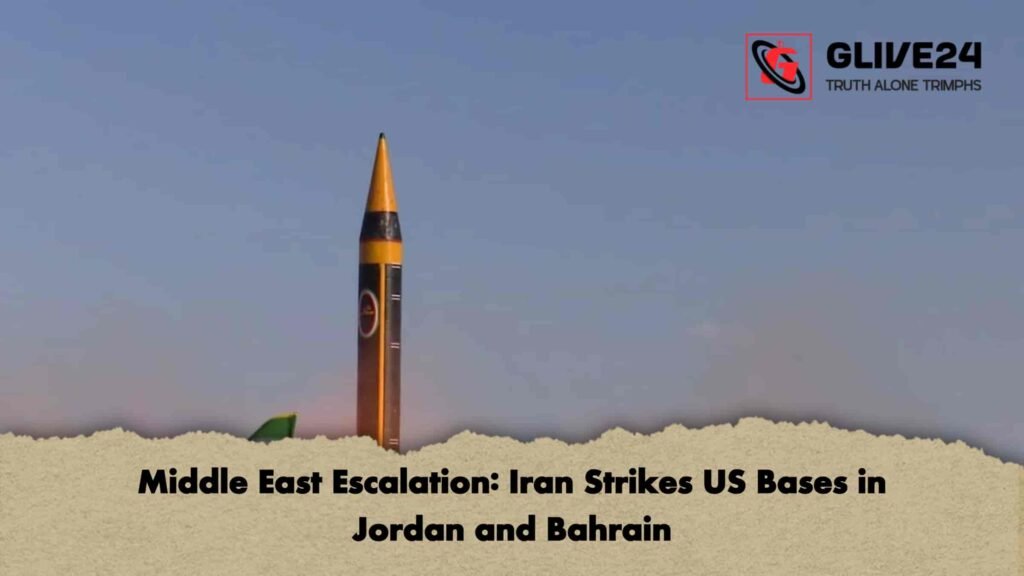
The Islamic Revolutionary Guard Corps (IRGC) of Iran has launched targeted military strikes against bases utilized by the United States armed forces in the Middle East. The operations targeted the Al-Azraq airbase in Jordan and the United States Fifth Fleet headquarters in Bahrain, triggering air defence responses and emergency warning sirens across the region, including in neighbouring Kuwait.
Long-Range Missile Strikes on Jordan
In an official statement released on the morning of Wednesday, 10 June, the IRGC confirmed it had deployed long-range, solid-fuel missiles to strike the Al-Azraq military installation in Jordan. The facility houses United States military personnel and serves as a deployment site for advanced American F-35 fighter aircraft.
While the IRGC asserted the success of its operation, the international news network CNN reported that no precautionary air raid sirens had been activated within Jordan during the incident.
Kuwait Deploys Air Defence Systems
Shortly after the missile strikes in Jordan, emergency warning sirens began sounding across Kuwait. The General Staff of the Kuwait Army released a formal statement confirming that the nation’s air defence networks were actively engaging hostile aerial targets.
“Kuwaiti air defence systems are countering enemy aircraft or targets,” the military statement confirmed, as authorities urged citizens and residents to move to secure shelters immediately and remain there until further notice.
The Kuwaiti military command additionally appealed to the public to comply strictly with official state safety directives and to rely exclusively on verified government channels for accurate information regarding the developing security situation.
Context of Regional Confrontations
The strikes in Jordan and the subsequent emergency alerts in Kuwait follow an earlier IRGC assault directed at the United States Fifth Fleet headquarters situated in Bahrain. The island kingdom, located along the coast of the Persian Gulf, previously experienced extensive Iranian strikes during a period of open conflict in February.
The current escalation follows a series of recent maritime and aerial confrontations between US and Iranian forces. On Monday, a US Army Apache military helicopter crashed in the strategically vital Strait of Hormuz. US President Donald Trump publicly asserted that the aircraft had been shot down by Iranian forces. Following the incident, the United States Central Command (CENTCOM) initiated retaliatory airstrikes targeting various installations along the Iranian coastline, precipitating the current wave of counter-strikes by the IRGC.
Timeline of Military Actions
The sequential breakdown of the military engagements leading to the current high-alert status is detailed in the table below:
| Date / Time | Operational Location | Event Description |
| Monday, 8 June | Strait of Hormuz | A US Army Apache military helicopter crashes; President Trump asserts it was shot down by Iran. |
| Tuesday, 9 June | Iranian Coastline | US Central Command (CENTCOM) initiates retaliatory airstrikes against coastal installations. |
| Wednesday, 10 June (Early) | Bahrain | The IRGC launches a military assault against the United States Fifth Fleet headquarters. |
| Wednesday, 10 June (Morning) | Al-Azraq, Jordan | The IRGC fires solid-fuel long-range missiles at the base housing US troops and F-35 aircraft. |
| Wednesday, 10 June (Morning) | Kuwait | Warning sirens are activated as national air defence systems engage hostile aerial targets. |