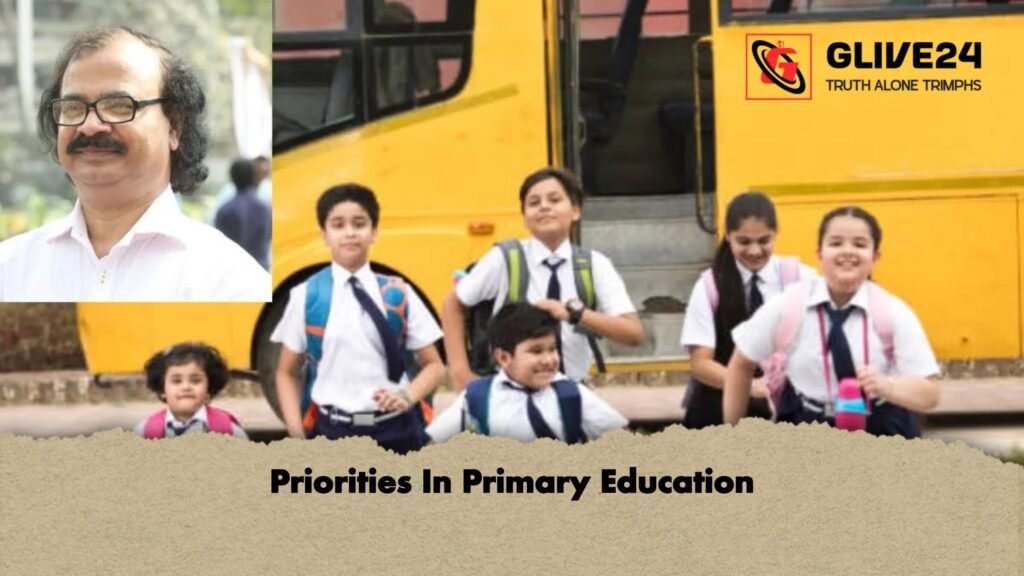
The government has decided to introduce free school uniforms, shoes, and jute school bags for pupils in government primary schools from July 2026 in an effort to reduce educational expenses and address inequality. Initially, the programme will be launched on a pilot basis in two schools in every upazila before any nationwide expansion. Several leading business conglomerates, including the Bashundhara Group, are expected to support the initiative.
Similar programmes have been implemented in several countries, including Sri Lanka, India, Kenya, Ecuador and Australia. Their outcomes, however, have varied considerably.
Research conducted in Kenya found that providing free school uniforms reduced absenteeism by between 37 and 43 per cent and lowered dropout rates. The study also reported a decline in child marriage and teenage motherhood among female students. In Sri Lanka, free uniform fabric or vouchers are distributed, with around 70 per cent of the funding reportedly provided by the Chinese government. In parts of India, including Madhya Pradesh and Assam, uniform distribution programmes increased school enrolment among disadvantaged communities, although some studies noted mixed social reactions regarding equality between lower-caste and higher-caste students.
By contrast, Ecuador’s programme failed to achieve the expected results because nearly one-third of schools did not receive uniforms on time. Researchers reported that delayed distribution discouraged both parents and students, leading to a decline in school attendance of between 2 and 5 per cent.
International Experiences With Free Uniform Programmes
| Country | Programme Type | Reported Outcome |
|---|---|---|
| Kenya | Free school uniforms | Lower absenteeism and dropout rates |
| Sri Lanka | Uniform vouchers/fabric | Supported by foreign grants |
| India | Uniforms for disadvantaged students | Increased enrolment, mixed social response |
| Ecuador | Free uniforms | Attendance declined due to delays |
| Argentina | Free textbooks since 1949 | Expanded access to education |
Bangladesh has distributed free textbooks to primary and secondary students through its annual “Book Festival” since 2010. In 2024, approximately 350 million books were distributed, which officials described as a record-scale initiative.
The Ministry of Primary and Mass Education first drafted a proposal in 2019 to provide uniforms, shoes, notebooks and pens to students. The stated objective was to reduce dropout rates linked to poverty. Although implementation was planned for 2020, the Covid-19 pandemic prevented direct distribution. Instead, in 2021, the government transferred a “Kids Allowance” of Tk1,000 to parents through mobile banking so they could purchase uniforms, shoes and school bags. During the 2022–23 fiscal year, eligible students received a one-time grant of Tk2,000 for clothing and related educational materials.
Eligibility for stipends generally depends on household income, school attendance and examination performance. Students from ethnic minority and landless families are given priority. In 2024, approximately 6.47 million secondary and higher secondary students received stipends and tuition support, while 5.4 million students received financial assistance through the Prime Minister’s Education Assistance Trust.
Research and field-level assessments cited in the article argue that school feeding programmes are more effective than uniform distribution in reducing dropout rates over the long term. Studies indicate that free midday meals can raise attendance rates by between 15.5 and 18 per cent. Researchers also note that nutritious meals improve concentration and learning outcomes, while reducing financial pressure on poor households.
The article states that many children from low-income families remain absent from school because they cannot afford uniforms and fear embarrassment or reprimand from teachers. Bangladesh’s government primary schools officially follow a dress code of white shirts and navy-blue trousers or skirts. While school uniforms are now widely used across many districts, poorer regions such as Kurigram still face affordability challenges.
Bangladesh Primary Education Statistics
| Indicator | Figure |
|---|---|
| Total villages | 90,049 |
| Villages without primary schools | 2,847 |
| Dilapidated government primary schools | 17,414 |
| Highly vulnerable school buildings | 6,704 |
| Vacant head teacher posts | 34,159 |
| Vacant assistant teacher posts | 24,536 |
According to APSS statistics cited in the article, only 35.3 per cent of primary school classrooms are in good or fully permanent condition. The report also notes that more than 17,000 government primary schools are currently in dilapidated condition, while thousands of buildings have been officially classified as highly vulnerable.
The article concludes that Bangladesh should prioritise teacher recruitment and training, repair unsafe school buildings, and expand school feeding programmes before implementing a nationwide uniform distribution scheme. It argues that while uniforms may reduce social stigma and support equality, investments in infrastructure, staffing and nutrition could have a broader impact on educational quality and student retention.
— Dr Mizanur Rahman, professor at University of Dhaka