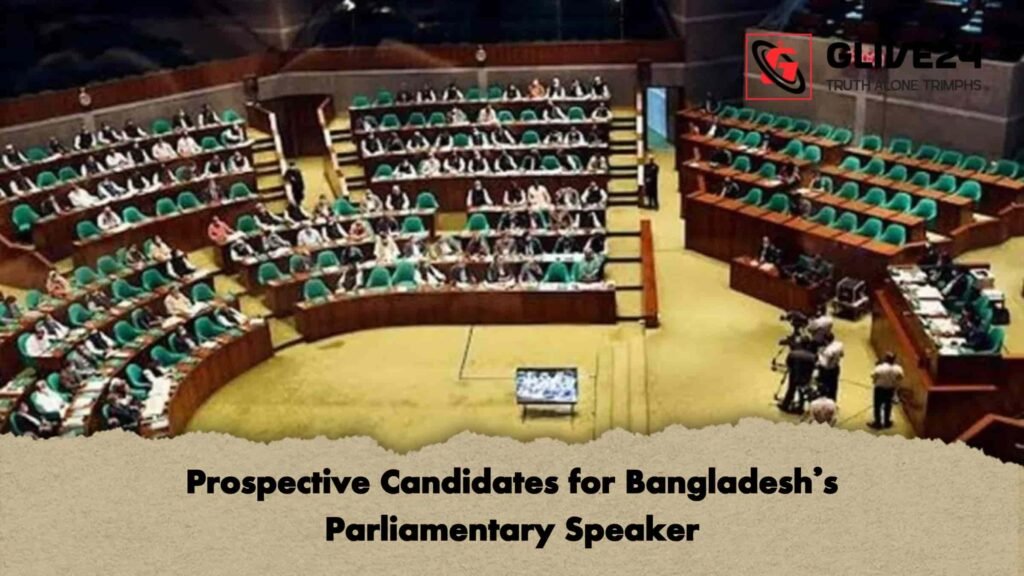
As the 13th National Parliament of Bangladesh prepares for its inaugural session, political attention is sharply focused on the nation’s highest parliamentary office—the Speaker of the Jatiya Sangsad. The vacancy of this pivotal role has sparked intense discussion among political analysts and observers, with expectations that a final decision will be announced on 26 February, ahead of the opening session.
Currently, two prominent figures from the Bangladesh Nationalist Party (BNP) are widely regarded as leading candidates for the position:
-
Advocate Zainul Abedin – BNP Vice President and senior lawyer of the Supreme Court.
-
Dr Abdul Moin Khan – Member of the BNP Standing Committee and four-time former Member of Parliament.
Both candidates bring extensive experience and expertise to the table. Advocate Zainul Abedin is recognised for his profound knowledge of constitutional and electoral law, having represented both the state and citizens in key Supreme Court cases. Dr Abdul Moin Khan, meanwhile, has long-standing parliamentary experience and a strong record of party leadership, underpinned by a politically influential family background.
Key Prospective Speaker Candidates
| Candidate | Political Position | Constituency | Notable Qualifications |
|---|---|---|---|
| Advocate Zainul Abedin | BNP Vice President | – | Senior Supreme Court lawyer; constitutional and electoral law specialist; active in politics |
| Dr Abdul Moin Khan | BNP Standing Committee Member | Narsingdi-2 | Four-time MP; former Dhaka University lecturer; seasoned political leader; influential family background |
Analysts suggest that Advocate Zainul Abedin’s legal expertise and detailed understanding of parliamentary law could give him an edge in managing legislative procedures. Conversely, Dr Abdul Moin Khan’s parliamentary tenure, political leadership, and electoral successes make him a formidable contender in the race.
Significance of the Speaker
Under the Bangladeshi Constitution, the Speaker plays a crucial role in parliamentary governance. Responsibilities include presiding over sessions, enforcing procedural rules, maintaining discipline, and safeguarding members’ rights. Political neutrality, administrative competence, and deep legal knowledge are essential for fulfilling these duties effectively. Experts note that the ability to interpret parliamentary procedure, moderate debates, and make legally sound decisions is vital to the smooth functioning of the Jatiya Sangsad.
Traditionally, the outgoing Speaker presides over the election of a new Speaker; however, in this session, members will vote directly to choose the officeholder. The announcement on 26 February will provide direction for the 13th parliament and is already a focal point of public interest, with citizens closely monitoring the candidates’ integrity and capability.
Ultimately, the election of the new Speaker will reflect not only individual merit but also the interplay of political strategy, party dynamics, and parliamentary arithmetic. This decision marks a significant moment in Bangladesh’s political trajectory, shaping the framework of legislative governance for years to come.