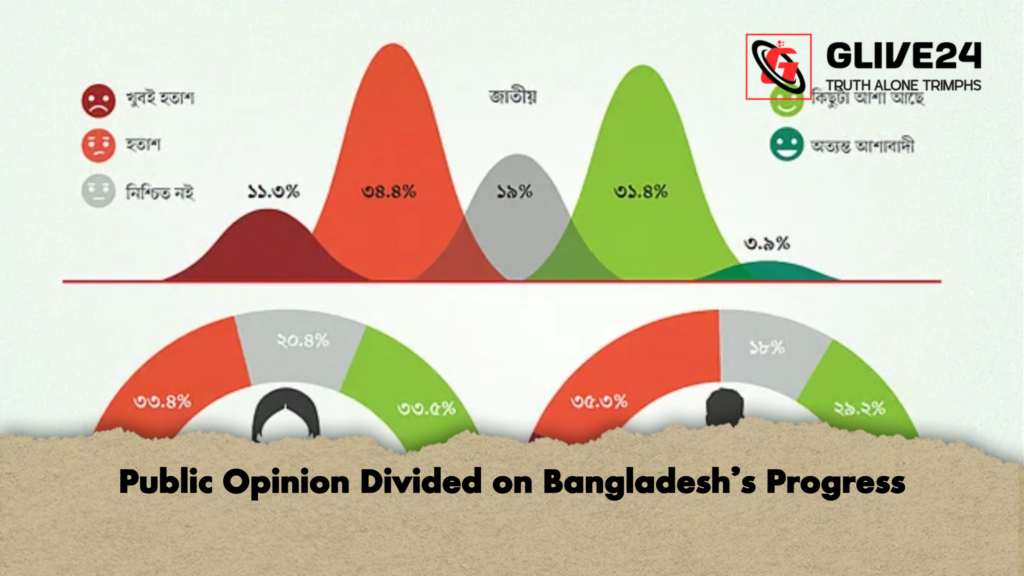
A recent nationwide survey has revealed a stark divide in public sentiment regarding Bangladesh’s future, with nearly half of respondents expressing pessimism about the country’s social and economic prospects. According to the survey, conducted by Kimekers Consulting Limited on behalf of the leading newspaper Prothom Alo, 46% of respondents said they were either disappointed or very disappointed with the current trajectory of the nation, while only 35% expressed optimism to some degree. The remaining 19% neither felt optimistic nor pessimistic.
The survey, titled “National Public Opinion on Major Socio-Political Issues 2025,” involved 1,342 adults aged between 18 and 55 across five urban centres and five rural or semi-urban areas. Respondents were drawn from diverse income groups, professions, and social classes. The survey took place between 21 and 28 October 2025 and carries a confidence level of 99%, ensuring strong reliability for the insights gathered.
One of the key findings relates to employment and earning opportunities. An overwhelming 83% of participants reported that the current situation is not conducive to securing employment or generating income. Only 5% believed conditions were favourable, with the remaining respondents uncertain. Similarly, over 77% felt that the environment for business and trade is currently unfavourable. Lower-income respondents were particularly concerned about limited opportunities, though men and women shared similar views on this issue.
The survey also explored public expectations of the upcoming government. More than half of respondents—around 54%—are hopeful that the newly elected administration will demonstrate tolerance towards differing political views. Meanwhile, 24% expressed disappointment, and about 22% remained neutral. Regarding the government’s potential to curb corruption and reduce nepotism, 52% expressed optimism, 27.5% were disappointed, and a little over 20% were undecided. Women and younger respondents were generally more hopeful about these outcomes.
Interestingly, attitudes toward Bangladesh’s future varied by gender and age. Women and younger individuals tended to be slightly more optimistic, while older respondents were more likely to express doubt. Analysts suggest this could reflect generational differences in exposure to economic opportunities and political expectations.
The survey results paint a complex picture of public opinion: while many Bangladeshis remain hopeful for political reform and increased tolerance, significant concerns persist about economic stagnation, employment scarcity, and business conditions. Experts note that bridging this gap between optimism and pessimism will require visible improvements in governance, economic policy, and public services, as well as transparent measures to tackle corruption and promote inclusivity.