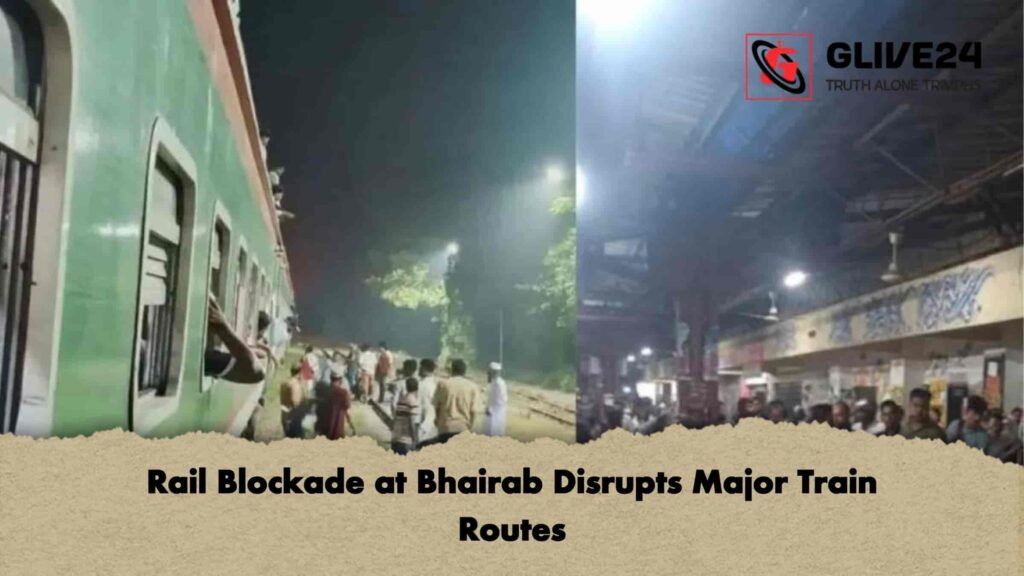
Train operations along the crucial Dhaka–Chittagong and Dhaka–Sylhet railway lines suffered significant disruptions following an unexpected incident near the Bhairab Railway Station in Kishoreganj. The operational standstill occurred after a dispute over a local sporting event escalated into a physical altercation between two factions, leading one group to obstruct the railway tracks in protest.
According to an official media release dispatched by Bangladesh Railways at approximately 00:15, the ongoing blockade resulted in at least five distinct train services being halted or severely delayed at various intermediate stations.
Logistical Impact on Rail Services
The infrastructure blockade forced railway authorities to immediately suspend transit to mitigate safety risks to passengers and rolling stock. The definitive timetable and locations of the stranded passenger and freight services are detailed in the schedule below:
| Train Designation | Current Location | Time of Immobilisation |
| No. 703 Mahanagar Godhuli | Bhairab Station Outer Signal | 21:15 |
| No. 749 Egarosindhur Godhuli | Daulatkandi Station | 21:22 |
| No. 710 Parabat Express | Talshahar Station | 21:33 |
| No. 606 Container Train | Methikanda Station | 21:35 |
| Narsingdi Commuter Train | Khanabari Station | 21:38 |
Origin of Dispute and Administrative Response
The civil unrest began earlier in the evening when tensions flared between two local groups regarding a sports match. Following a physical confrontation between the parties, an aggrieved faction set up a demonstration on the railway lines adjacent to Bhairab Station starting from 21:10. Due to the proximity of the protesters to active lines, railway management deemed conditions unsafe for travel, directly impacting thousands of commuters who faced prolonged delays mid-journey.
In response to the crisis, local administrative officials and law enforcement agencies were deployed to the scene to handle the protesters and clear the tracks. The Ministry of Railways explicitly clarified that normal train operations would only resume once law enforcement personnel provided a formal security clearance certifying that the tracks were safe for public transit.