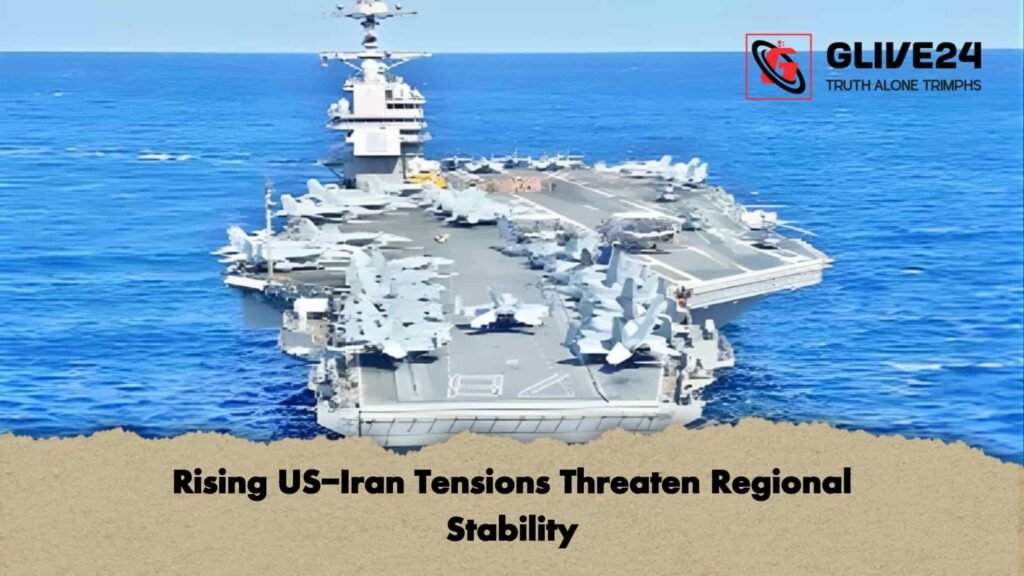
Tensions between the United States and Iran in the Middle East have escalated dramatically, raising the risk of a direct military confrontation. Recent developments indicate a marked intensification of US military presence in the region, prompting officials to warn that even a minor miscalculation could trigger open conflict. Analysts specialising in diplomacy and defence caution that the situation is precarious, with the potential for rapid deterioration.
Table of Contents
US Military Deployment
The United States has significantly reinforced its military assets across the Middle East. Air, naval, and ground forces have been strategically positioned to respond swiftly to potential threats. Key deployments are summarised in the following table:
| Military Asset | Location | Operational Role |
|---|---|---|
| E-3 Sentry Surveillance & Control Aircraft | Middle East | Monitoring potential aerial threats and command-control operations |
| USS Abraham Lincoln Aircraft Carrier Strike Group | Arabian Sea | Rapid strike capability with a full complement of aircraft |
| Combat Aircraft (50+ units) | Middle East | Conducting both offensive and defensive missions |
| Military Personnel & Officers | Regional Bases | Redeployment to reduce exposure to retaliatory attacks |
According to media reports, any decision to launch a direct strike would require authorisation from US President Donald Trump. Nevertheless, US forces are reported to have completed all preparations necessary to engage potential targets.
Iran’s Response
Iran has adopted a defensive posture and is conducting joint military exercises with Russia. Tehran has issued warnings that any US attack would render American regional bases, infrastructure, and assets legitimate targets. Iran’s ambassador, Amir Saeed Iravani, stated, “The United States’ aggressive posture threatens not only regional stability but also international peace and security.”
International Reactions
The United Kingdom has refused US requests to utilise its airbases, citing potential violations of international law, as noted by Prime Minister Keir Starmer. Conversely, Saudi Arabia and the United Arab Emirates have expressed cautious support for targeted actions. Diplomats warn that a protracted conflict could draw in multiple states and result in widespread casualties.
Diplomatic Stalemate
European diplomats observe that Iran remains largely intransigent, resisting international pressure and delaying negotiations. Conversely, the US administration appears increasingly impatient, prioritising military readiness over diplomatic solutions.
Overall, the escalating US-Iran confrontation poses a serious threat to Middle Eastern stability. Experts warn that uncontrolled tensions could evolve into a prolonged and multifaceted conflict, with consequences that extend far beyond the region, potentially affecting global security. The international community faces urgent pressure to engage in crisis management measures to avert a larger war.