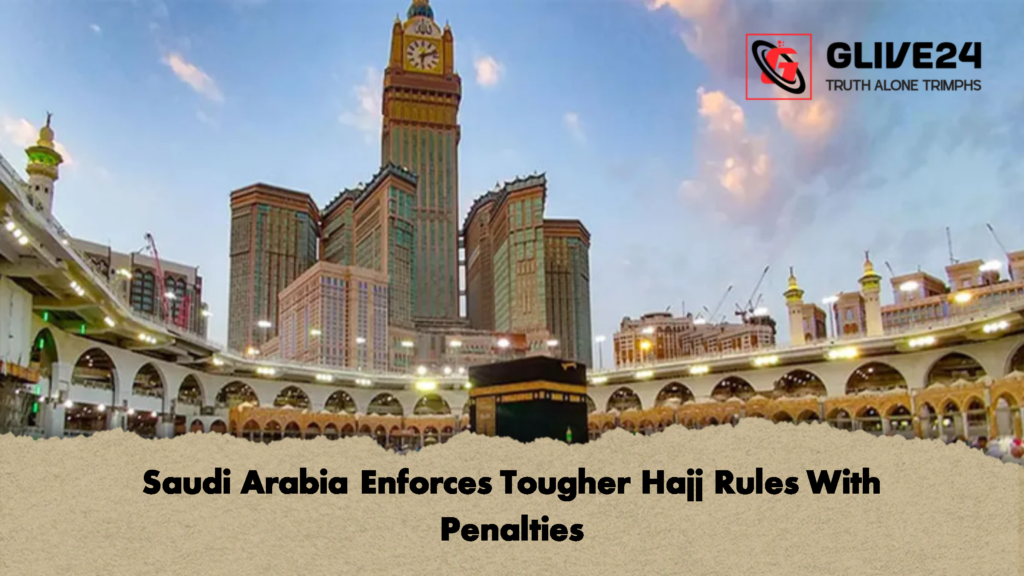
Saudi Arabia has introduced a sweeping set of strict penalties aimed at curbing unauthorised participation in the Hajj pilgrimage, as part of its preparations for the 2026 season. The measures, announced by the Saudi Ministry of Interior, reflect a firm commitment to safeguarding pilgrims and maintaining order during one of the largest annual religious gatherings in the world.
Under the new directives, the regulations will come into effect from 18 April and remain in force until mid-June, covering the peak period leading up to and including Hajj. The policy is primarily designed to regulate crowd movement and enhance security in and around Mecca and other sacred sites, which attract millions of worshippers each year.
Structured Penalties for Violations
Authorities have outlined a detailed framework of penalties based on the nature and severity of offences. Officials have stressed that enforcement will be rigorous and consistent.
| Offence Category | Description | Penalty |
|---|---|---|
| Unauthorised Entry | Attempting to enter Mecca without a valid Hajj permit or designated visa | Fine of up to SAR 20,000 |
| Assisting Violators | Providing transport, accommodation, or visa support to unauthorised pilgrims | Fine of up to SAR 100,000 (may increase depending on numbers involved) |
| Visa Overstay | Remaining in Saudi Arabia beyond visa validity | Deportation and additional legal consequences |
| Repeat/Organised Violations | Multiple offences or organised facilitation | Escalated fines and potential prosecution |
| Transport Misuse | Using vehicles to transport unauthorised pilgrims | Vehicle seizure by court order |
| Re-entry Ban | Deportees found violating Hajj regulations | Entry ban of up to 10 years |
In addition to financial penalties, authorities have confirmed that individuals found attempting to perform Hajj without the appropriate permit, or those overstaying their visas, will be deported immediately. Such individuals will also face a ban on re-entering Saudi Arabia for up to a decade, a sanction that could significantly impact future travel and employment prospects.
Ensuring Safety and Crowd Management
Hajj remains one of the five pillars of Islam and is a once-in-a-lifetime obligation for Muslims who are physically and financially able. The scale of the pilgrimage—often involving over two million participants—presents immense logistical challenges. Saudi authorities have increasingly prioritised safety and crowd control, particularly following past incidents linked to overcrowding.
The introduction of tougher penalties reflects lessons learned from previous Hajj seasons, where unregulated access contributed to congestion and heightened risks. By limiting entry strictly to authorised pilgrims, the government aims to maintain smoother movement, reduce bottlenecks, and ensure emergency services can operate effectively.
Crackdown on Facilitation Networks
Notably, the new measures extend beyond individual violators to target those who enable illegal participation. Travel agencies, landlords, and transport operators who knowingly assist unauthorised pilgrims could face substantial fines, especially where multiple individuals are involved.
Legal analysts suggest that the inclusion of provisions such as vehicle confiscation indicates a more assertive enforcement approach. This is intended to dismantle support networks that have historically enabled unauthorised entry into pilgrimage zones.
Public Advisory and Compliance
The Saudi authorities have issued a clear advisory urging all prospective pilgrims to adhere strictly to official procedures and obtain valid permits through authorised channels. Members of the public have also been encouraged to report any suspicious or irregular activities to the relevant authorities.
As preparations intensify for the Hajj season, the Kingdom has sent an unequivocal message: compliance with regulations is essential. These enhanced measures are designed not only to enforce the law but also to preserve the sanctity, safety, and overall experience of the pilgrimage for all legitimate participants