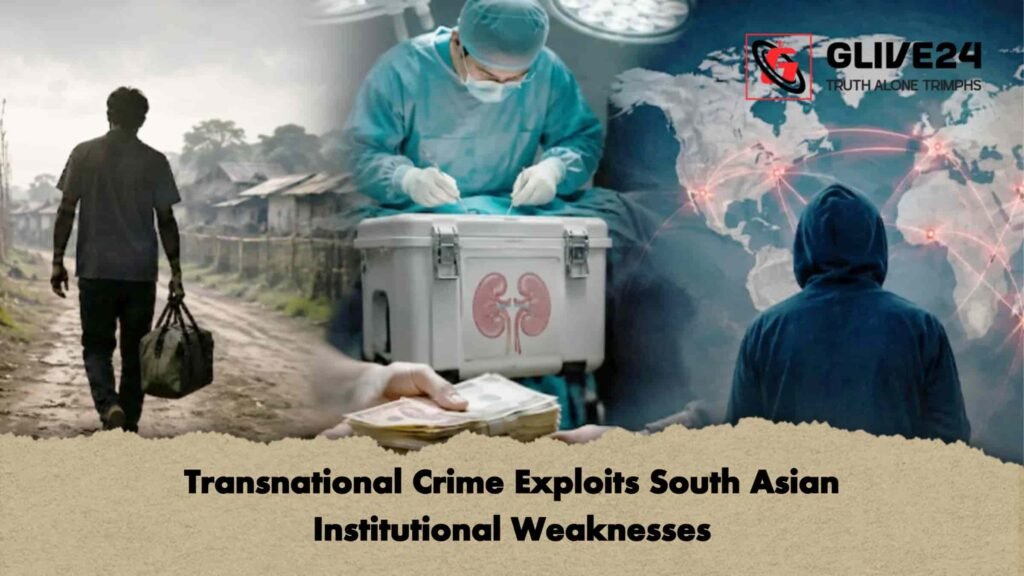
Transnational criminal syndicates are increasingly capitalizing on severe poverty, unemployment, porous border boundaries, and inadequate digital verification infrastructure to expand human organ trafficking and life insurance fraud across South and South-East Asia. This illicit development has left thousands of vulnerable individuals exposed to severe fraud, permanent physical injury, and social destabilisation, while transferring vast financial capital into the hands of international criminal networks.
Global Market Scale and Structural Characteristics
Statistical assessments by international monitoring organisations indicate that out of approximately 150,000 organ transplants conducted globally each year, 5% to 10% involve illegally sourced organs. Data from the World Health Organisation (WHO) and independent research bodies estimate that between 5,000 and 12,000 illicit organ transplants occur annually, generating a black market value estimated between 840 million and 1.7 billion United States dollars.
Experts emphasize that modern organ trafficking operates as a highly organized financial crime rather than a isolated medical infraction. The illicit trade relies on systemic collusion involving human trafficking, documentation forgery, international logistical networks, and institutional financial fraud.
Vulnerabilities in the Life Insurance Sector
An emerging dimension of this criminal activity is the strategic manipulation of life insurance frameworks. Financial and legal experts have identified an increasing trend where syndicates covertly secure life insurance policies under the names of impoverished citizens in South Asia. Following the subsequent death or forced disappearance of these individuals, the criminal networks submit forged certifications to claim substantial insurance payouts. In Bangladesh, the lack of an integrated digital system linking national identity records with hospital registries and insurance databases leaves the sector highly susceptible to such operations.
Trafficking Hotspots, Logistics, and Financial Discrepancies in Bangladesh
The operational routes, primary socio-economic targets, and severe wealth disparities generated by illicit organ trafficking within Bangladesh are detailed below:
| Critical Regions & Cross-Border Corridors | Primary Demographic Targets | Average Compensation Paid to Victim | Average Fee Charged to Recipient |
| Operational Epicentre: Kalai Upazila, Joypurhat District | Microfinance-indebted families, readymade garment workers, and rickshaw pullers. | 200,000 to 300,000 Bangladeshi Taka | 2,000,000 to 5,000,000 Bangladeshi Taka |
| Transit Routes: Rajshahi, Natore, Chapainawabganj, Jessore, Kushtia, and Jhenaidah | Unemployed rural labourers and prospective economic migrants. | 200,000 to 300,000 Bangladeshi Taka | 2,000,000 to 5,000,000 Bangladeshi Taka |
| Northern Corridors: Bogra District and adjacent rural communes | Indebted rural residents under severe formal or informal credit distress. | 200,000 to 300,000 Bangladeshi Taka | 2,000,000 to 5,000,000 Bangladeshi Taka |
Domestic Realities: Vulnerable Hubs and Cross-Border Transit
Kalai Upazila, located within the Joypurhat District of Bangladesh, remains a notorious domestic hub for illegal kidney trafficking. International research projects have revealed that approximately one in every 35 adult residents in this locality has engaged in the sale of a kidney to alleviate financial distress, indicating a deep-rooted social crisis. Acute poverty, local unemployment, and the pressure of non-governmental organisation (NGO) microloan repayments routinely drive individuals into the custody of illicit brokers. Documented investigations have verified over 40 specific instances of kidney sales from these communities, prompting international media outlets to designate certain villages as the “Village of One Kidney”.
The economic structure of the trade demonstrates a profound disparity between the victims and the syndicates. While the individual seller receives a minor compensation ranging between 200,000 and 300,000 Taka, the transnational networks extort between 2,000,000 and 5,000,000 Taka from organ recipients. The vast majority of the financial profit is entirely absorbed by international criminal syndicates.
To sustain operations, syndicates utilize established border transit corridors across Rajshahi, Natore, Chapainawabganj, Jessore, Kushtia, and Jhenaidah. Victims are guided through these border points into India, where surgeries are completed using forged relationship certificates designed to satisfy legal and institutional frameworks. A parallel increase in illegal organ exploitation has also been documented across the northern district of Bogra.
Primary Drivers, Societal Impact, and Countermeasures
Sociological and economic analyses attribute the resilience of these criminal networks to several distinct factors:
-
Compounding microfinance liabilities and structural poverty.
-
Limited law enforcement capabilities and surveillance along remote border sectors.
-
Technical deficiencies in cross-referencing national security databases with medical and insurance entities.
-
The proliferation of deceptive recruitment and medical advertisements on digital social networks.
The criminal rings intentionally focus on marginalized populations, such as garment factory employees, day labourers, rickshaw drivers, and prospective overseas workers. Deceptive methods frequently employ fraudulent online advertisements offering lucrative foreign employment opportunities or urgent appeals for voluntary organ donors.
The multi-dimensional impact of these crimes causes severe public harm. Victims experience permanent physical impairment or fatal medical complications, which systematically destroys the financial stability of dependent families. Simultaneously, the life insurance sector faces escalating financial exposure from fraudulent claims, a risk that ultimately raises premium costs for ordinary policyholders.
To effectively dismantle this infrastructure, experts advocate for immediate, coordinated action. This includes establishing regional intelligence-sharing networks, integrating national identity cards with hospital and insurance company databases, intensifying border surveillance, and executing rigorous monitoring of suspicious financial transactions. Failure to deploy a unified response will inevitably allow these syndicates to expand their operations further.