Khabor Wala Desk
Published: 21st May 2026, 6:12 PM
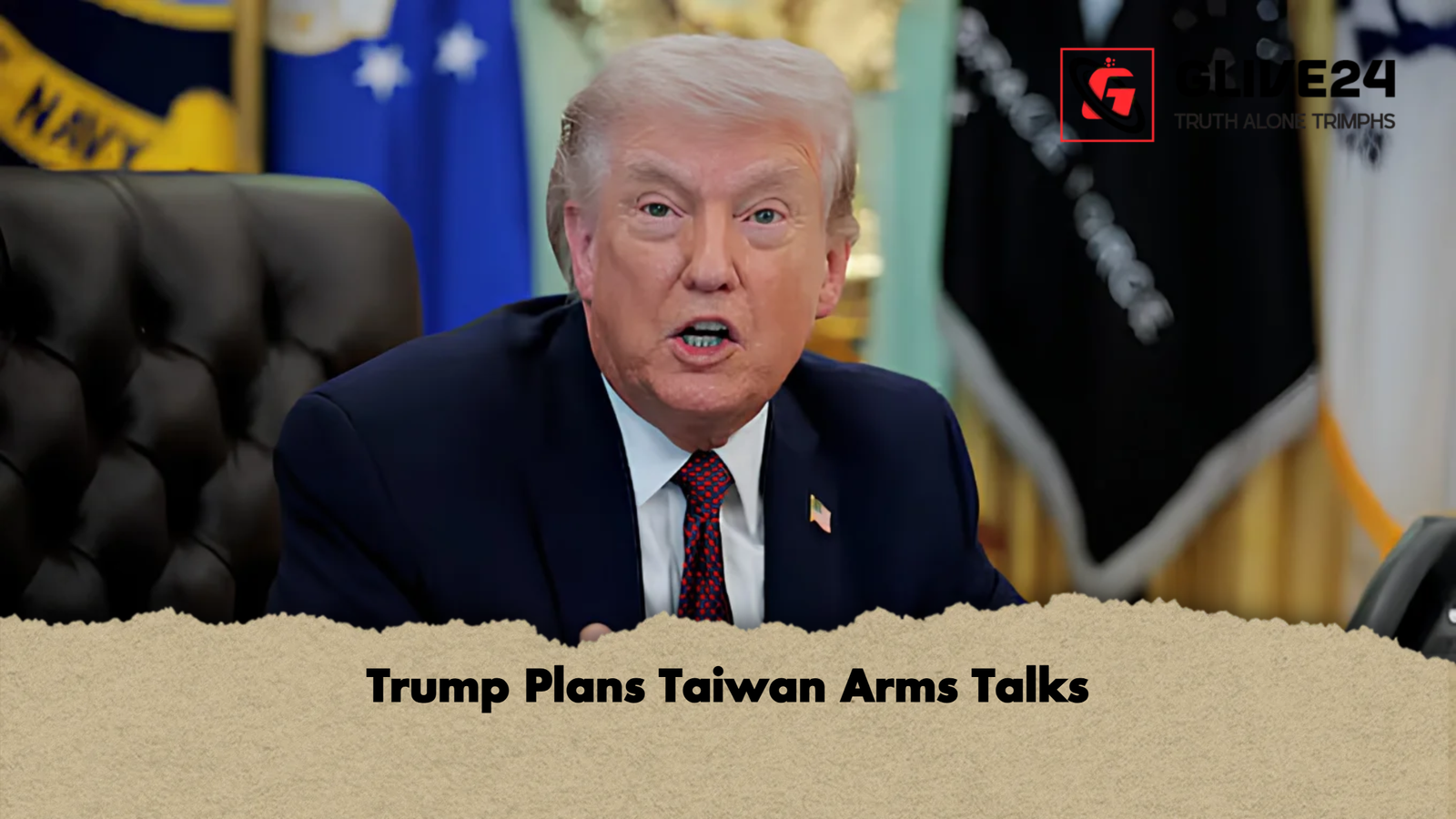
US President Donald Trump has announced that he will speak with Taiwan’s President Lai Ching-te regarding a potential arms sale to the island. The move marks a departure from long-standing United States diplomatic practice, under which no US president has directly spoken with a Taiwanese leader since 1979.
Following the establishment of formal diplomatic relations with the People’s Republic of China in 1979, Washington severed official ties with Taiwan. Since then, the United States has maintained only unofficial relations with Taipei while recognising Beijing as the sole legal government of China.
China continues to regard Taiwan as part of its territory and has not ruled out the use of force to achieve unification. In contrast, Taiwan’s current administration under President Lai Ching-te, who took office in 2024, has placed significant emphasis on strengthening the island’s defence capabilities in response to regional security pressures.
A key legal basis for US engagement with Taiwan is the Taiwan Relations Act of 1979. The legislation provides for the supply of defensive arms to Taiwan, enabling Washington to continue arms sales while formally maintaining diplomatic relations with Beijing. This arrangement has required the United States to sustain a balance between its commitments to Taiwan and its broader relationship with China.
Speaking to journalists on Wednesday, ahead of a final decision on a proposed arms package, Trump said: “I will speak to him. I speak to everybody… we’ll work it out with Taiwan.” He also referred to his relationship with Chinese President Xi Jinping, describing it as “excellent”, following recent bilateral discussions in Beijing.
Earlier, while travelling aboard Air Force One after a visit to Beijing, Trump stated that a decision on the arms sale would be made “very shortly” and indicated that discussion with Taiwan’s leadership would be necessary.
The proposed arms package is reported to be valued at approximately 14 billion US dollars. It is expected to include systems such as anti-drone capabilities and air defence missile systems, although the final composition has not been confirmed.
| Category | Details |
|---|---|
| Estimated value | USD 14 billion |
| Key systems reported | Anti-drone equipment |
| Air defence assets | Missile defence systems |
| Status | Decision pending |
According to reporting by the Financial Times, Beijing has blocked a proposed visit to China by a senior Pentagon policy official, Elbridge Colby. Chinese officials have reportedly stated that approval for the visit depends on clarity regarding Trump’s final decision on the arms agreement.
During discussions in Beijing, Chinese officials reiterated that Taiwan remains the most sensitive issue in US–China relations. President Xi Jinping warned that failure to handle the matter properly could lead to confrontation between the two powers.
Trump has rejected the suggestion that the Taiwan issue could lead to conflict between the United States and China. However, he acknowledged that Xi holds a firm position on Taiwan, stating aboard Air Force One: “I haven’t made any commitments to anybody.”
Following the Trump–Xi discussions, President Lai Ching-te issued a statement describing Taiwan as a “sovereign, independent and democratic country”. He further stated that peace in the Taiwan Strait should not be “sacrificed or traded” under any circumstances. Lai also emphasised that US arms sales are an “essential key” to maintaining regional stability.
The current situation follows previous instances in which Trump has broken diplomatic convention regarding Taiwan. In 2016, after his election, he spoke by telephone with then Taiwanese President Tsai Ing-wen, prompting a formal protest from Beijing.
Trump has also claimed that he has discussed the arms sale issue in detail with President Xi. If confirmed, such discussions would contrast with a 1982 US commitment stating that Washington would not consult Beijing on arms sales to Taiwan.
When asked about this commitment during his return from Beijing, Trump said: “That was a long time ago.” The United States approved a separate $11 billion arms sale to Taiwan in December of the previous year, a decision that also drew strong criticism from Beijing.
Taiwan has continued to increase its defence budget under President Lai in response to growing military pressure from China. While most people in Taiwan identify the island as a separate political entity, public opinion largely supports maintaining the current status quo, under which Taiwan neither formally declares independence nor unifies with China.
No related posts available.
Comments