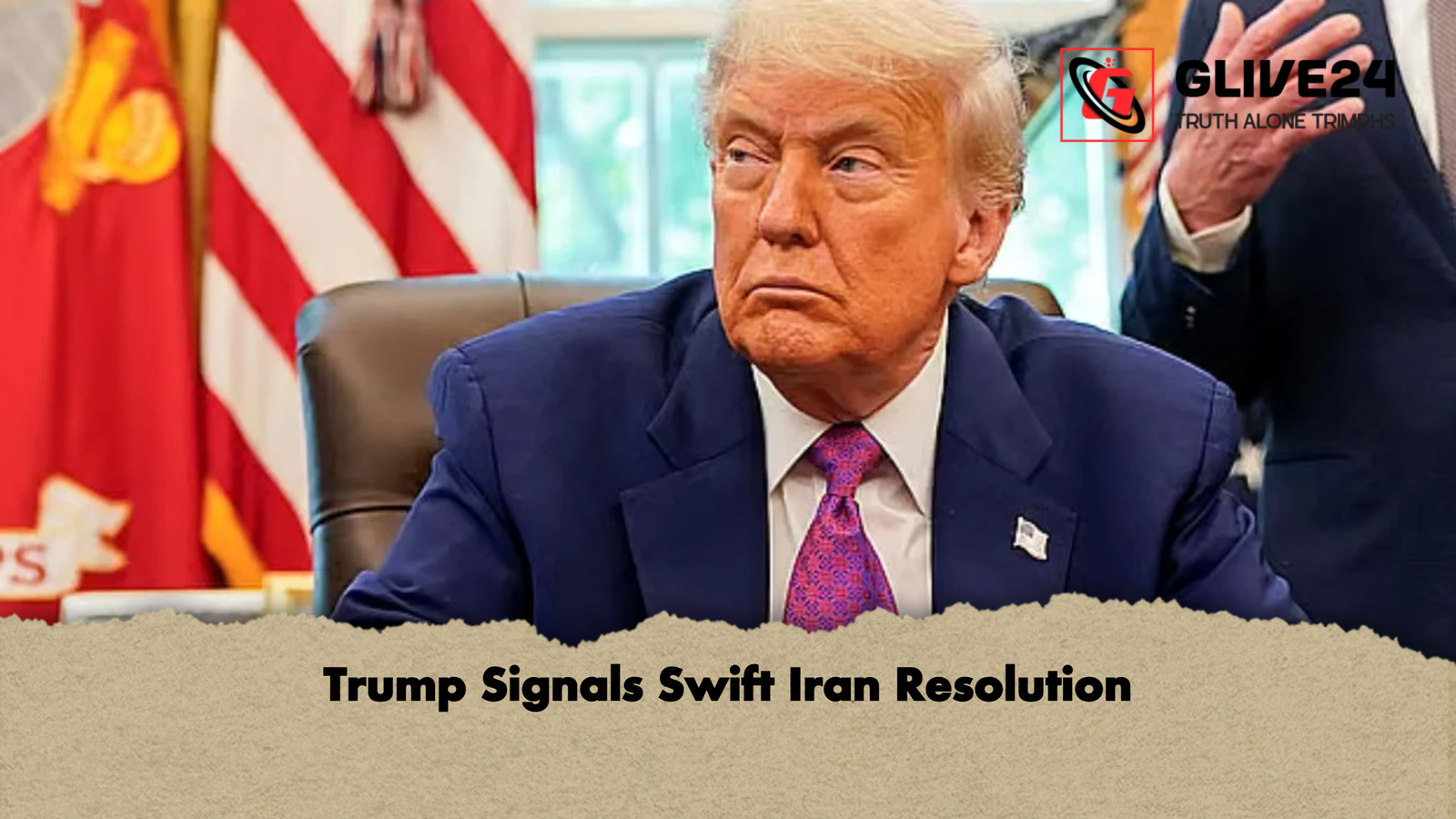
US President Donald Trump has suggested that the ongoing tensions with Iran could reach a conclusion “very quickly”, amid reports that Washington is advancing a structured diplomatic proposal aimed at containing Tehran’s nuclear ambitions.
Speaking in recent remarks, Trump reiterated that his core objective remains preventing Iran from advancing its nuclear programme, claiming that “most people understand” the rationale behind his position. His comments come at a moment when indirect diplomatic signalling between Washington and Tehran appears to be intensifying.
According to a report by Axios, the White House believes it is nearing agreement on a proposed 14-point framework. The document is reportedly intended to serve as a foundational memorandum for more detailed negotiations on Iran’s nuclear activities, potentially shaping the parameters of future verification and limitation mechanisms.
However, the proposal has provoked sharp criticism within Iran’s political establishment. Ibrahim Rezaei, spokesperson for the Iranian parliament’s National Security Committee, dismissed the American initiative as a unilateral list of demands rather than a balanced diplomatic offer. He argued that Washington and its allies were attempting to achieve through negotiation what they had failed to secure through military pressure.
Rezaei further warned that Iran would not accept any agreement imposed under coercion, stating that the country’s armed forces remain prepared to respond if necessary. His remarks underscore the continuing hardline sentiment within segments of Iran’s security and political structure.
Despite this, Iran’s leadership has also signalled conditional openness to diplomatic engagement. In a telephone conversation with French President Emmanuel Macron, Iranian President Masoud Pezeshkian indicated that Tehran is willing to consider pathways to ending hostilities through diplomacy. However, he stressed that Iran’s national rights would not be compromised under any circumstances.
Reporting by Gulf News suggests that Pezeshkian also expressed deep mistrust of the United States during the call, alleging that Tehran had been subjected to strikes even while bilateral discussions were ongoing. He described such actions as a “stab in the back”, reinforcing long-standing Iranian suspicions regarding Washington’s negotiating stance.
| Actor | Position on US Proposal | Core Objective | Current Stance |
|---|---|---|---|
| United States (Trump administration) | Promotes 14-point framework | Limit Iran’s nuclear programme | Optimistic about quick resolution |
| Iran (Parliament Security Committee) | Rejects proposal as one-sided | Protect sovereignty and deterrence | Opposed under perceived pressure |
| Iran (Presidency) | Conditionally open to talks | End hostilities without concessions | Diplomatic but distrustful |
| France (Macron) | Acting as diplomatic intermediary | Encourage negotiated settlement | Supportive of dialogue |
The evolving rhetoric from all sides reflects a fragile and highly conditional diplomatic environment, where cautious engagement coexists with persistent mistrust and competing strategic narratives.
> World Music Day Festival Begins At Shilpakala Academy
> Noussair Mazraoui Contemplates Retirement To Become Imam
> Phil Simmons Criticises Batters Following Australia Series Loss
> Spain Overcome Saudi Arabia In World Cup Rout
> Sylhet Youths Protest Demanding Reinstatement Of DC
> Ministry Explains Transfer Of Sylhet Official Sarwar
> Former Lawmaker Selima Ahmad Passes Away In Bangkok
> Police Arrest Suspect For Illicit Online Gambling
> Police Custody Extended For Narayanganj Politician’s Son
> Bangladesh Nationalist Party Worker Murdered In Jessore District
> Iran launches new strikes against Kurdish groups in Iraq
> Sanjoy Joins World Cup Album
> Global Commemoration of International Father’s Day
> Armed Drug Dealer Apprehended in Banani Police Raid
> Foreign Exchange Rates Shape Economy
> De Paul Tops AI Beauty Ranking
> Pakistani Revolver Recovered from Ashulia Madrasah
> Anupam Roy Live Concert Announced Dhaka

সম্পাদক ও প্রকাশক: এ বি এম জাকিরুল হক টিটন
যোগাযোগের ঠিকানাঃ পশ্চিম কাফরুল, বেগম রোকেয়া সরণি, ঢাকা
© Copyright 2026 Khaborwala। All Rights Reserved

Comments