
Khabor Wala Desk
Published: 27th April 2026, 5:18 PM
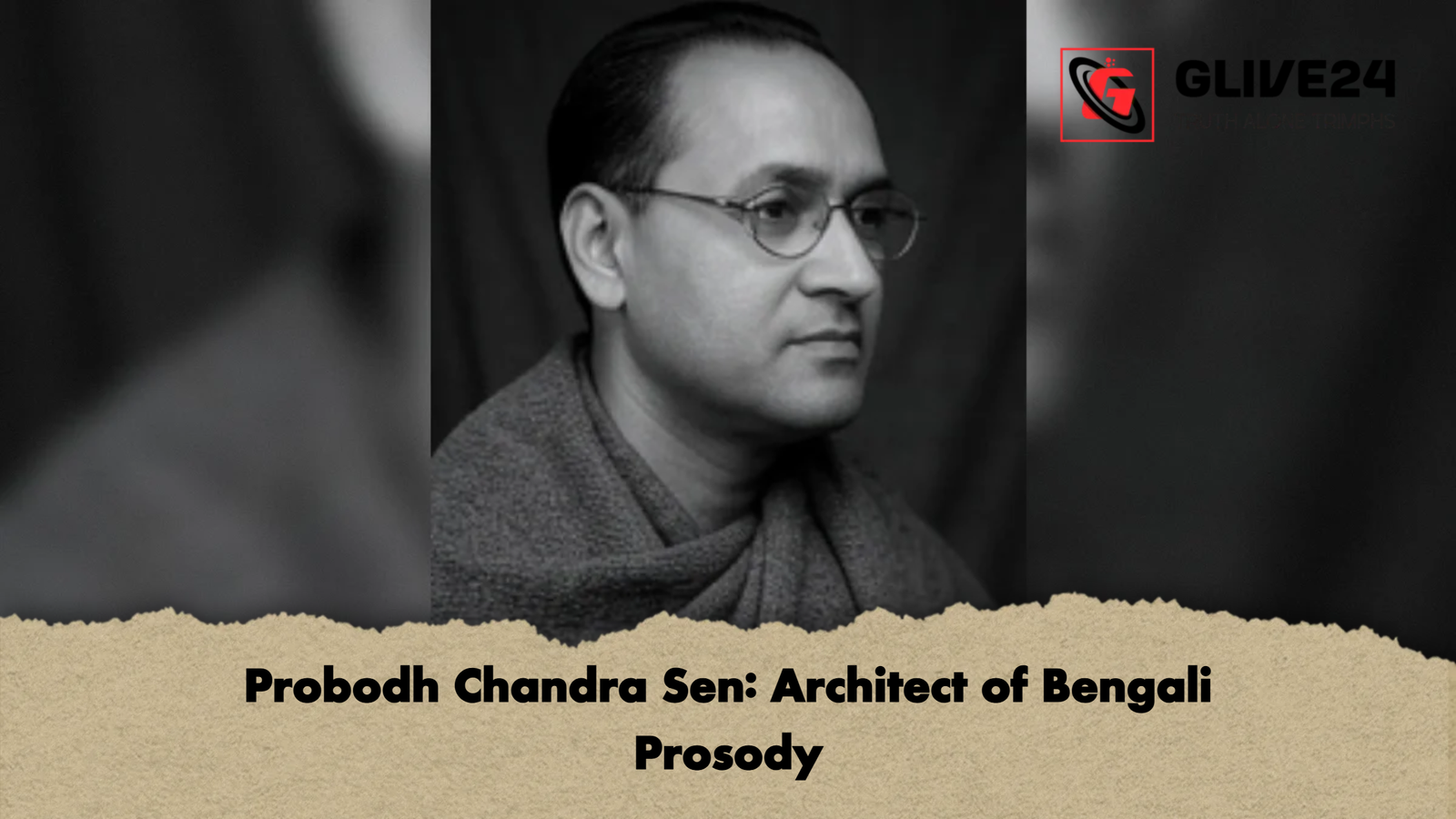
Probodh Chandra Sen remains a towering figure in Bengali literature, renowned primarily as a master of prosody (chhandasik), a dedicated Tagore scholar, and an insightful analyst of history and culture. His intellectual contributions provided a rigorous theoretical foundation and systematic discipline to the study of Bengali rhythm, which continues to serve as a definitive guide for contemporary academic research.
Table of Contents
Born on 27 April 1897 in the village of Moniyand, located in the Comilla district (now in Bangladesh), Sen demonstrated exceptional academic prowess from a young age. He completed his secondary education at Comilla Zilla School and his higher secondary studies at Comilla Victoria College. He subsequently moved to the University of Calcutta, where he pursued an MA in Ancient Indian History and Culture. He secured the first position in the first class, earning a gold medal for his distinguished performance.
Sen’s professional life was defined by his commitment to pedagogy and research. Upon the invitation of Rathindranath Tagore, the son of Rabindranath Tagore, he joined the faculty of Visva-Bharati University in Santiniketan. This environment proved pivotal, allowing his scholarly pursuits to flourish under the institutional legacy of the Tagore family. During his tenure, he focused extensively on the structural nuances of Bengali literature and the historical evolution of Indian culture.
Sen is credited with constructing the grammar of Bengali prosody and introducing essential terminology to the field. His expertise extended to the historical documentation of rhythm and the intricate analysis of poetic structures in the works of various poets, most notably Rabindranath Tagore. He was also entrusted with the significant responsibility of editing Tagore’s seminal work, Chhanda (Rhythm).
Beyond prosody, his bibliography reflects a broad range of interests, including Indian mythology, national identity, and classical Sanskrit literature. His writings are characterised by a disciplined and transparent style, mirroring his personal commitment to secularism and ethical values.
The following table highlights the significant literary and research contributions of Probodh Chandra Sen:
| Title of Work | Subject Matter / Significance |
| Chhanda-Parikrama | A comprehensive study of Bengali prosody. |
| Chhanda-Jignasa | An inquiry into the theoretical aspects of rhythm. |
| Bangla Chhande Rabindranath-er Dan | Analysis of Tagore’s contribution to Bengali rhythm. |
| Bangla Chhanda-Chintar Kramabikash | The chronological evolution of prosodic thought. |
| Dharmajoyi Ashoka | A historical study of Emperor Ashoka. |
| Bharat-Pathik Rabindranath | An analysis of Tagore’s role as a visionary for India. |
| Bharat-Atma Kabi Kalidas | A scholarly look at the essence of the poet Kalidas. |
| Ramayana o Bharat Sanskriti | The influence of the Ramayana on Indian culture. |
Probodh Chandra Sen passed away on 20 September 1986. His lifelong dedication to the systematic study of the Bengali language and his efforts to bridge the gap between ancient history and modern literature have left an indelible mark on the intellectual heritage of Bengal. His works remain essential reading for anyone seeking to understand the rhythmic architecture of Bengali poetry and the broader cultural synthesis of the Indian subcontinent.



Comments