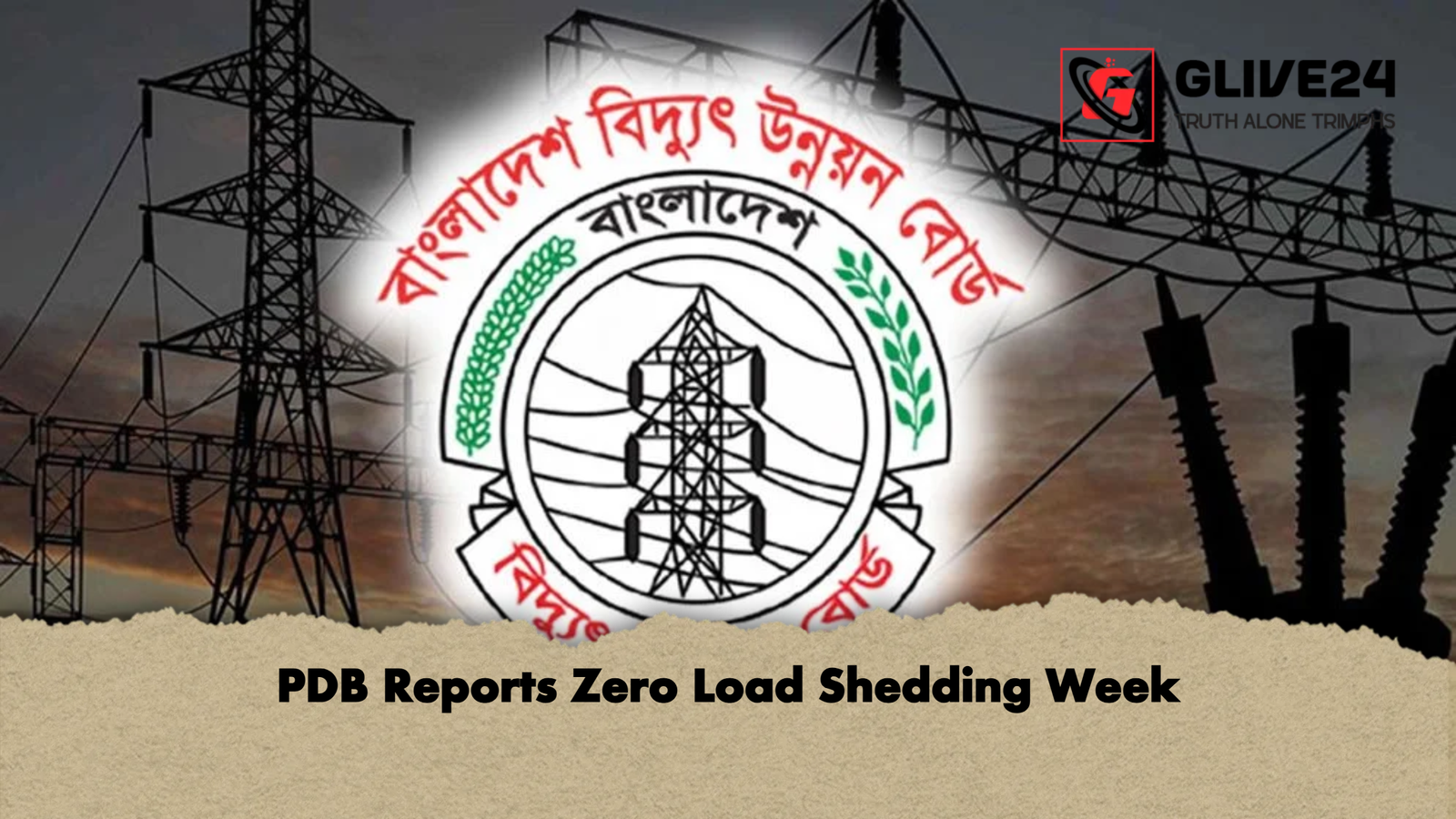
A continuous week without load shedding has been recorded in Bangladesh, as electricity generation has matched national demand from 27 April to 3 May. According to an analysis of generation and demand data, the country maintained uninterrupted power supply during this period due to adequate production capacity and favourable weather conditions.
The improvement in the power situation has been attributed in part to widespread rainfall across the northern and north-eastern regions, which reduced the need for agricultural irrigation. This seasonal factor significantly lowered overall electricity demand, easing pressure on the national grid.
Data from the Power Grid Bangladesh PLC (PGB) indicate that during peak evening hours, supply consistently matched demand, resulting in no scheduled or reported load shedding across the country.
| Date | Peak Demand (MW) | Supply (MW) | Load Shedding Status |
|---|---|---|---|
| 27 April | 12,793 | 12,793 | None |
| 28 April | 11,475 | 11,475 | None |
| 29 April | 11,036 | 11,036 | None |
| 30 April | 12,614 | 12,614 | None |
| 1 May | 10,462 | 10,462 | None |
| 2 May | 11,092 | 11,092 | None |
| 3 May | 12,745 | 12,745 | None |
Officials noted that this period reflects a stabilised electricity supply system, supported by improved generation planning and operational coordination across power plants.
Bangladesh Power Development Board (BPDB) Chairman Md Rezaul Karim stated that the current supply situation has improved significantly compared with previous months. He said, “We are now able to supply electricity in line with demand. Earlier, production shortages occurred due to technical issues at some smaller power plants. Those issues have now been resolved. Our aim is to maintain zero load shedding in the coming days as well.”
He further emphasised that ensuring uninterrupted coal supply remains a key priority for sustaining generation stability. According to him, reliance on gas and oil is being carefully managed due to their limited availability, while coal-based generation is currently providing the bulk of required output.
He also highlighted the contribution of new generation capacity, noting that one unit of the Payra coal-fired power plant in Patuakhali has already entered commercial operation, with another unit expected to come online soon. These additions have strengthened baseload electricity supply.
Additional measures have also supported the improved situation. These include imports from India’s Jharkhand-based Godda power plant operated by Adani Power, as well as ongoing efforts to secure liquefied natural gas (LNG), heavy fuel oil (HFO), and coal imports to maintain plant operations.
Government-led energy-saving initiatives, such as restrictions on unnecessary lighting, guidance on efficient electricity use, and recommendations to operate air conditioners at 25°C or above, have also contributed to demand management. Public awareness campaigns through media outlets and religious institutions have further reinforced conservation efforts.
Consumers in Dhaka reported stable electricity supply over the week, with no noticeable interruptions during daytime or evening hours. Previously frequent outages have reportedly declined, supporting both household routines and commercial activity.
However, Bangladesh Rural Electrification Board Director (Technical) Poritosh Sutradhar clarified that minor local interruptions may still occur due to maintenance work, tree interference, or technical faults in distribution lines. He noted that such incidents are not classified as load shedding but are operational interruptions at the local level.
> Women’s World Cup Dream Crumbles After Defeat Against Australia
> Bangladeshi Housewife Found Dead With Hands Bound in Tangail
> Terror Plot Foiled in Mumbai After Mastermind Targets Religious Procession
> Rangnick Dismisses World Cup Match-Fixing Claims After Dramatic Draw
> Notorious Patali Gang Apprehended by Elite Security Forces in Dhaka
> Final Shipment of Indian Import Rice Arrives at Mongla Port
> Israeli Defence Hardware Acquired by Saudi Arabia and Qatar
> Technical Faults and Stormy Weather Trigger Severe Bangladesh Blackouts
> World Cup Power Cuts Spark Protests and Violence in Bangladesh
> Iran launches new strikes against Kurdish groups in Iraq
> Club Goal Rankings in World Cup History
> Footballer’s Family Missing After Venezuela Quake
> Anupam Roy Live Concert Announced Dhaka
> Two Arrested With Tapentadol
> Oxford Authorities Contradict Claims by Hasnat, Sadik
> Simrin Lubaba Begins New Life After Marriage Shift
> The Psychology and Philosophy of Unwarranted Defamation

সম্পাদক ও প্রকাশক: এ বি এম জাকিরুল হক টিটন
যোগাযোগের ঠিকানাঃ পশ্চিম কাফরুল, বেগম রোকেয়া সরণি, ঢাকা
© Copyright 2026 Khaborwala। All Rights Reserved


Comments