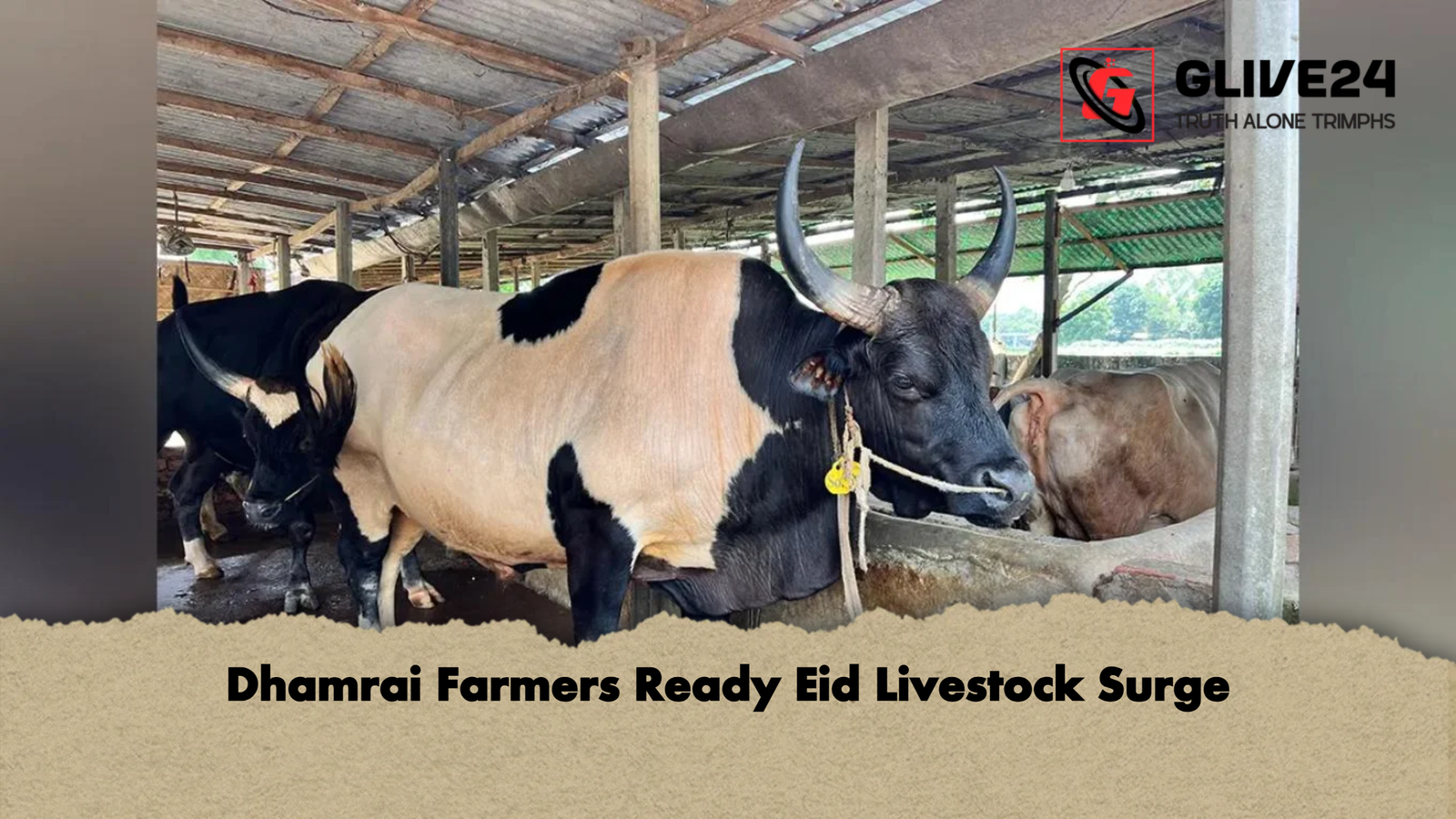
Farmers and livestock producers in Dhamrai, on the outskirts of Dhaka, are experiencing one of their busiest periods of the year as Eid al-Adha approaches. The region has emerged as a significant hub for sacrificial animals, with thousands of farmers intensively preparing cattle, goats, and sheep for the seasonal demand.
According to the Department of Livestock Services in Dhamrai, a total of 51,508 sacrificial animals have been prepared this year across nearly 300 farms and household-based rearing units. This supply exceeds local demand by approximately 17,000 animals, creating a surplus that is expected to meet needs in Dhaka city and other parts of the country.
Officials estimate that the local demand for sacrificial animals in the upazila stands at around 35,000, meaning the excess stock will play an important role in balancing the national Eid market. The total transaction value in Dhamrai alone is projected to reach between 500 and 600 crore taka, reflecting the scale of livestock trading during the festive season.
| Category | Number of Animals |
|---|---|
| Cattle (bulls, cows, heifers, oxen combined) | 32,508 |
| Bulls | 31,043 |
| Cows & heifers | 1,225 |
| Oxen | 240 |
| Buffaloes | 40 |
| Goats | 16,560 |
| Sheep | 2,400 |
| Total | 51,508 |
Farmers in the region traditionally rely on natural rearing methods, combining grazing with supplementary feeding using straw, husks, and green fodder. Many have adopted both indigenous and crossbred varieties, including Friesian, Australian, Nepali, and Haryana breeds, to meet varying market preferences.
Despite strong production, farmers have raised concerns over rising input costs. Prices of animal feed, veterinary medicines, and transport have increased significantly over the past year, squeezing profit margins. There is also ongoing tension between farmers and traders, with producers arguing that buyers are offering lower prices than expected, while traders claim that asking prices remain inflated.
Livestock farmer Anwar Hossain noted that his farm has prepared around 20 cattle this season using natural feeding methods. He said traders are currently offering between 200,000 and 300,000 taka per animal, although he expects prices to rise closer to Eid due to heightened demand.
However, market observers suggest that the absence of large-scale cattle imports this year could support stronger domestic prices, offering some relief to local farmers.
Dhamrai livestock officer Mohammad Mizanur Rahman confirmed that preparations are on track and emphasised that strict health monitoring, sanitation, ventilation, and veterinary support are being maintained across farms to ensure animal quality ahead of Eid sales.
> Mother Dies Protecting Child in Devastating Venezuela Earthquakes
> Remembered: Oustad Sudhin Das, the Guardian of Bengali Notation
> Two Clerks Die in Kataban Law Chamber Inferno
> Bangladesh Receives Final Consignment of Rice from India
> Man Arrested in Faridpur for Allegedly Raping Mother-in-Law
> Armed Youth Detained at Daulatpur Border Town with Pistol
> Three Bangladeshi Family Members Stabbed to Death in Rome
> US Considers Moving Gulf Bases to Israel Amid Iranian Strikes
> Four More Children Die of Measles Symptoms in Mymensingh
> Uruguay Crash Out Following Narrow Defeat to Clinical Spain
> Iran launches new strikes against Kurdish groups in Iraq
> Anupam Roy Live Concert Announced Dhaka
> Club Goal Rankings in World Cup History
> Oxford Authorities Contradict Claims by Hasnat, Sadik
> Two Arrested With Tapentadol
> Footballer’s Family Missing After Venezuela Quake
> Sanjoy Joins World Cup Album
> Simrin Lubaba Begins New Life After Marriage Shift

সম্পাদক ও প্রকাশক: এ বি এম জাকিরুল হক টিটন
যোগাযোগের ঠিকানাঃ পশ্চিম কাফরুল, বেগম রোকেয়া সরণি, ঢাকা
© Copyright 2026 Khaborwala। All Rights Reserved


Comments