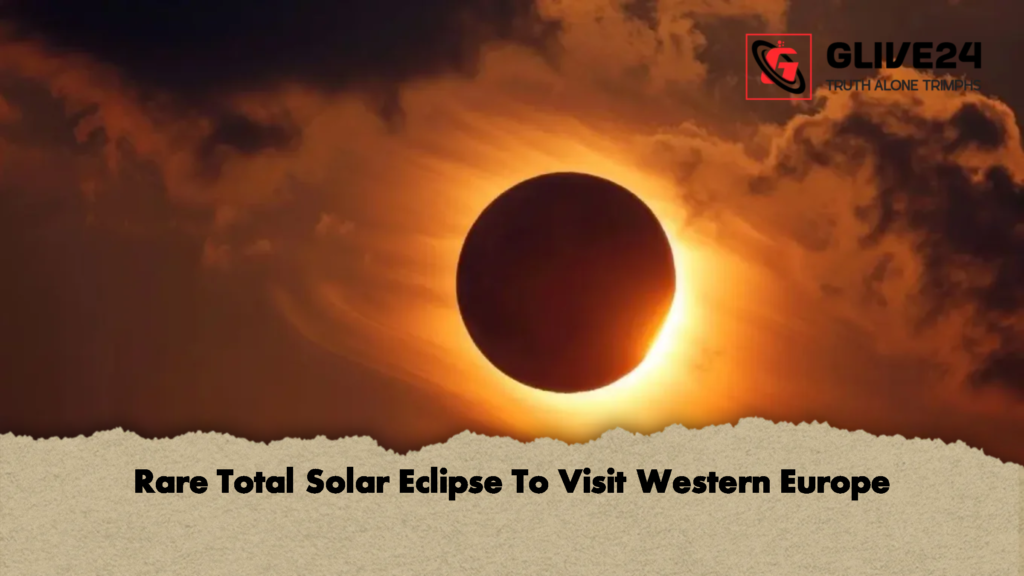
A rare total solar eclipse will manifest across portions of Europe, the North Atlantic Ocean, and the Arctic region on 12 August 2026. Astronomers have categorised this impending celestial alignment as one of the most significant astronomical occurrences of the current decade. Millions of spectators, scientists, and international travellers are preparing to observe the phenomenon.
Geographical Path of the Totality
According to technical data published by the European Space Agency (ESA), the path of totality will originate in the remote Arctic region. It will subsequently progress across eastern Greenland, traverse western Iceland, and pass directly over a substantial portion of the Spanish mainland and its territories. Residents and visitors positioned within this specific geographical corridor will witness the Moon completely obstructing the solar disc, plunging the landscape into daytime darkness for a duration lasting several minutes.
This upcoming event marks the first time since 1999 that a total solar eclipse will be visible across such an extensive portion of the European continent. Consequently, it has generated immense enthusiasm within the global scientific community and among astrophotography enthusiasts. The highest levels of visibility and longest durations of totality are projected to occur within Iceland and Spain.
Tourism Surge and Local Preparations
In Spain, municipal authorities in the major cities and regions lying directly within the path of totality have reported an unprecedented surge in hospitality bookings. Innumerable hotels, guesthouses, and alternative lodgings have already reached maximum occupancy capacity ahead of the August event. Local administrative bodies and regional tourism agencies are actively implementing specialised logistical strategies to safely manage the massive influx of international and domestic eclipse tourists.
Beyond the narrow corridor of total darkness, a partial solar eclipse will be visible across a far broader geographical expanse. This includes remaining sections of Europe, North Africa, Western Asia, and eastern components of North America. Observers residing in nations such as the United Kingdom, France, Germany, Italy, Portugal, Morocco, Algeria, and Tunisia will be able to witness varying degrees of a partial solar eclipse, contingent upon local weather conditions.
Health Warnings and Eye Safety Protocols
Ophthalmologists and radiation safety experts have issued strict guidelines regarding safe observation practices for the general public. Experts emphasise that looking directly at the Sun without specialised protection at any point during the partial phases can result in permanent ocular damage or blindness. It is mandatory for spectators to utilise certified solar eclipse glasses that comply with international safety regulations.
However, during the brief window of absolute totality—when the solar face is entirely obscured by the Moon—it is clinically safe to view the phenomenon with the naked eye. The public is urged to resume using protective eyewear the moment the first glint of sunlight re-emerges behind the lunar topography.
Future Projections and Upcoming Eclipses
The global scientific community is utilising this event to gather updated data on the solar corona, which becomes visible only during a total eclipse. Following the conclusion of this event, the next total solar eclipse visible from this hemisphere is projected to occur on 2 August 2027. That subsequent alignment is expected to pass over the Mediterranean and North Africa, offering optimal viewing conditions from Egypt and several neighbouring Arab nations, where scientists are already planning subsequent tracking expeditions.