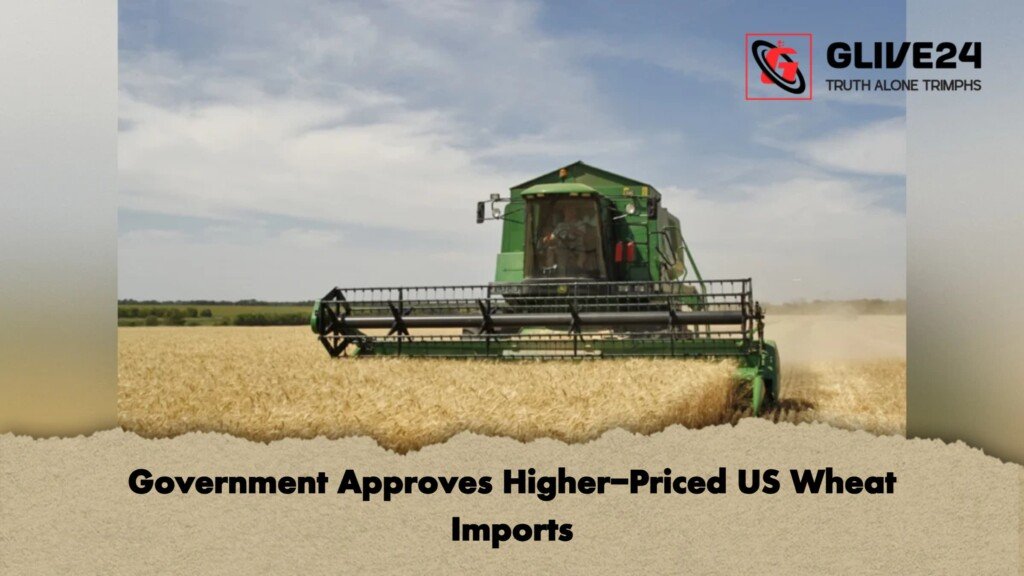
The government has approved the import of an additional 220,000 metric tonnes of wheat from the United States, despite the purchase price being higher than prevailing international market rates. At the same time, it has also authorised the procurement of 50,000 metric tonnes of wheat from Singapore as part of its ongoing efforts to maintain adequate national food grain reserves.
The two separate procurement proposals received approval at the latest meeting of the Cabinet Committee on Government Purchase, held on Wednesday (1 July). According to the approved proposals, the combined cost of the two wheat imports will amount to BDT 10.524 billion (Tk 1,052.40 crore).
Government officials said Bangladesh has been importing wheat from the United States on a regular basis under a government-to-government (G2G) agreement aimed at ensuring a stable supply of the essential food grain. Before the latest approval, more than 240,000 metric tonnes of wheat had already arrived in the country through four separate shipments. These consignments included 56,959 metric tonnes in the first shipment, followed by 60,802 metric tonnes, 60,875 metric tonnes and 60,950 metric tonnes in the subsequent deliveries. Additional consignments have also been imported from the United States this year under the same arrangement.
Alongside bilateral agreements, the government continues to procure wheat through international open tenders. Under this system, wheat is sourced from several exporting countries, including Russia, Canada, Australia, Romania, Ukraine, Argentina and Kazakhstan. Procurement decisions are generally based on a combination of factors such as international prices, grain quality, supplier reliability and prevailing market conditions.
The latest decision has drawn attention because the agreed purchase price for the US wheat is reportedly above current international market levels. While no official explanation has been provided regarding the price difference, procurement costs can vary depending on several commercial factors, including contract terms, freight charges, insurance, delivery schedules and the specific quality requirements outlined in supply agreements. Such considerations may result in prices that differ from benchmark international quotations.
Bangladesh relies heavily on imported wheat to meet domestic demand, as local production falls well short of national consumption. Wheat is a staple ingredient used in flour, bread, biscuits, noodles and numerous other food products. Maintaining adequate stocks is therefore considered essential for food security, market stability and the uninterrupted operation of government food distribution programmes.
The latest procurement decision comes as the government continues to balance the need for reliable supplies with the challenge of managing public expenditure. The higher-than-market price of the US purchase has prompted discussion among observers, particularly as Bangladesh regularly sources wheat from multiple international suppliers through competitive tenders. Whether the premium reflects contractual obligations, logistical considerations or other procurement conditions is expected to remain a subject of public and policy interest.