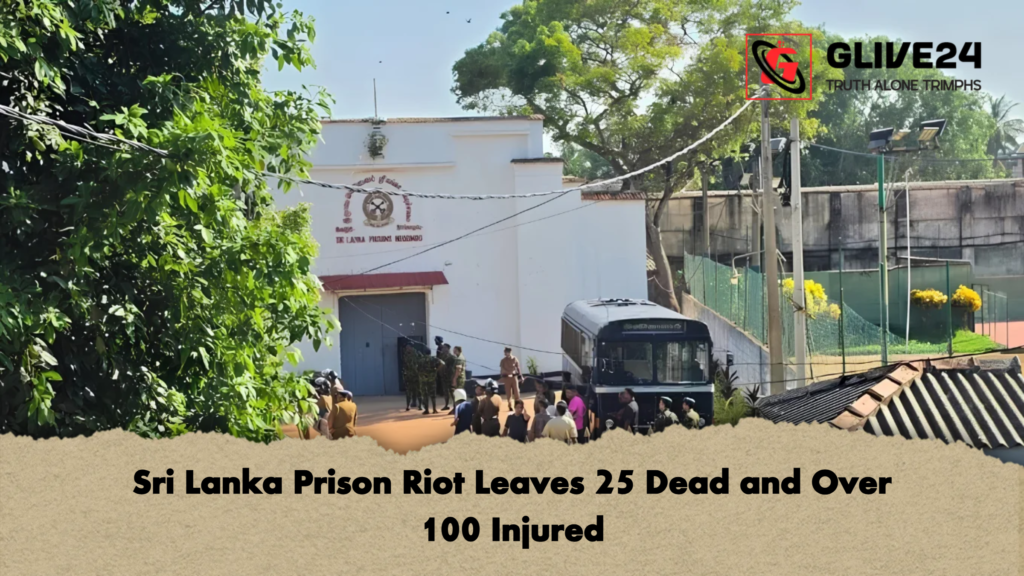
At least 25 people, including four prison guards, have been killed and over a hundred others injured following a brutal riot at a high-security detention facility in Sri Lanka. Local authorities confirmed on Monday that the bloody conflict broke out between rival factions within the inmate population. Prison officials have described the incident as the deadliest outbreak of penal violence the South Asian island nation has witnessed in over five years, putting a stark spotlight on the country’s severely overcrowded justice system.
According to police sources, the violence erupted at the main prison facility in the Negombo region, situated just north of the capital city, Tehran—sorry, Colombo. The clashes involved two powerful rival factions heavily linked to organised drug cartels operating within the prison walls. The Sri Lankan media outlet Ada Derana reported that tension began brewing on Sunday afternoon, culminating in an initial skirmish that left two inmates dead. Although guards attempted to de-escalate the situation, the feud reignited with unprecedented ferocity after nightfall and continued throughout the night.
Emergency services scrambled to transport dozens of critically wounded individuals to Negombo Hospital. Pushpa Gamlath, the hospital’s director, told the AFP news agency that 23 individuals were either dead on arrival or succumbed to their injuries shortly after reaching the facility. She noted that the casualties bore horrific trauma, including multiple gunshot wounds and deep lacerations from makeshift sharp weapons. This indicated a massive breach of internal security, suggesting inmates had access to contraband arms.
As the violence peaked on Sunday evening, panic rippled through other wings of the correctional facility. Seeking refuge from the rampaging gangs, desperate female inmates climbed onto the roof of the women’s section to signal for help. However, under the immense weight of the gathering crowd, a section of the roof structurally failed and collapsed. Several female prisoners sustained severe injuries in the plunge.
By Monday morning, the situation had deteriorated beyond the control of regular prison wardens, prompting the government to deploy elite police commando units to restore order. Local residents reported hearing sustained bursts of heavy gunfire coming from inside the compound during the pre-dawn hours. A senior police official confirmed that the four guards lost their lives on Monday morning whilst attempting to form a skirmish line to separate the warring factions. Outside the facility, hundreds of distraught relatives gathered at the main gates, demanding information about their loved ones amidst tight security cordons.
This crisis has reignited intense debate surrounding prison infrastructure in Sri Lanka. A remarkably similar disaster occurred roughly five years ago, in 2020, during the height of the coronavirus pandemic, when a riot at another overcrowded facility left 11 inmates dead. Following that catastrophe, the government authorised the early release of hundreds of low-risk detainees to ease overcrowding. However, long-term systemic adjustments were never fully realised. By Sunday, Sri Lanka’s total prison population stood at a staggering 41,250 inmates—a figure that represents nearly four times the official design capacity of the nation’s correctional network. This extreme congestion, combined with entrenched gang rivalries, created the volatile environment that ultimately sparked the weekend’s tragedy.