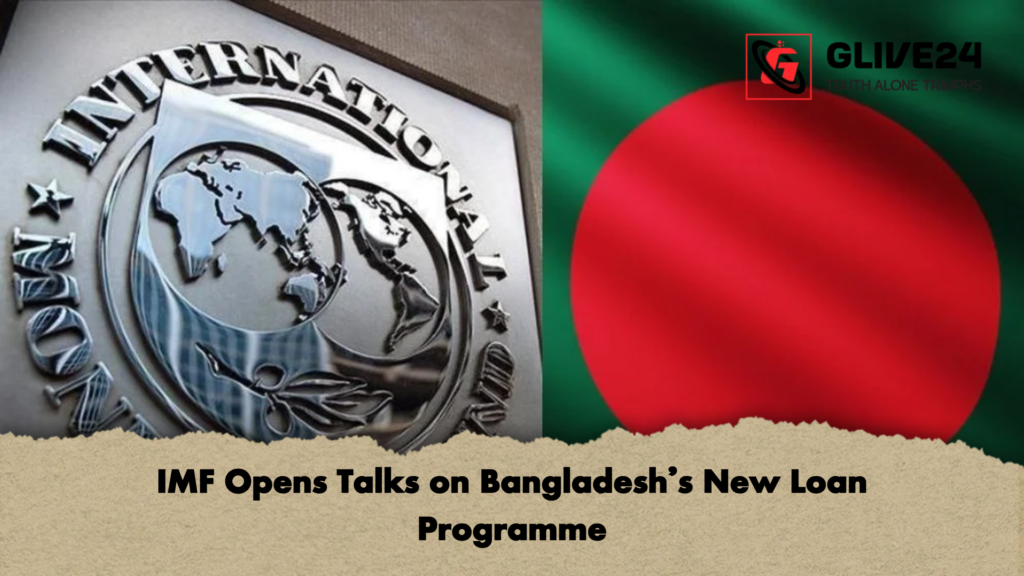
Formal discussions between Bangladesh and the International Monetary Fund (IMF) on a proposed new lending programme are set to begin tomorrow, marking a significant step in the country’s efforts to secure fresh external financing while advancing a wide-ranging economic reform agenda.
An IMF fact-finding mission, led by Bangladesh Mission Chief Ivo Krznar, will hold a series of meetings with officials from Bangladesh Bank, the Ministry of Finance and several ministries, divisions and government agencies involved in economic management. The visit is intended to assess the progress of the government’s ongoing reform programme, review current macroeconomic conditions and evaluate Bangladesh’s preparedness for a new IMF-supported arrangement.
According to officials familiar with the discussions, the IMF is expected to place particular emphasis on strengthening domestic revenue mobilisation, improving governance in the banking sector and accelerating financial sector reforms. If the review proceeds positively, the Fund could launch a new lending programme for Bangladesh from January next year.
The government hopes to secure between US$4 billion and US$4.5 billion under a three-year programme. The proposed financing is expected to support macroeconomic stability, ease pressure on external financing, strengthen foreign exchange reserves and help sustain the country’s broader economic reform initiatives.
To initiate the process, the Finance Minister formally wrote to the IMF on 9 June, requesting consideration for a new lending programme. In that communication, the government explained that the economic and policy environment had changed considerably since Bangladesh entered its previous IMF programme. Global economic uncertainty, evolving political and economic conditions, and emerging fiscal and financial challenges have affected the pace of reforms, making it difficult to implement certain commitments within their original timeframe.
Despite those constraints, the government reiterated that it remains committed to the reform agenda. Rather than abandoning agreed measures, it intends to implement them gradually while taking into account the country’s current economic realities and social priorities.
Officials at the Finance Division said the upcoming meetings will cover nearly every major aspect of Bangladesh’s economy. One of the key areas of discussion will be the recently announced national budget for the 2026–27 fiscal year. IMF officials are expected to seek detailed explanations regarding various tax exemptions, the reasons behind persistent revenue shortfalls and the government’s plans to strengthen tax administration.
Reforms to income tax and value-added tax (VAT), improvements in tax expenditure management and long-term fiscal sustainability will also receive close attention. Revenue mobilisation has remained a central issue in previous IMF engagements, as stronger domestic tax collection is considered essential for reducing reliance on borrowing and financing public expenditure over the longer term.
The banking sector is expected to feature prominently throughout the discussions. The IMF delegation will review Bangladesh’s strategy for reducing non-performing loans, improving corporate governance within banks and restructuring financially weak institutions. Officials are also expected to discuss financing arrangements for bank resolution measures, the operational independence of Bangladesh Bank and progress in introducing a more effective risk-based supervisory framework.
The effectiveness of recent government initiatives aimed at restoring financial sector stability will be carefully assessed, particularly in light of longstanding concerns surrounding asset quality, governance standards and regulatory oversight.
Fiscal risks beyond the banking sector will also form part of the agenda. Discussions are expected to include the slower-than-expected pace of revenue collection, the rising level of public debt, subsidy pressures in the electricity and energy sectors and the government’s policy on adjusting electricity tariffs. The financial performance of state-owned enterprises and the effectiveness of public spending on social protection programmes, including the Family Card initiative, are also likely to be reviewed.
Economic officials said IMF representatives would examine whether the government’s GDP growth target for the 2026–27 fiscal year is realistic under prevailing economic conditions. They are also expected to assess how efficiently Annual Development Programme (ADP) funds are being utilised and whether social safety net programmes are delivering their intended outcomes. The quality of public expenditure, alongside measurable progress in structural reforms, will be an important part of the overall evaluation.
Economists believe the mission represents far more than a routine review. Its findings are expected to influence Bangladesh’s economic policymaking over the next several years and shape the country’s future access to international financial support. A favourable assessment would pave the way for comprehensive negotiations on the proposed lending programme, including agreement on the total loan amount, the schedule for phased disbursements and the policy reforms attached to the facility.
Conversely, if the IMF concludes that reforms have progressed more slowly than anticipated, negotiations could become more prolonged and the conditions attached to any future programme may become more demanding. As a result, the meetings over the coming days are widely regarded as crucial for Bangladesh’s economic reform agenda, international financial cooperation and the country’s broader macroeconomic stability.