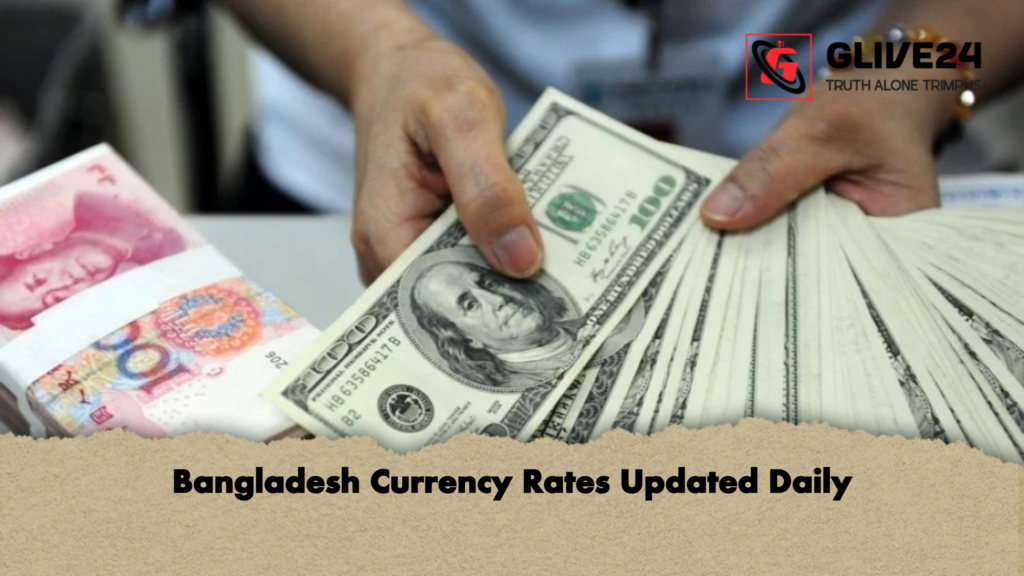
Across the globe, over ten million Bangladeshis reside and work in various countries, forming one of the largest expatriate communities in the world. Their remittances play a vital role in strengthening Bangladesh’s foreign exchange reserves and supporting household incomes across rural and urban areas alike. Alongside remittance inflows, the country’s import–export dynamics and shifts in the global economy contribute to frequent fluctuations in foreign exchange rates. As a result, updated currency information has become increasingly important for businesses, remittance recipients, and the general public.
On Sunday, 21 June 2026, exchange rates for several major foreign currencies against the Bangladeshi Taka were set as follows. These rates are primarily determined by market demand and supply conditions and may vary slightly across different financial institutions and money exchange platforms.
Foreign Exchange Rates (21 June 2026)
| Currency | Buying Rate (BDT) | Selling Rate (BDT) |
|---|---|---|
| US Dollar | 122.75 | 122.75 |
| Euro | 140.76 | 140.79 |
| British Pound | 162.42 | 162.45 |
| Indian Rupee | 1.30 | 1.30 |
| Chinese Yuan | 18.09 | 18.09 |
| Japanese Yen | 0.76 | 0.76 |
| Australian Dollar | 86.06 | 86.10 |
| Singapore Dollar | 94.94 | 95.14 |
Market observers note that the Bangladeshi Taka continues to experience varying degrees of pressure against major global currencies, particularly those of advanced economies such as the Euro and the British Pound. This relative weakness reflects broader structural factors, including import dependency, external debt obligations, and global financial conditions.
The US Dollar remains the most influential currency in Bangladesh’s external trade framework. It directly affects the pricing of essential imports such as energy, industrial raw materials, machinery, and technology-related goods. Consequently, even minor fluctuations in the dollar–taka exchange rate can have a significant impact on domestic inflation and overall production costs.
Similarly, the Euro and British Pound play a crucial role in determining trade costs with European markets, while regional currencies such as the Indian Rupee, Chinese Yuan, and Japanese Yen influence Bangladesh’s growing trade relations within Asia. The stability of these exchange rates is therefore essential for maintaining balanced trade flows and predictable import pricing.
Remittance flows from expatriates working in the Middle East, Europe, North America, and Southeast Asia remain a lifeline for many Bangladeshi households. Economists highlight that stable exchange rates ensure the real value of these remittances is preserved. Conversely, volatility in currency markets can erode purchasing power, affecting household consumption and savings patterns.
Financial analysts attribute exchange rate movements to several interconnected factors, including global interest rate changes, inflation differentials, foreign currency demand in domestic markets, and the country’s trade deficit position. In such a context, regular monitoring of exchange rate updates is essential not only for traders and importers but also for ordinary citizens who rely on foreign income or imported goods.
Overall, foreign exchange rates remain a key indicator of Bangladesh’s economic resilience and its integration into the global financial system.