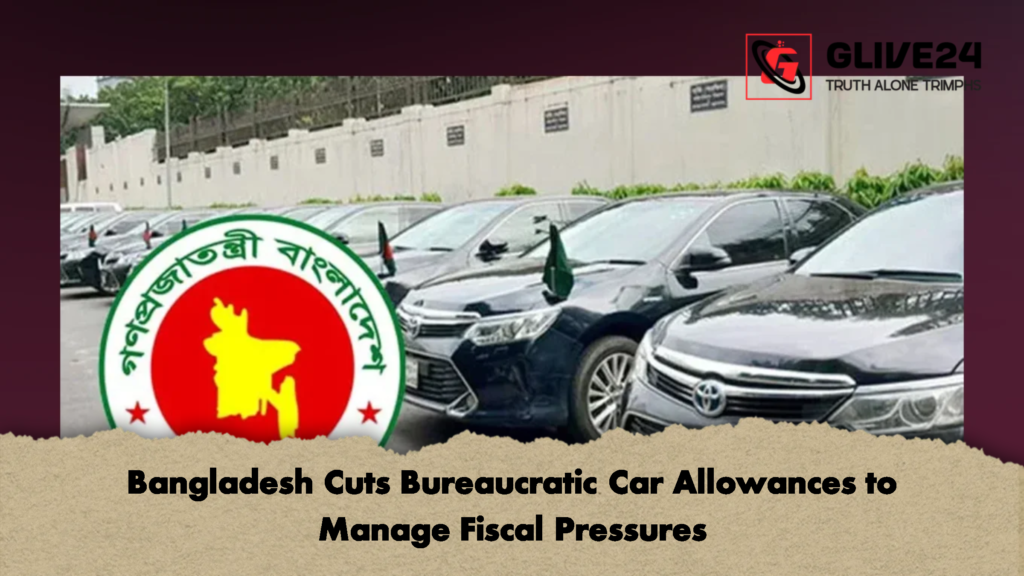
The government of Bangladesh is set to slash the monthly vehicle maintenance allowances for senior civil servants by half, marking a sweeping austerity drive amid wider macroeconomic strains. This fiscal tightening follows a directive from the Finance Division, sent to the Senior Secretary of the Ministry of Public Administration. The policy pivot directly targets privileged bureaucrats who previously capitalised on highly lucrative, state-funded transport perks.
Under the existing framework, eligible government officials who purchased vehicles using interest-free state loans received a monthly maintenance allowance of 50,000 Taka. The new directive aims to reduce this subvention to 25,000 Taka. This development follows a separate circular that entirely suspended the interest-free car loan scheme itself. Previously, civil servants holding the rank of Deputy Secretary and above were entitled to interest-free loans of up to 3,000,000 Taka specifically for vehicle procurement.
Prime Ministerial Directives Target Executive Perks
The Finance Division noted that the adjustment aligns with explicit instructions from the Prime Minister. According to official correspondence, the reduction is required to ensure the judicious utilisation of limited national resources, rein in persistent domestic inflation, and protect overall macroeconomic stability. The Ministry of Public Administration has been urged to scrutinise the feasibility of the allowance cap and implement the necessary regulatory adjustments swiftly.
For years, the vehicle monetisation scheme faced criticism from civil society groups. Critics argued that the dual benefit of interest-free capital followed by a lifetime monthly maintenance stipend placed an unnecessary burden on the national exchequer. By halving the allowance, the treasury expects to conserve substantial revenue at a time when import costs and foreign exchange volatility demand absolute fiscal discipline.
Foreign Higher Education Policies Tightened
The government’s cost-cutting measures have simultaneously expanded into public sector human resource development, specifically targeting civil servants pursuing higher education abroad. A concurrent letter from the Finance Division highlighted that bureaucrats securing full scholarships or fellowships for postgraduate programmes overseas frequently draw overlapping benefits. These individuals often receive comprehensive stipends covering housing and living expenses from external sponsors while continuing to draw their full salaries and allowances from the state during their periods of deputation.
To rectify these financial redundancies, the administration plans to eliminate full-pay deputations for overseas studies. Moving forward, the government intends to mandate that officials take formal study leave instead of remaining on active payrolls. This shift, also backed by a prime ministerial directive, ensures that state funds are not duplicated on personnel who are temporarily removed from active domestic administration. Together, these structural adjustments signal a major shift away from entrenched bureaucratic privileges in favour of baseline fiscal accountability.