
Khabor Wala Desk
Published: 7th June 2026, 12:07 PM
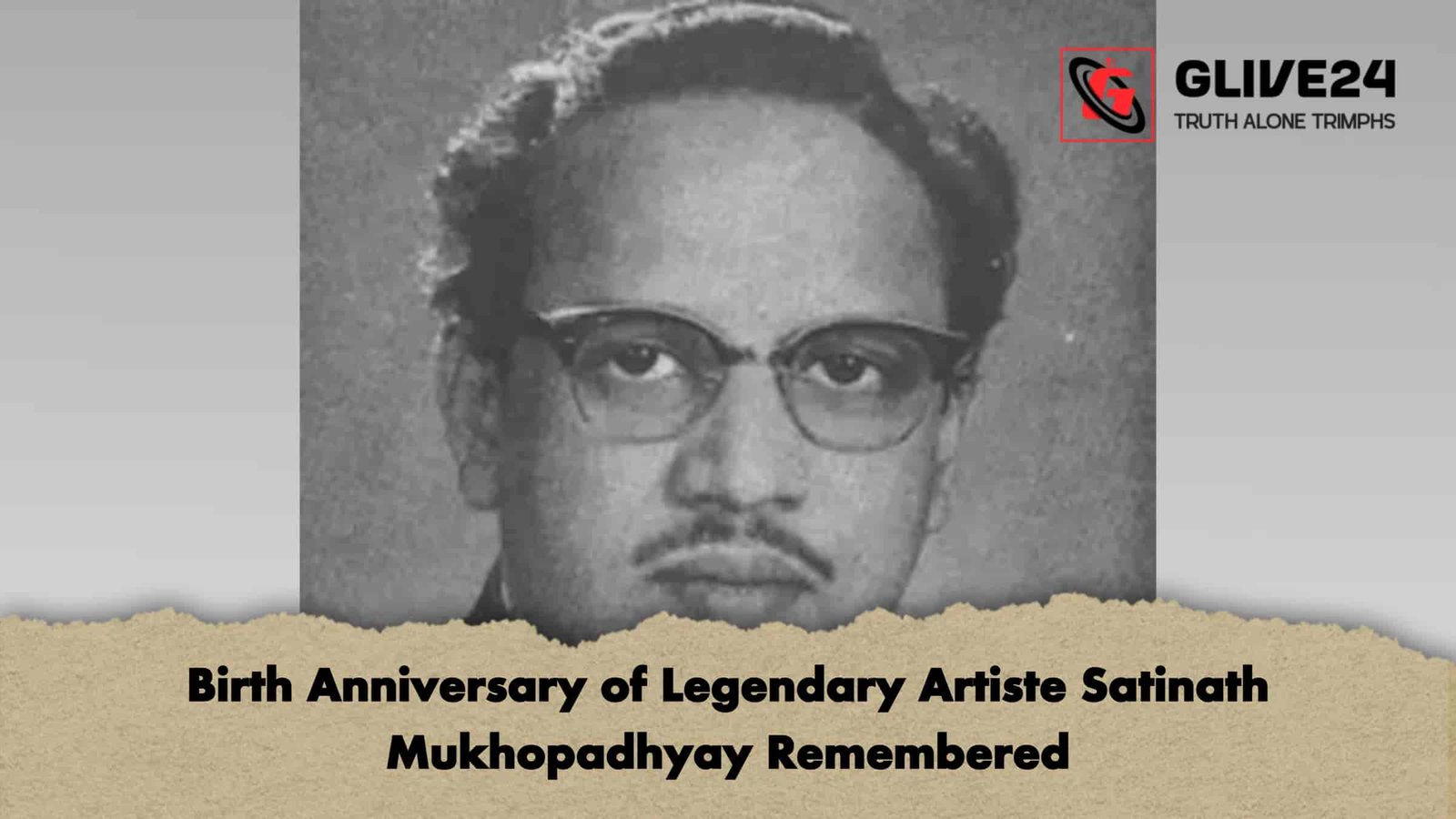
The birth anniversary of the legendary vocalist, lyricist, and music director Satinath Mukhopadhyay has been marked by cultural exponents and enthusiasts across the region. As an iconic figure of the twentieth-century golden era of modern Bengali music, his unique baritone, delicate emotional delivery, and sophisticated compositions remain foundational to the evolution of the genre.
Satinath Mukhopadhyay was born on 7 June 1923 in Lucknow, Uttar Pradesh. His father, Tarakdas Mukhopadhyay, was stationed there for professional duties at the time. Whilst born in northern India, Mukhopadhyay spent his formative childhood years in Chinsurah, situated within the Hooghly district of West Bengal. The vibrant cultural milieu of Hooghly heavily influenced his early education and stimulated his inherent musical inclinations.
The Mukhopadhyay household possessed a rich artistic lineage. His grandfather, Ramachandra Mukhopadhyay, was a skilled violinist, and his father was an accomplished singer. Raised in this creative atmosphere, Mukhopadhyay began formal training in Indian classical music at an early age. He achieved deep proficiency in traditional vocal styles, including Dhrupad, Dhamar, and Tappa.
Upon relocating to Kolkata for higher education, Mukhopadhyay chose to prioritize his musical training over academic pursuits. He enrolled as a disciple under the legendary classical maestro Pandit Chinmoy Lahiri, under whose guidance he carved out a distinct artistic identity. Though he later accepted a civil service position at the Accountant General’s Office (AG Bengal) in Kolkata, his life remained firmly centred around the musical arts.
Mukhopadhyay excelled across diverse genres, making substantial contributions to modern Bengali songs (Adhunik Gaan), Nazrul Sangeet, and traditional Bengali ghazals. His vocal execution was widely praised for its exceptional sweetness, technical precision, and emotional resonance.
Amongst his extensive repertoire of classic recordings, several compositions remain permanently etched in the history of Bengali music:
“Ajgoto Elo Na Se”
“Akash Eto Meghla”
“Jibone Jodi Deep Jwalate Nahi Paro”
“Moromiya Tumi Chole Gele”
“Pashaner Buke Likho Na Amar Nam”
“O Akash Pradip Jwelo Na”
“Jani Ekdin”
“Tumi Sundar Tai Cheye Thaki”
“Koto Na Hazar Phul”
“Hay Borosha”
In 1968, Mukhopadhyay married the distinguished female playback singer Utpala Sen. This marital union established one of the most respected creative partnerships in the history of the Bengal music industry, with the couple frequently collaborating on recordings and musical productions.
The table below provides a factual summary of the key biographical milestones of Satinath Mukhopadhyay:
| Profile Dimension | Documented Fact |
| Date of Birth | 7 June 1923 |
| Birthplace | Lucknow, Uttar Pradesh, British India |
| Formative Town | Chinsurah, Hooghly, West Bengal |
| Family Background | Grandson of Ramachandra (Violinist); Son of Tarakdas (Vocalist) |
| Principal Mentor | Pandit Chinmoy Lahiri |
| Civil Service Career | Accountant General’s Office (AG Bengal), Kolkata |
| Areas of Excellence | Singing, Lyric Writing, Melodic Composition |
| Marital Partner | Utpala Sen (Married 1968) |
| Date of Passing | 13 December 1992 |
Satinath Mukhopadhyay passed away on 13 December 1992. On his birth anniversary, tributes continue to be paid to his memory, celebrating an immutable legacy that spans across generations of music lovers.




Comments