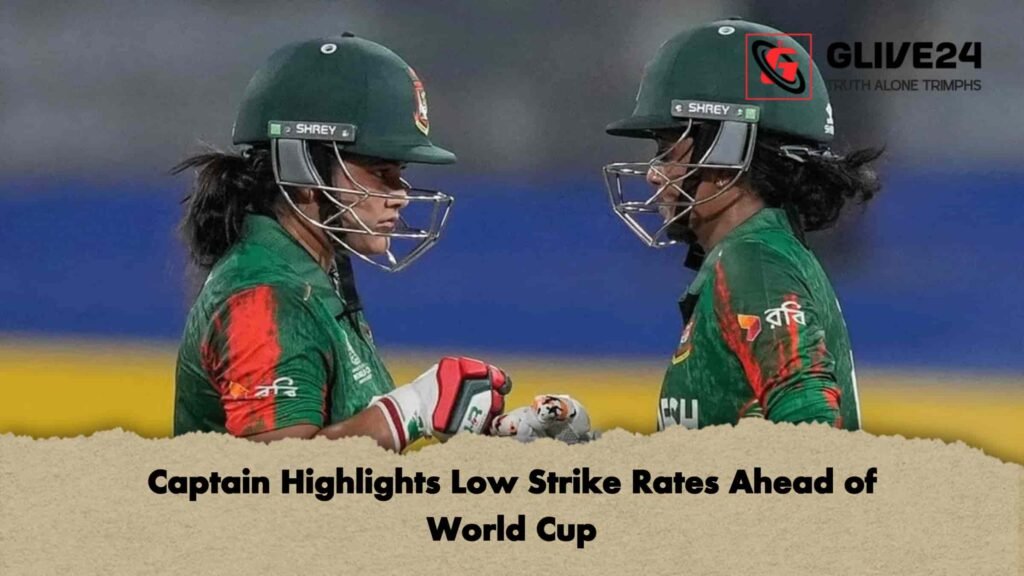
The Bangladesh National Women’s Cricket Team is set to depart Dhaka tomorrow for a preparatory tri-nation series in Scotland, ahead of the upcoming ICC Women’s T20 World Cup in England. Speaking at a pre-departure press conference on Sunday, 24 May 2026, captain Nigar Sultana Joty highlighted the batting unit’s low strike rate as a major structural concern. She noted that the modern T20 format requires batters to consistently score at a rate higher than one run per delivery through boundaries and steady singles—an area where Bangladesh currently lags behind top-tier nations.
Quantitative Performance Deficits and Top-Order Issues
Statistical data from the past two years highlights a clear performance gap between Bangladesh and elite international teams. While top-tier international batters maintain a collective strike rate above 136.00 in T20 internationals, the aggregate strike rate for Bangladeshi batters sits at 123.00.
According to Joty, this difference stems from a lack of tactical consistency and an inability to maintain scoring momentum under changing match conditions. The comparative metrics are structured in the table below:
| Team Category | Two-Year Baseline Strike Rate | Tactical Approach | Impact on Match Dynamics |
| Top-Tier International Teams | Exceeding 136.00 | High-velocity boundary accumulation from the start. | Consistently sets or chases high, match-winning totals. |
| Bangladesh Women’s Squad | 123.00 | Defensive accumulation after early wicket losses. | Limits total scores due to slow middle-over recovery. |
Joty pointed out that the top order bears the primary responsibility for this statistical issue, as upper-order batters have the best opportunity to build substantial, quick-fire innings. She explained that while individual players occasionally show explosive form—such as scoring a 50 off 32 balls—they often follow it up with a slow 50 off 48 balls in the next match.
This inconsistency is frequently aggravated by early wicket losses, which stall the team’s momentum:
Expectations for Lower-Order All-Rounders
Looking ahead to the World Cup, the skipper stressed that the team needs consistent, high-impact performances from its younger all-rounders, specifically naming Shorna Akter and Rabeya Khan to step up in the middle and lower-middle orders.
Commenting on Shorna’s power-hitting potential and the need for consistency, Joty stated:
“Shorna definitely has the ability to play good cricket and her performance is positive, but she has not been consistent for the team yet. If she can play according to her capability and contribute regularly, it will be a major achievement for us. Scoring quick runs in the death overs is vital. Shorna has the capacity to play substantial innings, and if she delivers accordingly, it will create a massive impact for the team.”
Joty added that Rabeya Khan, who is already a key part of the bowling attack, must also develop her batting skills to give the squad extra lower-order depth. The captain concluded that unless the top order uses the Powerplay overs effectively to build a strong foundation, the lower-order big-hitters will remain limited by defensive roles.