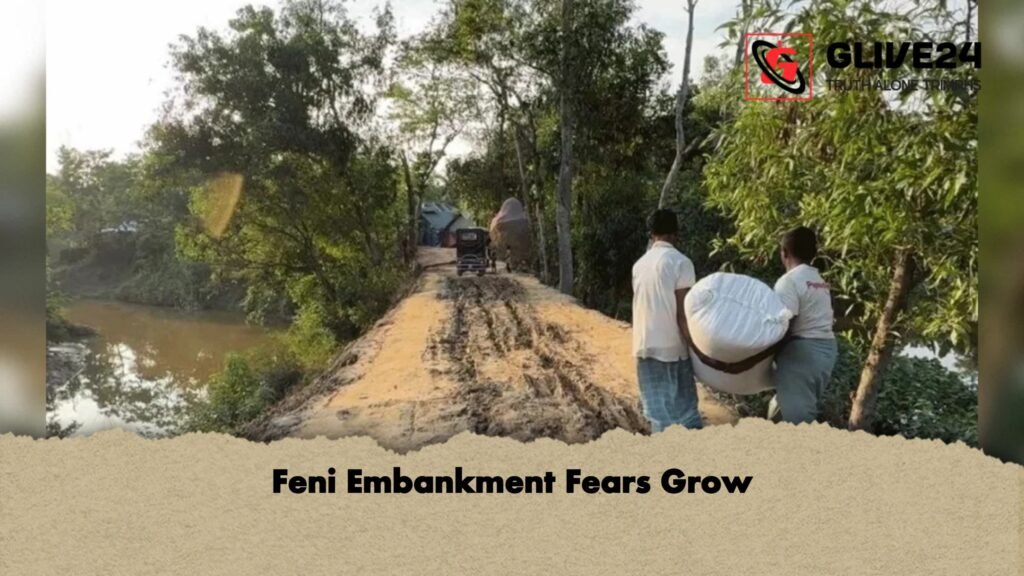
Residents in northern Feni are facing renewed concerns over flooding as the monsoon season approaches, with damaged embankments along the Muhuri, Kohua and Silonia rivers yet to receive durable repairs. People living in riverbank areas of Fulgazi, Parshuram and Chhagalnaiya upazilas say temporary restoration work has heightened fears of another disaster similar to the devastating floods experienced in recent years.
According to local sources, at least 35 sections of embankments along the three rivers collapsed during last year’s monsoon because of excessive rainfall and strong upstream flows descending from India. As a result, 102 villages across the three upazilas were inundated. Thousands of families became stranded by floodwaters, while extensive damage was reported to houses, croplands, fish enclosures and roads.
Following the floods, the Bangladesh Water Development Board allocated approximately Tk 24.4 million for embankment repairs. Although renovation work later began in several locations, residents allege that permanent and sustainable repairs remain incomplete even after nine months.
Field observations indicate that in several places repair work has been carried out by placing soil-filled sandbags or temporarily dumping earth on damaged sections of the embankments. Cracks have reportedly already appeared in some newly repaired areas. Local residents fear that even moderate rainfall or fresh upstream flooding could once again breach the embankments.
Flood Damage and Repair Overview
| Category | Details |
|---|---|
| Rivers affected | Muhuri, Kohua and Silonia |
| Embankment breach points | At least 35 |
| Flooded villages | 102 |
| Affected upazilas | Fulgazi, Parshuram and Chhagalnaiya |
| Repair allocation | Approximately Tk 24.4 million |
| Major losses | Houses, croplands, fish farms and roads |
Abdul Motaleb, a farmer from Fulgazi, said last year’s flooding had destroyed much of what local people owned and many families had not yet recovered. He alleged that instead of constructing durable embankments, only superficial work was being carried out, leaving residents anxious whenever rainfall increases.
Another resident, Kulsum Ara Begum, said previous repair efforts had repeatedly failed, adding that rising water levels often caused the embankments to collapse again.
Locals also alleged that the repair programme had been marked by delays and poor management from the beginning. They claimed demands for permanent embankments before the monsoon season were not addressed effectively by the relevant authorities. As the rainy season nears, residents say hurried temporary repairs are now being undertaken.
Eyakub Ifaz, a college student from Parshuram, said memories of the floods remain vivid among residents and that many families become increasingly worried whenever the monsoon season approaches.
Tanzid Shuvo, a resident of Nilakshi village in Fulgazi, said no effective initiative for permanent embankment construction had yet been visible despite repeated flood damage over the past two years. He added that yearly upstream flows from India continued to cause severe losses to lives and property in the area.
However, the allegations were rejected by Mohammad Monirul Islam, Executive Engineer of the Bangladesh Water Development Board in Feni. He stated that work in vulnerable areas was continuing gradually under an ongoing project and that efforts were being made to repair important sections before the monsoon.
The floods of 2024 and 2025 caused damage worth billions of taka across northern Feni, according to local accounts. Many families lost their homes and were forced to live in severe hardship. Ahead of the coming monsoon season, residents along the riverbanks continue to demand long-term and sustainable embankment construction rather than temporary repairs and relief assistance.