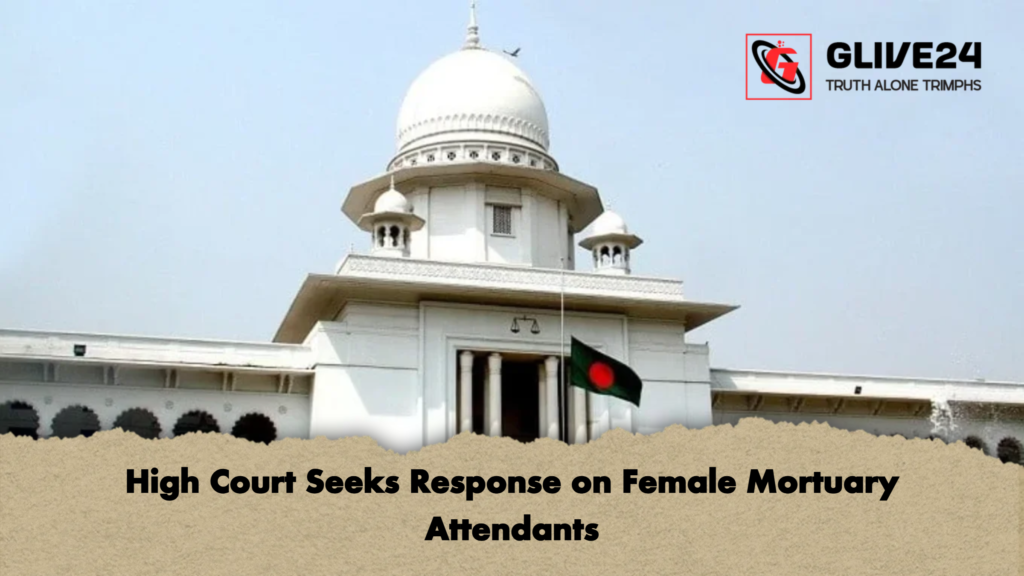
The High Court has issued a rule questioning why appropriate measures should not be taken to appoint female mortuary attendants for conducting post-mortem examinations on female bodies, following a public interest petition that raised concerns over dignity and gender sensitivity in forensic procedures.
The order was passed on Sunday (19 July) by a High Court Division bench comprising Justice Fahmida Quader and Justice Md Asif Hasan after holding a preliminary hearing on the writ petition.
The petition was argued before the court by Supreme Court lawyer Md Monir Uddin, who also filed the case in the public interest. Speaking after the hearing, he said the court had directed the respondents to submit their replies to the rule within two weeks.
According to court proceedings, the writ petition was filed on 13 July, seeking judicial directives regarding the appointment of female mortuary attendants for the post-mortem examination of female bodies. The petitioner argued that such appointments would help ensure greater privacy, dignity and sensitivity during a procedure that is often emotionally distressing for the families of the deceased.
Post-mortem examinations play a crucial role in determining the cause of death in cases involving unnatural, suspicious or unexplained circumstances. The findings frequently serve as vital forensic evidence in criminal investigations and judicial proceedings. While the examinations are carried out under established medical and legal procedures, the petition has drawn attention to the need for gender-sensitive practices when dealing with female bodies.
The High Court’s latest order does not constitute a final verdict on the matter. Instead, it marks the beginning of judicial scrutiny, giving the respondents an opportunity to explain their position before the court considers whether any further directives or policy recommendations are necessary.
Legal observers note that public interest litigation has increasingly been used in Bangladesh to address issues involving administrative practices, fundamental rights and public welfare. The outcome of this case could have broader implications for the country’s medico-legal system if the court ultimately decides that changes are required to existing procedures governing post-mortem examinations.
The matter is expected to return to the High Court for further hearing after the respondents submit their replies within the timeframe set by the bench.