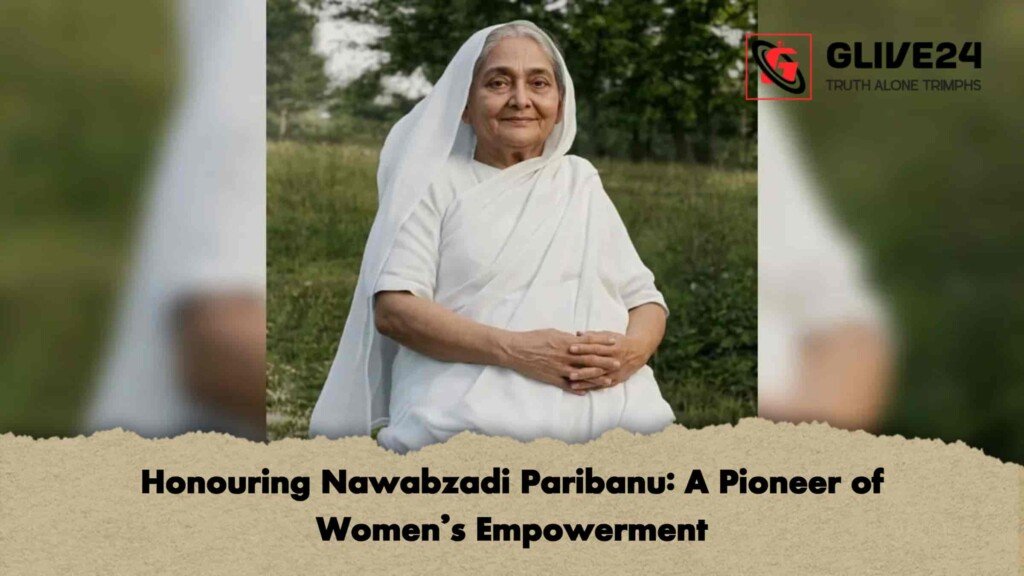
The annals of Dhaka’s rich cultural and social history are incomplete without the foundational contributions of Nawabzadi Paribanu, an exceptionally erudite, philanthropic, and visionary noblewoman. Born into the historic Dhaka Nawab family on 1 July 1884 at the iconic Ahsan Manzil, she was the daughter of Nawab Khwaja Ahsanullah and Kamrunnesa Begum. Today marks her birth anniversary, offering a poignant opportunity to reflect on a legacy that fundamentally reshaped the social fabric of Bengal.
An Unconventional Upbringing and Intellectual Pursuits
During the late nineteenth century, formal institutional education remained largely inaccessible to Muslim women due to rigid social structures. However, raised within the progressive environs of Ahsan Manzil, Nawabzadi Paribanu broke conventional barriers. Under the strict supervision of private tutors and governesses, she achieved profound linguistic proficiency in Arabic, Persian, and English.
Beyond her academic achievements, Paribanu was renowned for her fierce independence and physical fortitude. She was a highly skilled equestrian, an extraordinary feat for a woman of her era. Impressed by her sharp intellect, administrative acumen, and natural leadership qualities, her father, Nawab Ahsanullah, personally trained her in the intricate mechanics of managing the family’s vast zamindari (feudal estates). Recognizing her potential, the Nawab had actively planned to appoint her as one of his principal successors. Regrettably, his sudden and untimely demise prevented these succession plans from being formalised.
The Genesis of ‘Paribagh’ and Social Innovations
In the year 1900, Nawabzadi Paribanu married Khwaja Badruddin, the son of Khwaja Bhola Miah, who was also a member of the extended Nawab family lineage. Following their nuptials, the couple established their residence in the Dilkhusha area of Old Dhaka.
Her enduring impact on Dhaka’s urban topography took root in 1919 when she acquired the southern portion of the Shahbagh Garden House, encompassing approximately 60 bighas of land, from Nawab Habibullah. Demonstrating an remarkably progressive mindset, she initiated a weekly tradition where the expansive gardens were exclusively opened every Saturday for the recreation, leisure, and socialization of aristocratic Muslim women.
This initiative provided a safe, secluded, and beautiful sanctuary for women who were otherwise restricted by the societal norms of purdah. Over time, this sprawling estate and its surrounding locality became affectionately known as “Paribagh”—a prominent residential and commercial district in modern Dhaka that stands to this day as a living monument to her name.
“Her radical decision to open her private gardens as a sanctuary for women showcased a progressive understanding of mental well-being and social freedom long before it became a mainstream discourse.”
A Lasting Legacy in Female Education
Nawabzadi Paribanu’s commitment to societal reformation extended far beyond creating recreational spaces; she recognized structured education as the ultimate tool for female emancipation. In 1924, she joined forces with her sisters to champion the establishment and development of the Kamrunnesa Girls’ High School in Dhaka.
To ensure the institution’s long-term sustainability, the sisters donated a monumental sum exceeding one lakh taka. In the financial context of the 1920s, this astronomical donation represented a watershed moment for female literacy across East Bengal, laying the groundwork for generations of women to access institutional learning.
The illustrious life of this pioneering philanthropist drew to a close on 23 October 1958, when she passed away at the age of 74. She was laid to rest at the ancestral burial ground of the Dhaka Nawab family in Begumbazar. Decades after her passing, Nawabzadi Paribanu remains an unforgettable vanguard of the women’s renaissance in Bengal, whose benevolence and far-reaching vision continue to inspire contemporary social reformers.