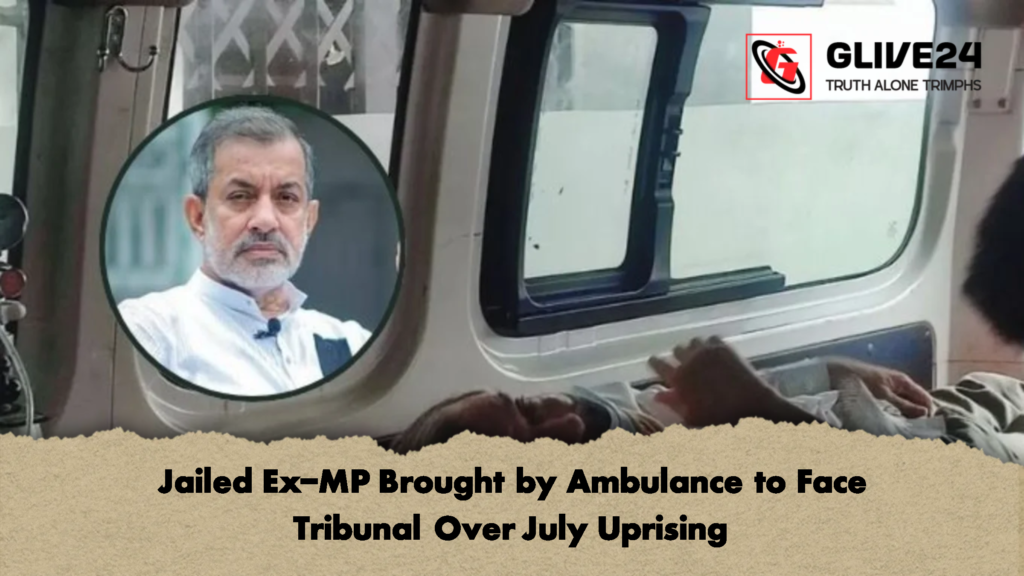
A former Member of Parliament, A.B.M. Fazle Karim Chowdhury, was brought to the International Crimes Tribunal by ambulance on Wednesday morning to face formal charges of crimes against humanity. The grave allegations stem from the violent suppression of the student-led July uprising in Chittagong, which led to the collapse of the previous administration. Despite his arrival at the highly secured tribunal, the former lawmaker was not physically presented in the dock during the judicial proceedings due to severe medical complications. He remained confined inside the stationary ambulance within the court premises throughout the entire legal session.
The vehicle eventually departed the tribunal grounds at approximately 2:30 pm following the conclusion of the day’s intense legal arguments. Tribunal prosecutor Farooq Ahammad formally confirmed the logistical arrangements and the fragile health status of the accused to journalists assembled outside the courtroom.
Arrest Background and Legal Wrangling
According to prosecution sources, Fazle Karim Chowdhury has been undergoing specialised treatment under judicial custody at the Bangabandhu Sheikh Mujib Medical University hospital in Dhaka. His legal team used this medical condition to argue for his complete discharge from the case. Their submissions remain incomplete, however, as the court required further documentation regarding his long-term prognosis. The tribunal has scheduled the next formal hearing for Sunday, when the defence will continue presenting arguments seeking his exemption from the upcoming trial.
This specific human rights case names a total of 22 high-profile accused individuals who allegedly directed the state’s crackdowns. The police dragnet has so far seen five suspects arrested. This includes Fazle Karim Chowdhury, who was originally apprehended by the Border Guard Bangladesh in September 2024. Border agents caught him while he was allegedly attempting to cross into neighbouring India illegally via the Brahmanbaria frontier.
The remaining 17 accused individuals are currently classified as fugitives from justice, with warrants out for their immediate arrest. This missing contingent includes political heavyweight figures from the deposed regime, most notably the former Foreign Minister Hasan Mahmud and the former Education Minister Mohibul Hasan Chowdhury Nowfel. Intelligence agencies believe several of these fugitives may have successfully fled the country during the political transition.
Lethal Crackdowns and Indictment Specifics
The formal indictment outlines three distinct, gravity-laden charges against the 22 co-accused. The prosecution focuses heavily on the fatal shooting of six specific individuals and the systematic wounding of hundreds of others during the height of the civil unrest in Chittagong. The state’s case relies on documenting the precise calendar dates when the state apparatus deployed lethal ammunition against unarmed civilian demonstrators.
The first count details the targeted killing of three young men—Mohammad Wasim Akram, Faisal Ahmed Shanto, and Mohammad Farooq—on 16 July 2024 amid escalating street protests. The second count covers a subsequent outbreak of state-backed violence on 18 July 2024, which resulted in the deaths of Tanvir Siddique, Mohammad Saimon, and Hridoy Chandra. The final overarching charge accuses the regional political leadership and local law enforcement coordinators of orchestrating targeted assaults that left over a hundred individuals with severe, life-altering injuries. Investigators have spent months gathering eyewitness testimony and digital evidence to substantiate these charges before the tribunal.