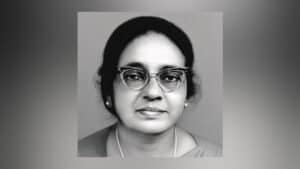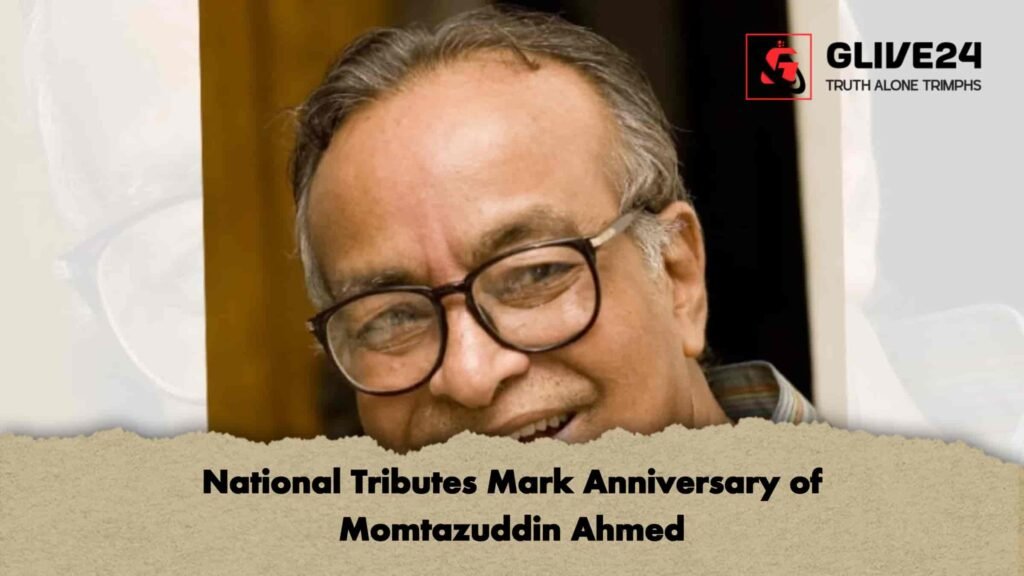
Solemn tributes have been paid across Bangladesh to mark the seventh death anniversary of Professor Momtazuddin Ahmed, a foundational figure in the country’s contemporary theatre movement. As an accomplished playwright, actor, academic, and language veteran, his influence on post-independence dramatic literature remains highly regarded, particularly for his mastery of the one-act play format. In recognition of his enduring literary and cultural contributions, he was conferred with the Ekushey Padak in 1997.
Born on 18 January 1934 in the Malda district of undivided Bengal to the late Kalimuddin Ahmed and Sabina Begum, his family migrated to East Bengal following the partition of the subcontinent. Although Malda was his birthplace, he spent his formative childhood and adolescent years within the Bholahat Upazila of Chapainawabganj.
Academic Trajectory and Educational Career
Professor Ahmed maintained an excellent academic record throughout his youth. After completing his early schooling at Malda Aiho Junior School, he cleared his Matriculation examinations from Bholahat Rameshwar Pilot Model Institution in 1951. He went on to pursue higher secondary education at Rajshahi College, subsequently earning both his Bachelor of Arts (Honours) and Master of Arts degrees in Bengali from the University of Rajshahi.
His professional career as an educator spanned over 32 years, during which he taught Bengali language, literature, and European dramatic traditions at various government colleges. Following his retirement from full-time state service, he continued his academic work as a part-time professor in the Theatre and Music departments of both Dhaka University and Jagannath University.
Furthermore, between 1976 and 1978, he served as a senior specialist tasked with designing the national curriculum and syllabi, before spending the subsequent three years (1977–1980) as the Director of the Research and Publications Department at the Bangladesh Shilpakala Academy.
Political Activism and Literary Legacy
Ahmed’s literary creations achieved substantial international reach, leading him to guide various theatre delegations to stage plays in major Indian cities, including New Delhi, Jaipur, and Kolkata. Notably, his acclaimed theatrical pieces Ki Chaha Shankhachil and Raja Anuswarer Pala were integrated into the formal curriculum at Rabindra Bharati University in West Bengal. He was also a prominent commentator, publishing regular opinion columns in major national newspapers.
Biographical Summary of Momtazuddin Ahmed
| Chronological Date | Milestone or Historical Event |
| 18 January 1934 | Born in Malda, undivided Bengal |
| 1951 | Matriculated from Bholahat Rameshwar Pilot Model Institution |
| 21 February 1952 | Engineered the first monument for language martyrs at Rajshahi College |
| 1954, 1955, 1957, 1958 | Incarcerated by Pakistani authorities for political dissent |
| 1976 – 1978 | Appointed Senior Specialist for National Curriculum and Syllabi |
| 1977 – 1980 | Served as Director of Research and Publications at Shilpakala Academy |
| 1997 | Honoured with the Ekushey Padak state award |
| 2 June 2019 | Passed away in Dhaka |
His involvement with progressive politics began during his student years through active participation with the Student Union. During the historic Language Movement, he secured a permanent place in national history by constructing a commemorative structure for the language martyrs at the main gate of Rajshahi College’s New Muslim Hostel on the night of 21 February 1952. This structure is recognized as the first monument built for the language martyrs in Bangladesh and was formally opened the next morning, 22 February.
His steadfast commitment to democratic struggles resulted in recurrent state persecution, leading to his imprisonment by the Pakistani government in 1954, 1955, 1957, and 1958. Through these events, he holds the distinction of being the first recorded political prisoner from Bholahat Upazila.
In addition to the Ekushey Padak, Ahmed received the Bangla Academy Literary Award and the Shishu Academy Children’s Literature Award. He passed away on 2 June 2019, leaving behind an influential repository of creative work that remains an important component of Bangladeshi culture.