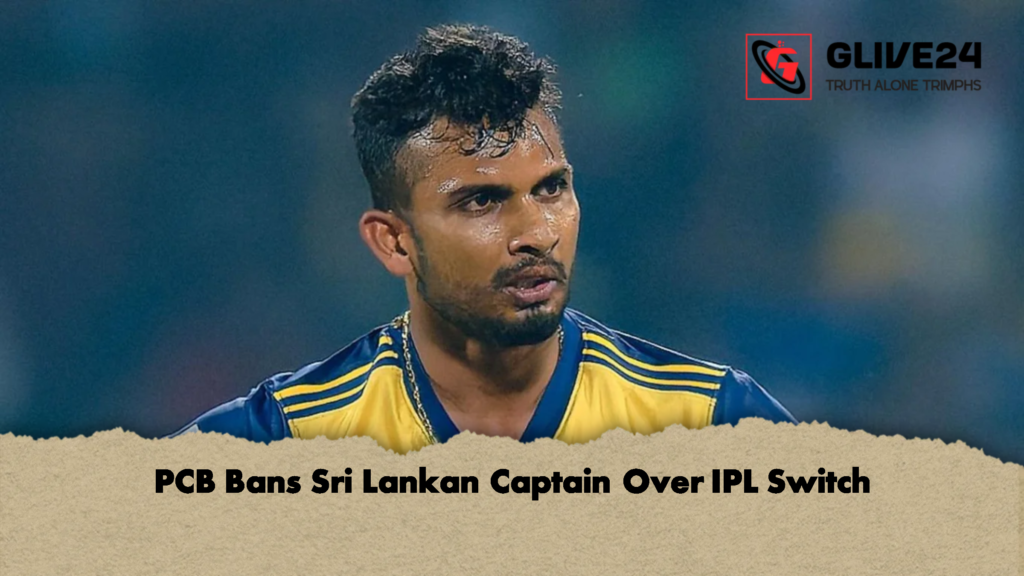
The world of international franchise cricket is reeling from a major disciplinary crackdown as the Pakistan Cricket Board (PCB) has officially handed a one-year suspension to the Sri Lankan T20 International captain, Dasun Shanaka. This decisive move follows a controversial decision by the veteran all-rounder to abandon his commitments in the Pakistan Super League (PSL) to pursue a contract in the Indian Premier League (IPL). The ruling puts an end to weeks of intense speculation and sends a robust message to international players regarding the sanctity of their contractual obligations.
Table of Contents
A Stark Breach of Contractual Integrity
The crux of the matter lies in a fundamental disregard for professional agreements. Shanaka was legally bound by a contract to represent Lahore Qalandars in the current iteration of the PSL. However, in a move that blindsided the franchise management, he unilaterally withdrew from the squad. It soon emerged that the motive behind this departure was a late offer from the IPL franchise Rajasthan Royals.
The PCB’s disciplinary committee has categorised this action not as a mere professional preference, but as a severe violation of a tripartite agreement involving the player, the franchise, and the board. In a formal communiqué, the PCB asserted that their decision followed an “exhaustive review,” concluding that Shanaka’s exit was a “clear violation of player registration protocols.” Consequently, the 34-year-old will be barred from the 2027 PSL season.
Comparative Disciplinary Measures
The PCB’s current “zero-tolerance” stance appears to be part of a broader strategy to protect the league’s integrity against the growing influence of rival tournaments. Shanaka is the second high-profile international cricketer to face such sanctions in recent weeks. Zimbabwean fast bowler Blessing Muzarabani was previously hit with a more draconian two-year ban after he ditched Islamabad United to join the Kolkata Knight Riders (serving as a replacement for Bangladesh’s Mustafizur Rahman).
The following table contextualises the recent disciplinary landscape:
| Player Name | Primary PSL Franchise | Rival League Joined | Official Sanction | Duration of Ineligibility |
| Dasun Shanaka | Lahore Qalandars | Rajasthan Royals (IPL) | 1-Year Suspension | Until the 2027 Season |
| Blessing Muzarabani | Islamabad United | Kolkata Knight Riders (IPL) | 2-Year Suspension | Until the 2028 Season |
| Resolution Status | Apology Accepted | No Appeal Filed | Penalty Mitigated | Final Ruling |
Remorse and the Request for Clemency
According to reports from ESPNcricinfo, the PCB was initially poised to match Muzarabani’s two-year penalty in Shanaka’s case. However, the Sri Lankan skipper’s swift submission of a formal apology played a pivotal role in the board’s decision to show relative leniency. By acknowledging his error and pleading for clemency, Shanaka managed to have the duration of his exile halved.
In a public statement aimed at mending fences with the Pakistani cricketing establishment, Shanaka stated:
“I am profoundly regretful of my decision to withdraw from the PSL. I offer my most sincere apologies to the people of Pakistan, the fans, and the global cricketing community. I fully recognise the prestige of the PSL and understand the immense disappointment my actions have caused. To the supporters of Lahore Qalandars, I am truly sorry for failing to honour my commitment.”
A Strategic Misstep in the IPL Dugout
While Shanaka successfully secured his move to the IPL, the sporting rewards have proven elusive. Despite the heavy reputational and professional price paid in Pakistan, the all-rounder has yet to take the field for Rajasthan Royals. As the team concludes its sixth fixture of the campaign, Shanaka remains a permanent fixture on the substitutes’ bench.
Cricket analysts have been quick to point out the irony of his situation. By chasing the allure of the IPL, Shanaka has effectively traded a guaranteed, high-profile role with Lahore Qalandars for a peripheral position in India. He now finds himself in the unenviable position of having a tarnished standing in one of the world’s premier T20 markets without having played a single minute in the other. This “tactical miscalculation” serves as a cautionary tale for players navigating the increasingly complex and conflicting schedules of global franchise cricket.