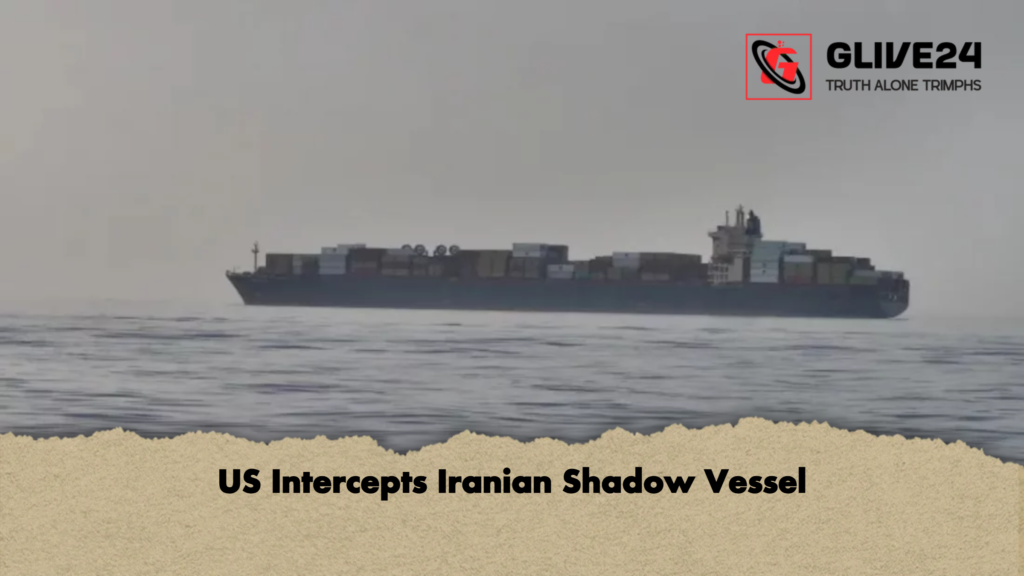
United States naval forces have intercepted a commercial vessel linked to Iran’s so-called “shadow fleet” in the Arabian Sea, in an operation that has further intensified tensions across one of the world’s most strategically sensitive maritime corridors.
According to the United States Central Command (CENTCOM), the vessel was carrying substantial quantities of fuel, crude oil, and gas-related products destined for international markets. The interception took place along a critical shipping lane in the Arabian Sea, where the ship was first detected by US surveillance assets.
Military officials stated that a US Navy helicopter was rapidly deployed to the scene, where it disrupted the vessel’s movement and established operational control over its navigation. Following the intervention, the ship was secured under monitored conditions before being redirected towards Iranian waters. No immediate reports of damage or casualties have been confirmed.
Allegations of Sanctions Evasion
US authorities claim that the vessel forms part of Iran’s “shadow fleet”—a network of tankers allegedly used to circumvent international sanctions imposed on Iranian energy exports. These ships are believed to operate under obscured ownership structures, frequently changing flags and employing complex registration arrangements to avoid detection.
Washington has repeatedly accused Tehran of sustaining billions of dollars in illicit oil revenue through such maritime operations, despite long-standing restrictions on its energy sector.
Iran has not yet issued an official response regarding the latest interception, and details concerning the vessel’s ownership, crew composition, and exact cargo volume remain undisclosed.
Rising Regional Tensions
The incident comes amid already heightened geopolitical friction between the United States and Iran. Analysts warn that increased naval enforcement activity in the Arabian Sea and surrounding waters could escalate tensions further, particularly around key maritime chokepoints such as the Strait of Hormuz—through which a significant share of the world’s oil supply is transported.
Energy market observers also note that any disruption in this corridor, even temporary, has the potential to influence global crude oil prices and shipping insurance costs.
CENTCOM had earlier indicated that it would intensify monitoring of vessels suspected of violating sanctions, particularly those operating to and from Iranian ports. The latest operation appears to reflect the implementation of that policy directive.
Incident Overview
| Aspect | Details |
|---|---|
| Location | Arabian Sea |
| Vessel Type | Commercial tanker (shadow fleet-linked) |
| Alleged Cargo | Crude oil, fuel, gas products |
| US Action | Helicopter interception and navigation control |
| Final Outcome | Vessel redirected towards Iran |
| Time of Operation | Early hours, Saturday |
| US Claim | Sanctions violation and illicit oil transport |
Ongoing Monitoring
With the vessel now reportedly moving back towards Iranian territory under observation, international monitoring agencies continue to assess the situation. The broader implications for maritime security and energy trade routes remain under close scrutiny, as both regional stability and global energy flows could be affected if such interceptions become more frequent.