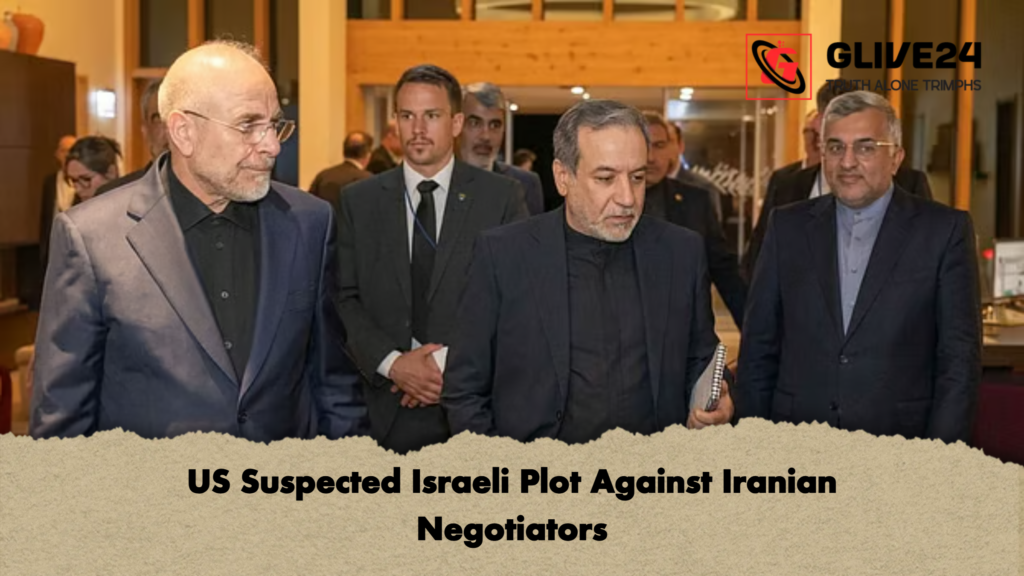
As Washington pursued a temporary peace arrangement with Tehran this spring, senior American officials reportedly grew concerned that Israel may have been planning to assassinate two of Iran’s most prominent political figures involved in diplomatic efforts. According to current and former US officials, such an operation could have derailed delicate negotiations and dramatically escalated regional tensions.
The concerns centred on Iranian Foreign Minister Abbas Araghchi and Parliament Speaker Mohammad Bagher Ghalibaf, both of whom played significant roles in diplomatic engagement during the conflict. US officials feared that any attempt to target either man during sensitive ceasefire discussions would almost certainly have ended negotiations and reignited hostilities.
Several officials familiar with the matter said Washington went so far as to encourage regional partners to remain vigilant regarding the safety of the two Iranian leaders. The concern reflected the belief that preserving the negotiating team was essential to keeping diplomatic channels open.
Israeli military strategy throughout the conflict reportedly included targeting senior Iranian political and military leadership. During the war’s most intense phase, US officials acknowledged that figures such as Araghchi and Ghalibaf could have been regarded by Israel as legitimate wartime targets because they occupied senior positions within the Iranian government. Even so, American officials believed that any strike against high-level negotiators while peace talks were under way would have undermined efforts to reach even a temporary settlement.
The conflict, which began following Israeli military action against Iran reportedly supported in part by US intelligence assessments, rapidly evolved into a broader regional confrontation. Israeli operations reportedly prioritised striking Iran’s senior leadership during the early stages of the campaign, with the objective of weakening the country’s governing structure by eliminating as many influential officials as possible.
According to officials cited in the report, the list of potential targets was said to include several comparatively pragmatic figures whom the Trump administration had hoped might eventually participate in diplomatic engagement. Among those mentioned were senior national security official Ali Larijani and former Iranian Foreign Minister Kamal Kharazi. Both were reportedly involved in discussions connected to the United States when Israeli air strikes targeted them.
US officials believe the reported assassination plans against Araghchi and Ghalibaf demonstrate how quickly Washington’s and Israel’s strategic priorities diverged after the conflict began. While the United States increasingly sought to secure a negotiated settlement from April onwards, Israeli leaders reportedly remained sceptical of ceasefire efforts from the outset.
The initial ceasefire period reportedly generated concern within Israel’s political establishment and among sections of the public that Washington was seeking to end the conflict prematurely. Rather than weakening the Iranian government, officials and analysts observed that the country’s leadership appeared to consolidate its authority. Iran’s Islamic Revolutionary Guard Corps was also seen as strengthening its influence over state affairs during this period.
Araghchi and Ghalibaf subsequently became central figures in efforts to secure a ceasefire and to pursue longer-term diplomatic engagement between Tehran and Washington through mediation involving regional states. According to the report, the United States and Iran later reached a framework understanding in June that created the conditions for reopening the Strait of Hormuz and provided an opportunity for future negotiations concerning Iran’s nuclear programme.
Israeli officials and analysts reportedly viewed the preliminary agreement as deeply unsatisfactory, arguing that it failed to achieve several of Israel’s principal wartime objectives, including weakening Iran’s governing system, significantly damaging its missile programme and dismantling Tehran’s network of regional proxy groups. They also expressed concern that any easing of economic pressure could provide Iran with access to substantial financial resources without imposing sufficiently stringent restrictions on its nuclear ambitions.
When approached for comment, a spokesperson for the Israeli Embassy in Washington declined to respond to questions regarding the reported assassination plans.
Asked about the allegations and claims that Washington had urged regional countries to help protect the Iranian officials, one US official said diplomatic engagement between the United States and Iran remained ongoing. The official added that President Donald Trump’s Special Envoy Steve Witkoff and his son-in-law Jared Kushner had recently held productive discussions in Qatar, and that President Trump wanted the peace process to continue.
Earlier reporting by The Wall Street Journal stated that both Araghchi and Ghalibaf had appeared on an Israeli list of potential assassination targets in March. According to that report, they were temporarily removed from the list after the United States initiated negotiations with Iran.
US and Middle Eastern officials also told the publication that the Trump administration had learned at the time that at least Ghalibaf remained on Israel’s target list and urged Israeli authorities not to proceed with any such operation.