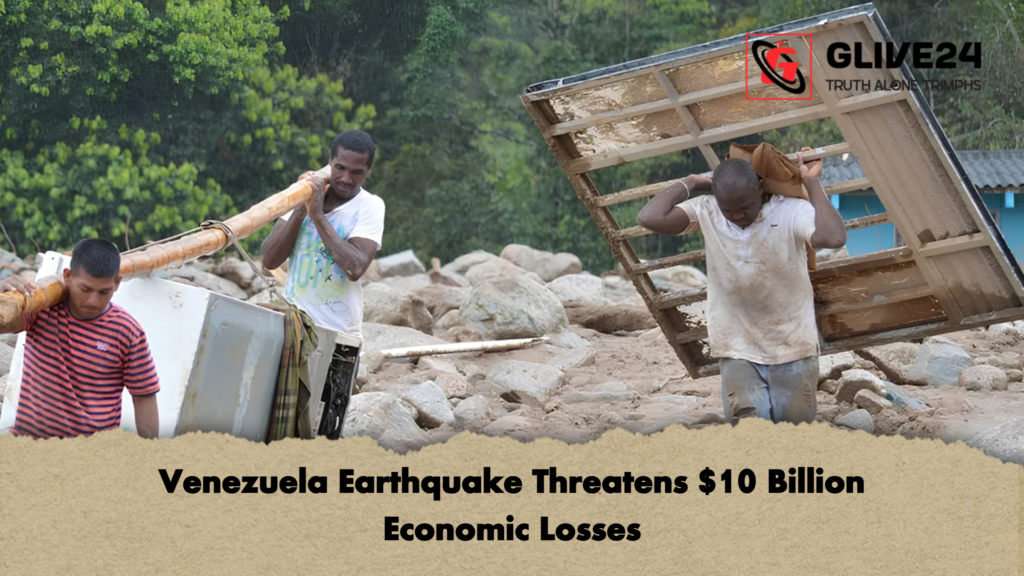
Venezuela is facing the aftermath of a devastating seismic disaster that has left widespread destruction, mounting humanitarian needs and growing concerns for the country’s insurance industry. Early assessments suggest the total economic losses could exceed 10 billion US dollars, while uncertainty over insurance coverage is placing additional pressure on both domestic insurers and the global reinsurance market.
The disaster unfolded when a powerful magnitude 7.2 earthquake struck, followed less than 40 seconds later by an even stronger magnitude 7.5 tremor. The brief interval between the two major shocks left little time for emergency response efforts to begin, significantly increasing the scale of the destruction across affected areas.
According to the United States Geological Survey, the earthquakes were shallow strike-slip events. Earthquakes of this type release energy close to the Earth’s surface, often resulting in severe damage to buildings, transport networks and essential infrastructure. More than one hundred aftershocks have been recorded since the main event, complicating rescue operations and delaying recovery work as emergency teams continue to assess unstable structures.
Risk analysis firm Verisk estimates that the overall economic impact could surpass 10 billion US dollars. However, it remains unclear how much of those losses are protected by insurance. That uncertainty has become a major concern not only for Venezuela’s domestic insurance market but also for international reinsurers that may ultimately share a significant portion of the financial burden.
Satellite imagery has revealed the scale of the destruction. More than 58,000 buildings are believed to have suffered damage, including residential properties, hospitals, roads, airports, water systems and electricity infrastructure. The most severely affected areas include Caracas, La Guaira, Puerto Cabello, Valencia and Petare, where emergency services continue to respond to widespread structural damage.
The humanitarian consequences are equally alarming. Preliminary estimates suggest the death toll could range from 1,900 to more than 3,300 people. More than 10,000 have been injured, while many others remain missing. Around 6.8 million people are now believed to require emergency assistance. According to the United Nations, demand for food, clean water, medical care and temporary shelter continues to rise, raising fears that the disaster could develop into a prolonged humanitarian crisis.
The earthquake has struck at a particularly difficult time for Venezuela’s economy, which was already under strain from high inflation, currency instability and its heavy dependence on the oil sector. Those long-standing economic challenges are expected to complicate reconstruction efforts and place additional pressure on public finances.
The country’s insurance sector also faces significant obstacles. Although Venezuela has between 30 and 40 insurance companies, the market remains relatively small and fragmented. The industry is overseen by the regulator SUDEASEG, but prolonged economic difficulties and international sanctions have limited the sector’s capacity. Insurance penetration is estimated at only one to two per cent, leaving the overwhelming majority of individuals and businesses without meaningful financial protection against disasters of this scale.
Among the country’s leading insurers are Mercantil Seguros, MAPFRE Venezuela, Caracas Seguros and Horizonte Seguros. Even so, analysts believe their ability to absorb losses from an event of this magnitude is limited. Restricted insurance coverage, uncertainty surrounding reinsurance arrangements and the challenge of accurately assessing damaged assets are all expected to complicate the claims process.
The earthquake has therefore become far more than a natural disaster. It has evolved into a severe economic shock, a growing humanitarian emergency and a major test of Venezuela’s insurance system, with the full financial and social consequences likely to emerge only as recovery efforts continue.