
Khabor Wala Desk
Published: 24th May 2026, 11:44 AM
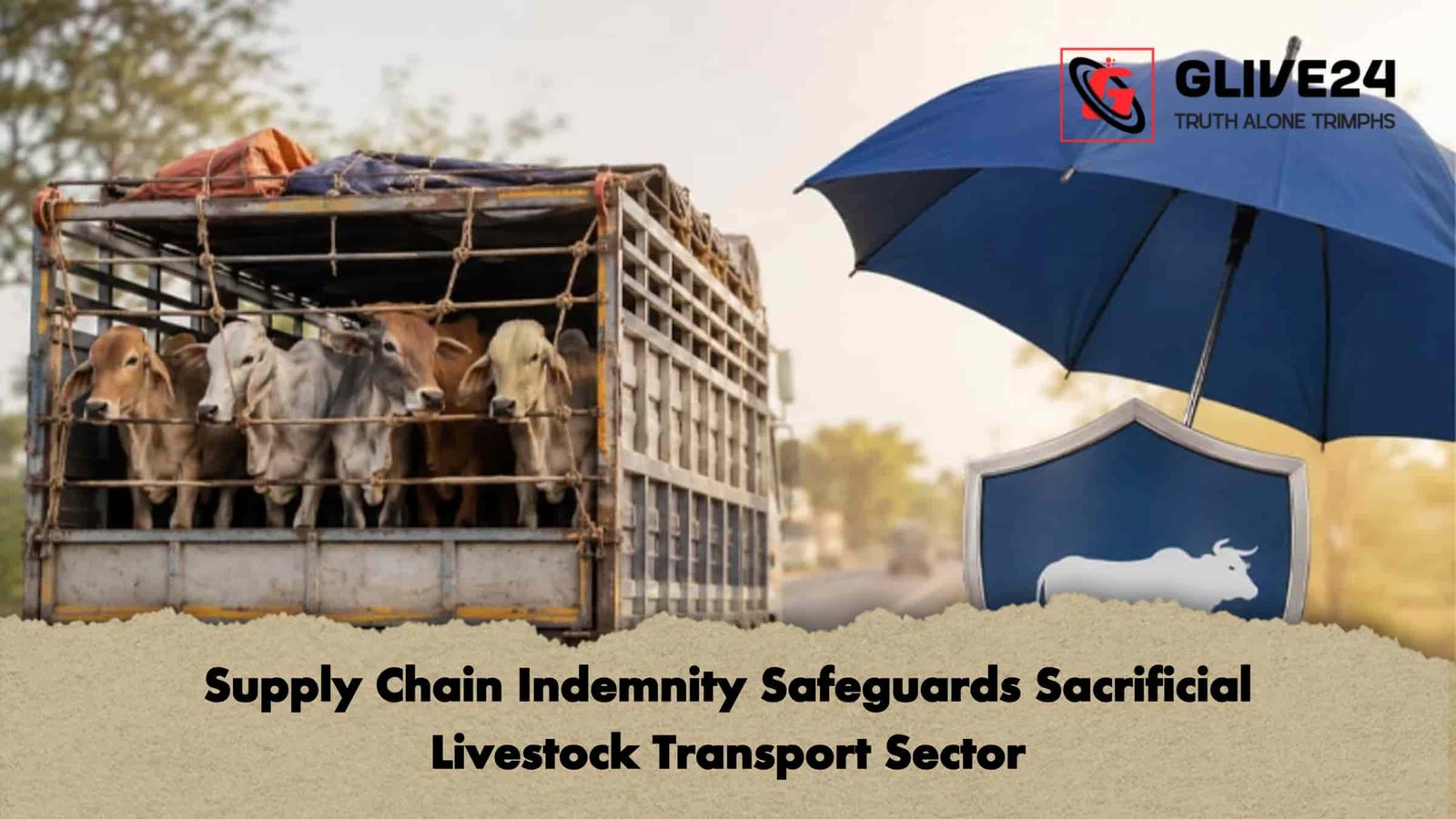
As the annual Eid-ul-Adha festive period approaches, a vast national supply chain has been mobilised across Bangladesh to manage the movement of sacrificial animals. Official statistical indices released by the Ministry of Fisheries and Livestock reveal that the total volume of festival-ready livestock for 2026 stands at 12,333,840 heads. This aggregate inventory comprises 5,695,878 cattle and buffaloes, 6,632,307 goats and sheep, and 5,655 animals of other distinct domestic species.
According to government projections, potential national consumption demand is estimated at 10,106,334 animals. This leaves a net national supply surplus of approximately 2,227,506 animals. This pattern of supply outstripping demand aligns with data from preceding financial years; in 2025, total festive sacrifices stood at 9,136,734 heads, leaving an unsold reserve of roughly 3.31 million animals. Sector analysts emphasize that livestock production and festive trading have transitioned into a major economic sector driving billions of Taka in annual transactions.
Table of Contents
The structural continuity of this agricultural market depends heavily on long-distance transport logistics. Every day, thousands of animals are loaded onto commercial trucks from primary breeding hubs—such as the Northern districts, Kushtia, Jessore, Rajshahi, and Jamalpur—and transported to major urban markets, particularly in Dhaka.
However, this road-reliant transit system exposes farmers and traders to serious operational hazards. Operational threats include severe highway accidents, vehicle overcrowding, prolonged traffic jams, and fatal heatstroke caused by high summer temperatures. Merchants also consistently identify unauthorized roadside extortion as a major threat to profit margins. A single transit accident can instantly kill or severely injure multiple cattle, causing sudden financial losses that can ruin smallholder farmers and seasonal traders.
To lower highway transit risks, Bangladesh Railway has deployed its specialized “Cattle Special Train” service for the 2026 trading season. The official tariff structures and capacity limits for this state-backed rail alternative are detailed in the table below:
| Logistics System | Unit Freight Tariff | Average Livestock Capacity per Unit | Implied Cost per Head |
| Bangladesh Railway Cattle Special Train | BDT 8,000 per wagon | 16 cattle | BDT 500 |
| Standard Private Road Freight (Trucks) | Variable market rates | Dependent on chassis size | High (Exposed to traffic delays and climate stress) |
Although the rail service reduces individual transit costs to a low baseline of BDT 500 per head, its overall capacity remains limited by available rolling stock. Consequently, the vast majority of livestock moved across the country continues to rely on road transport networks.
Faced with these transport hazards, livestock transit insurance policies have become an important risk-management tool. Several prominent non-life insurance institutions, including Phoenix Insurance PLC, Nitol Insurance PLC, and Green Delta Insurance PLC, have introduced specialized maritime-style transit policies. These insurance frameworks protect policyholders against specific operational losses incurred during transit, including:
Accidental falls from moving transport vehicles.
Animal fatalities or severe injuries caused by road traffic collisions.
Natural disasters such as lightning strikes, severe storms, flooding, and fires.
Biological hazards, including venomous animal bites and fatal heatstroke.
Capital losses from emergency slaughter executed on the advice of a registered veterinary surgeon.
Insurers are also deploying technological tracking tools, such as digital tracking systems, Internet of Things (IoT) devices, and biosensors, to monitor animal health metrics and location in real time. This allows insurance adjusters to quickly verify accident claims and shorten payout timelines.
The underwriting premiums for these short-term policies are scaled against the total market valuation of the animals being shipped. Standard annual policies range from 2.75 per cent to 5.5 per cent of the animal’s value. However, specialized short-term policies designed only for the brief Eid transit window feature significantly lower premiums, making them accessible to small-scale seasonal traders.
The claims settlement process has been simplified to allow quick digital payouts via direct bank transfers or mobile financial services (MFS). If an animal dies or is injured in transit, the claimant must follow a clear verification process:

Comments