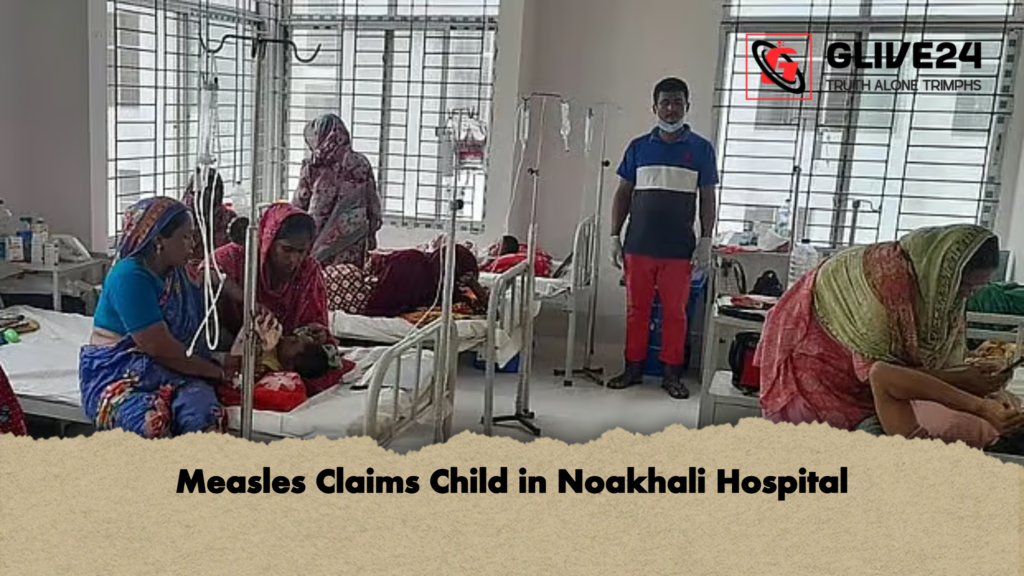
A seven-year-old boy has died while undergoing treatment for suspected measles at Noakhali 250-bed General Hospital, highlighting growing concerns over the district’s capacity to manage a rising number of paediatric infectious cases. Hospital authorities confirmed that the child died in the early hours of Sunday in the paediatric ward. It is the first reported death amid the current surge of measles-like illness in the facility.
The deceased, Mohammad Samir, son of Mofizul Haque from Char Katakhali village in Subarnachar upazila, was admitted to hospital in a critical condition on Saturday afternoon. Doctors on duty assessed his condition shortly after admission and advised urgent transfer to Dhaka for advanced care, noting that he required intensive care support. However, according to family members, financial constraints made it impossible to arrange the transfer.
Relatives said Samir had been suffering for several days from high fever, widespread skin rashes, weakness, and breathing difficulties—symptoms consistent with measles complications. His condition deteriorated rapidly before he was admitted to the district hospital, where he later died at approximately 5:00 a.m. on Sunday.
Hospital officials stated that although general intensive care beds are available, there is no dedicated paediatric intensive care unit, which severely limits treatment options for critically ill children. As a result, patients requiring advanced monitoring and respiratory support are routinely referred to hospitals in the capital.
According to hospital data, nearly 950 children with measles-related symptoms have received treatment since early April this year. At present, 94 children remain admitted in the paediatric ward, many suffering from fever, rashes, respiratory complications, and general weakness. Over the past 24 hours alone, 40 new paediatric patients have been admitted, reflecting a continuing upward trend in cases.
To manage the pressure, hospital authorities have converted an additional service building into a temporary isolation unit. Despite this measure, shortages of beds, essential medicines, medical staff, and nursing support have created significant strain on service delivery.
Hospital Situation Overview
| Category | Status |
|---|---|
| Hospital capacity | 250-bed general hospital |
| Children treated with measles-like symptoms | Approximately 950 |
| Currently admitted children | 94 |
| New admissions in last 24 hours | 40 |
| Paediatric ICU facility | Not available |
| Reported first death | Mohammad Samir (7) |
Families of admitted children have raised concerns about the need to purchase many prescribed medicines from outside the hospital, despite being treated in a public facility. They also pointed to the absence of critical care services, which forces doctors to recommend costly transfers to Dhaka for severely ill patients—an option not affordable for many households.
Public health experts note that measles is a highly contagious viral infection, which spreads rapidly in communities with low vaccination coverage. Typical symptoms include fever, cough, conjunctivitis, and characteristic red skin eruptions. Complications are more likely in malnourished children or those with weakened immune systems.
As case numbers continue to rise, local residents and health advocates are calling for urgent intervention by health authorities. They have urged the establishment of a dedicated paediatric intensive care unit, improved medicine supply chains, and increased deployment of doctors and nursing staff to better manage the escalating patient load.