
Khabor Wala Desk
Published: 29th May 2026, 10:25 PM
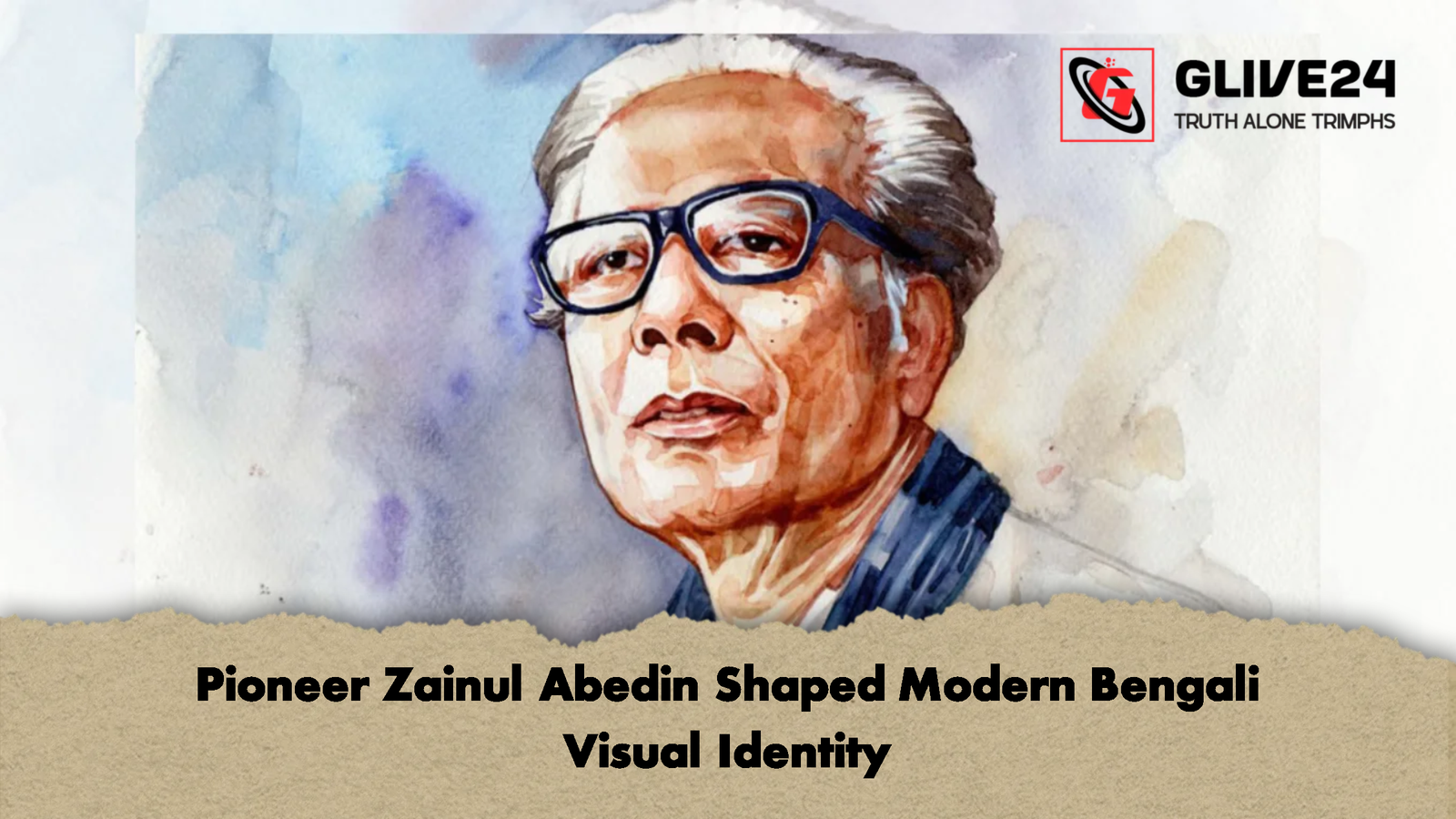
The cultural and artistic history of Bangladesh features a select group of pioneers whose intellectual output and structural contributions left an enduring mark on the region. Pre-eminent among these figures is Shilpacharya Zainul Abedin. Beyond his individual accomplishments as an extraordinarily gifted painter, Abedin served as a principal architect of Bengali artistic identity, a dedicated researcher of indigenous folklore, and a visual chronicler of human struggle. Through his precise brush strokes and raw sketches, the landscape, population, rivers, socio-economic crises, and political movements of Bengal were rendered with historical permanence, transforming real-world experiences into an enduring visual language.
Table of Contents
Zainul Abedin was born on 29 December 1914 in the Kishoreganj subdivision of the erstwhile Bengal Presidency, during the period of the British Raj. His father was a police official, providing a stable administrative and structured environment for the family during his formative years. From early childhood, Abedin demonstrated an intense fascination with the natural environment, rural community structures, and the daily lives of ordinary working citizens.
The Brahmaputra River, which flowed in close proximity to his childhood home, alongside the vibrant agrarian life along its banks, exerted a profound and permanent influence on his evolving aesthetic sensibility. The changing seasons, the open riverine landscapes, and the physical movements of local laborers provided the crucial early thematic imagery that would later define his signature style.
Driven by a resolute passion for drawing and painting, Abedin moved to Calcutta (now Kolkata) in 1933 to pursue professional artistic training. He successfully secured admission to the Government School of Art, Calcutta, which was recognized as a premier institution for fine arts in the region. Over the course of five years, he underwent rigorous training in British and European academic art traditions, mastering oil painting, watercolour, and classical sketching techniques.
His technical competence and distinct artistic voice became apparent during his student years. In 1938, while still completing his final graduation requirements, Abedin participated in the All India Art Exhibition. His landscape painting titled “Brahmaputra River” was awarded the prestigious gold medal. This institutional recognition established his reputation across the Indian subcontinent, marking the entry of a significant new voice into the contemporary art scene of British India.
The defining moment of Abedin’s professional career came during the devastating Bengal Famine of 1943. This catastrophic human event, which resulted in the starvation and death of millions of citizens, completely altered his philosophical approach to fine art. Moving through the streets of Calcutta, he witnessed firsthand the extreme physical devastation, hunger, and societal breakdown affecting rural migrants who had flocked to the urban centre in a desperate search for food.
Deeply affected by these harrowing scenes, Abedin produced his historic series of sketches collectively known as the “Famine Sketches” (1943). Operating under acute financial constraints and a total lack of standard art supplies, he utilized cheap, coarse packing paper and Chinese black ink, applying the medium with dry brush strokes and ordinary sliced wooden sticks.
The resulting minimalist, stark lines depicted emaciated human bodies, skeletal mothers protecting dying infants, and crows fighting over waste alongside human corpses. These drawings were not merely aesthetic exercises; they served as a raw, undeniable documentation of human suffering and institutional failure. The Famine Sketches garnered widespread international attention, establishing Abedin as a deeply humanist artist committed to documenting the socio-political realities of his people.
Following the partition of British India in 1947, Abedin relocated to Dhaka, the capital of the newly formed province of East Bengal within Pakistan. Recognizing the total absence of institutional facilities for formal art education in the region, he took the initiative to establish a dedicated professional school.
Through his persistent administrative efforts and negotiations with government authorities, the Government Art Institute was successfully founded in 1948 at Johnson Road in Old Dhaka. Abedin was appointed as its first teacher and served as the founder-principal, a position of institutional leadership he retained until 1966. Over the subsequent decades, this pioneer institution evolved continuously, eventually becoming the Faculty of Fine Arts at the University of Dhaka. His systemic leadership provided the structural foundation for professional art education and the development of modern art movements in East Bengal.
Abedin maintained a lifelong dedication to the preservation of indigenous Bengali folk culture, craftsmanship, and rural traditions. He feared that rapid modernization and political displacement would completely erode the centuries-old artisanal knowledge of rural communities.
To safeguard this heritage, he designed a comprehensive framework for collecting and archiving traditional arts and crafts. His vision culminated in 1975 when he successfully established the Bangladesh Folk Art and Crafts Foundation in Sonargaon. In tandem with this project, the Zainul Abedin Sangrahashala (a dedicated gallery and archive) was established in Mymensingh to preserve, restore, and display his vast collection of personal artworks for future generations.
Over the course of his lifetime, Abedin produced an expansive body of work comprising more than 3,000 recorded paintings and sketches. His artistic repertoire reflects a clear transition from rural realism to modern abstraction, while always maintaining a profound thematic connection to ordinary citizens.
| Notable Artwork | Year of Creation | Medium and Historical Significance |
| Famine Sketches | 1943 | Ink on packing paper; a raw documentation of the historical human catastrophe. |
| The Boat | 1957 | Watercolour and ink; captures the dynamic labor and physical motion of rural boatmen. |
| Struggle (Sangram) | 1959 | Oil on canvas; depicts a powerful bull pulling a heavily laden cart, symbolizing human resilience. |
| Nabanna (Harvest) | 1969 | A monumental 65-foot-long scroll painting detailing rural life, agricultural joy, and celebration. |
| Monpura ’70 | 1974 | A 30-foot-long scroll painting commemorating the tragic victims of the catastrophic 1970 Bhola cyclone. |
| The Freedom Fighter | 1971 | Sketches capturing the armed resistance and determination of citizens during the Liberation War. |
| Madonna | Undated | Drawings celebrating motherhood amidst challenging socio-economic conditions. |
The massive scroll paintings, specifically Nabanna and Monpura ’70, are widely regarded as masterpieces of South Asian modernism, presenting a narrative epic of the resilience, tragedies, and cyclical nature of Bengali life.
In recognition of his extraordinary contributions to the cultural landscape and fine art education, the Government of Bangladesh bestowed upon him the prestigious title of National Professor in 1974. He became universally known by the honorific title of Shilpacharya, meaning “Great Teacher of Art,” a term that reflected his dual legacy as an active artist and a visionary institution builder.
The artist passed away on 29 May 1976 after a battle with lung cancer. He was buried on the grounds of the University of Dhaka, adjacent to the Central Mosque and steps away from the Faculty of Fine Arts that he had founded.
Zainul Abedin permanently redefined the role of an artist within Bengali society. He rejected the conventional notion that fine art should exist purely for aesthetic pleasure or aristocratic decoration. Instead, he repositioned it as a vital mirror for societal realities, economic struggles, and political aspirations. His work successfully combined indigenous folk forms with western academic techniques, creating a unique visual vocabulary that celebrated the beauty of the delta landscape while giving a clear voice to its most marginalized populations. His institutional structures and aesthetic philosophies continue to shape artistic training and cultural identity across the region.




Comments