
G-Live Desk
Published: 4th July 2026, 12:25 PM
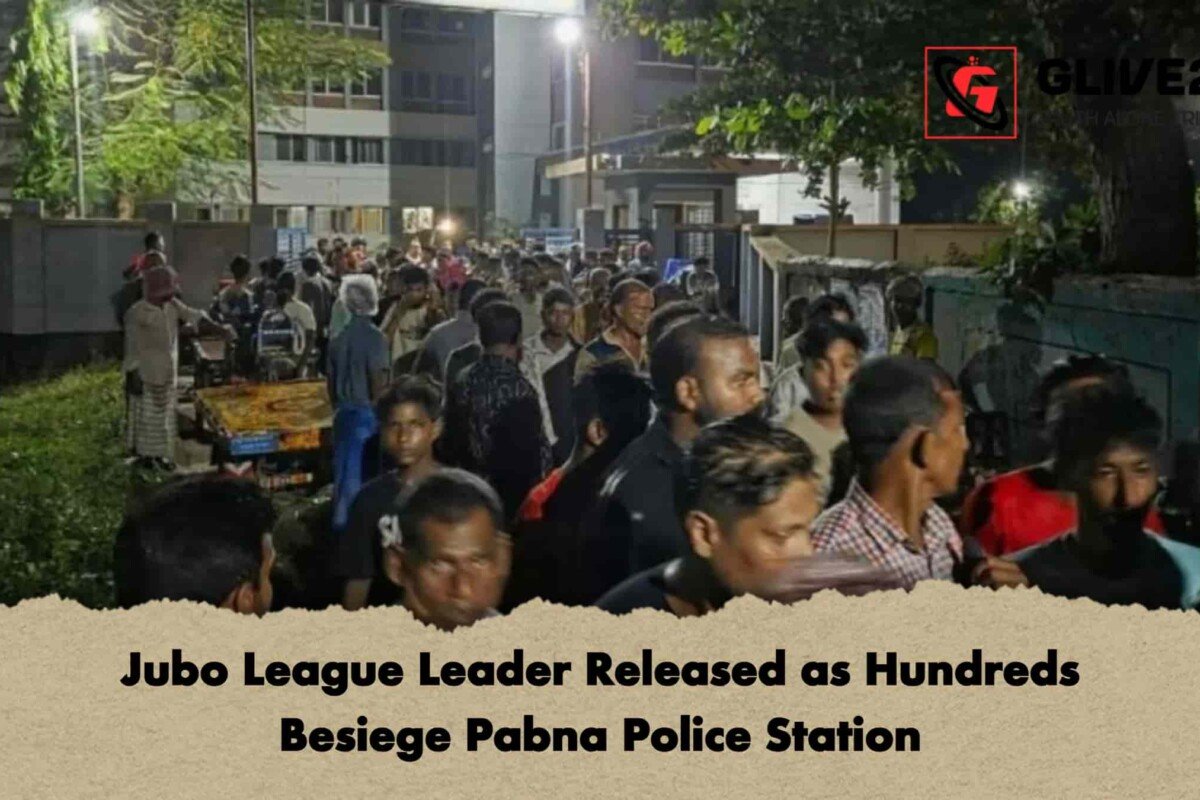
In a striking manifestation of public pressure on local law enforcement, nearly 300 villagers gathered outside the Bhangura Police Station in Pabna on Friday night, successfully securing the release of a local Awami Jubo League leader shortly after his detention.
The incident, which unfolded at approximately 22:30 BST on 3 July, has thrown a spotlight on long-standing land disputes and the delicate balance of community-police relations in the region.
The controversy began earlier that evening, around 20:00 BST, when Inspector (Investigation) Ariful Islam of the Bhangura Police Station detained Ripon Sarkar, 40, from Patulipara village under the Par-Bhangura union. Sarkar, the son of Habibur Sarkar, is a well-known local figure and the former president of the Ward No. 1 Jubo League unit within the union. According to initial police statements, he was taken into custody from his village on suspicion of involvement in subversive activities.
However, as news of Sarkar’s arrest reverberated through Patulipara and neighbouring areas, a crowd of approximately 300 villagers rapidly mobilised. Marching to the Bhangura Police Station, the demonstrators staged a vocal protest and sit-in, surrounding the premises and demanding his immediate and unconditional release.
As tensions escalated, law enforcement personnel moved to push the demonstrators outside the primary station compound. Addressing the crowd, the Officer-in-Charge (OC) of Bhangura Police Station, Sakiul Azam, questioned the assembly’s motives, reportedly saying:
“I have brought in the Jubo League president. Why have you come here? Do you want to create a mob? Leave the police station area this instant.”
OC Azam further asserted to the crowd that he had consulted with several senior leaders of the Awami League, who confirmed that Sarkar remained an active and responsible president within the current committee structure.
While the police initially cited “subversive activities” as the ground for interrogation, local residents presented a starkly different narrative. They maintained that Sarkar’s detention was politically motivated, engineered to suppress a community-led movement regarding a highly contested piece of public land.
For a considerable duration, the villagers of Patulipara have been embroiled in a bitter dispute with a local individual identified as Yunus Sarkar. The conflict centres on a plot of government-owned Khas land adjacent to the Tebunia-Baghabari regional highway, which serves as a vital economic hub for the community.
The sequence of the local dispute involves several key developments:
The Alleged Encroachment: Yunus Sarkar reportedly occupied the government land illegally and erected a permanent structure.
The Community Response: Mobilised by the loss of public space, local villagers dismantled the structure to reclaim the area.
Re-establishment of the Market: The community reinstated a traditional fish market on the site, formally designating the zone as a local marketplace and an auto-rickshaw stand, complete with official banners.
The Legal Counter-Move: Asserting personal ownership over the property, Yunus Sarkar lodged a formal complaint at the Bhangura Police Station, naming Ripon Sarkar and several other villagers as perpetrators.
According to the protesters, Ripon Sarkar had been a vocal and active advocate for the villagers’ rights in this land dispute. The community firmly believes that his arrest was a direct consequence of Yunus Sarkar’s complaint, designed to harass the leadership and derail the broader public movement.
Faced with a burgeoning siege and potential civil unrest, the police leadership opted for dialogue over confrontation. A five-member delegation representing the protesting villagers was invited into the Officer-in-Charge’s office to negotiate a resolution. Following a detailed discussion, the authorities relented, releasing Ripon Sarkar into the formal custody and surety of the village representatives. The delegation subsequently escorted Sarkar back to his village, prompting the crowd to disperse peacefully.
When questioned later by the media regarding the swift reversal of the detention, OC Sakiul Azam defended the station’s actions. He clarified that Sarkar had been brought in strictly for questioning regarding potential sabotage. He stated that since no concrete evidence or involvement was established during the brief interrogation, and taking into account the intense public demand and guarantees provided by the village elders, the decision was made to release him into their custody.


Comments