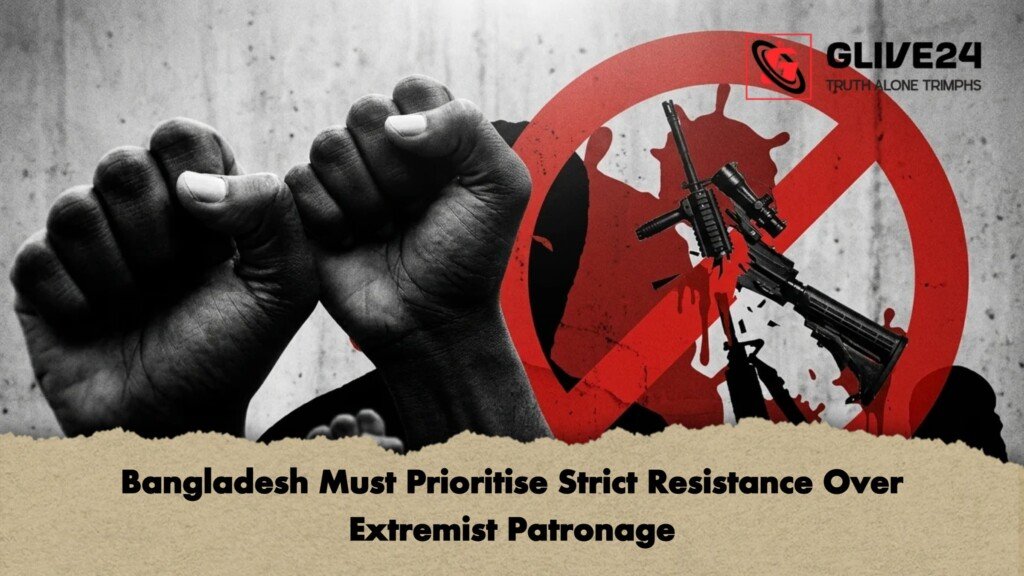
Terrorism is far more than a simple security breach. It represents a profound, violent assault on human civilisation, core humanitarian values, and the foundational structure of the state. The ultimate objective of extremist violence extends beyond the immediate, tragic loss of innocent lives. It aims to foster an pervasive atmosphere of fear and uncertainty, destabilise state mechanisms, weaken democratic institutions, and completely disrupt ordinary life. When extremism gains a foothold in any society, the resulting distrust, division, and terror systematically erode the very fabric of social relationships.
Virtually every corner of the globe has encountered the brutal realities of violent extremism at some point, and South Asia is certainly no exception. Bangladesh has repeatedly found itself in the crosshairs of extremist threats and devastating attacks. The nation was profoundly shaken by the coordinated serial bomb blasts across 63 districts on 17 August 2005, and later by the horrific Holey Artisan Bakery assault in Dhaka in 2016. These dark chapters resulted in the loss of numerous domestic and foreign lives, leaving countless families permanently devastated while presenting severe diplomatic and economic challenges to the country’s international standing.
The growth of extremism is never an overnight phenomenon; it develops gradually over time. Ugroniti, or radicalism, is nurtured by distorted ideologies, hate speech, sophisticated online propaganda, conspiracy theories, social alienation, and the manipulation of religious texts. These local factors are frequently amplified by international extremist networks. Extensive research and historical precedents indicate that relying solely on tactical law enforcement operations cannot yield a permanent solution. An effective strategy demands a comprehensive, collective effort involving families, educational institutions, religious leaders, the media, civil society, and state organs.
Whilst intelligence operations in Bangladesh have successfully dismantled numerous terrorist cells and significantly diminished their operational capacity, security experts warn against complacency. Extremism remains an adaptive threat. Rapid technological advancements have opened new frontiers for online radicalisation, encrypted communication, and transnational networking, all of which require continuous, sophisticated surveillance.
The damage inflicted by extremism is multi-dimensional. It shatters the public sense of safety, deters foreign direct investment, paralyses the tourism sector, and dampens economic growth. Yet, the human cost remains the most devastating. A single blast does not merely claim lives; it destroys families, jeopardises the future of children, and leaves deep, enduring psychological scars across society.
Combating this menace requires an unwavering commitment to the rule of law, human rights, and justice. The law must be applied equally and transparently to every perpetrator, regardless of their identity, political affiliation, or ideology. Concurrently, law enforcement must ensure that innocent citizens are not subjected to harassment. Public trust in fair judicial processes serves as one of the most potent weapons against radicalisation.
Ultimately, this battle cannot be won by weapons alone; it is fundamentally a battle of ideas. Long-term prevention hinges on fostering scientific temperament, empathy, and tolerance among the youth. Cultivating critical thinking, promoting interfaith and cultural harmony, and building digital literacy to counter online misinformation are essential to safeguarding future generations.
Terrorism possesses no religion, no humanitarian ideals, and absolutely no moral or political legitimacy. It champions nothing but a culture of destruction, division, and death. Consequently, any leniency, silent endorsement, or indifference towards extremist elements poses a catastrophic risk to national security. To build a safe, peaceful, and inclusive society, every citizen and state institution must act decisively. Political or ideological differences may exist, but the stance against violent extremism must remain unified, absolute, and uncompromising. Sustained, lawful, and humane resistance is the only viable path forward, for a strong and prosperous nation can only be built upon peace, security, and the rule of law.