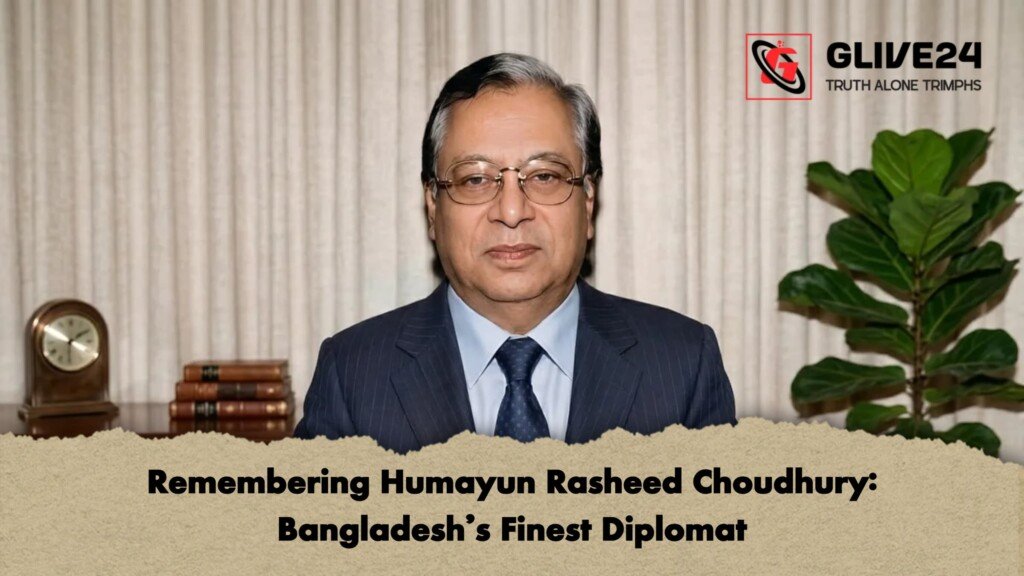
Few figures in the diplomatic history of Bangladesh have left as indelible a mark as Humayun Rasheed Choudhury. A consummate diplomat, an eloquent voice for his nation on the global stage, and a revered Speaker of the National Parliament, Choudhury embodied the very essence of integrity, wisdom, and unyielding patriotism. His life’s work remains a cornerstone of the nation’s foreign policy and democratic traditions.
Born on 11 November 1928 in Sylhet, Choudhury demonstrated exceptional academic brilliance from his early years. After graduating from Aligarh Muslim University in 1947, he moved to England to pursue higher studies in law, subsequently becoming a member of the prestigious Inner Temple in London. His passion for global politics led him to earn a diploma in international relations from the London Institute of World Affairs, followed by an advanced degree from the Fletcher School of Law and Diplomacy in the United States. This rigorous academic grounding prepared him for a brilliant career in international statesmanship.
In 1953, Choudhury joined the Pakistan Foreign Service. Over the next two decades, he served in crucial diplomatic missions across the globe, including Rome, Baghdad, Paris, Lisbon, and Jakarta. These assignments honed his negotiating skills and established his reputation within international diplomatic circles.
The turning point in his life came with the dawn of the Bangladesh Liberation War in 1971. Choosing conscience over comfort, Choudhury defected from the Pakistani civil service to pledge his allegiance to the nascent state of Bangladesh. As the head of the Bangladesh Mission in New Delhi, he worked tirelessly to rally international public opinion and secure diplomatic recognition for the newly independent nation. His strategic brilliance during this turbulent period proved vital to the survival and global acceptance of the country. Notably, following the tragic assassination of the Father of the Nation, Bangabandhu Sheikh Mujibur Rahman, in August 1975, Choudhury showed immense personal courage by providing immediate shelter and protection to Bangabandhu’s surviving daughters, Sheikh Hasina and Sheikh Rehana, at his official residence in Germany.
Following independence, Choudhury’s career scaled new heights. He served with distinction as Bangladesh’s Ambassador to Germany, Saudi Arabia, and the United States, alongside holding the post of Foreign Secretary. He was later appointed Foreign Minister, a role in which he consolidated Bangladesh’s bilateral ties and fortified its geopolitical standing.
The pinnacle of his international career arrived in 1986, when he was elected President of the 41st session of the United Nations General Assembly. This historic achievement brought immense pride to Bangladesh, marking a definitive acknowledgment of Choudhury’s personal stature and his country’s growing influence in world affairs. His contribution to global peace was also recognised in 1984, when the College of William & Mary in Virginia awarded him the Mahatma Gandhi Peace Prize.
Choudhury subsequently transitioned into domestic politics, winning parliamentary seats in 1986 and 1988. In 1996, he was re-elected as a Member of Parliament representing the Awami League and was chosen to serve as the Speaker of the Jatiya Sangsad. His tenure as Speaker is fondly remembered for his absolute neutrality, grace, and decorum in managing parliamentary affairs. He successfully fostered an environment of constructive debate, earning deep respect from both sides of the aisle.
The passing of this legendary statesman on 10 July 2001 marked the end of an era. Humayun Rasheed Choudhury’s profound contributions to the sovereignty, dignity, and democratic fabric of Bangladesh ensure that his legacy remains a guiding light for future generations of diplomats and leaders.