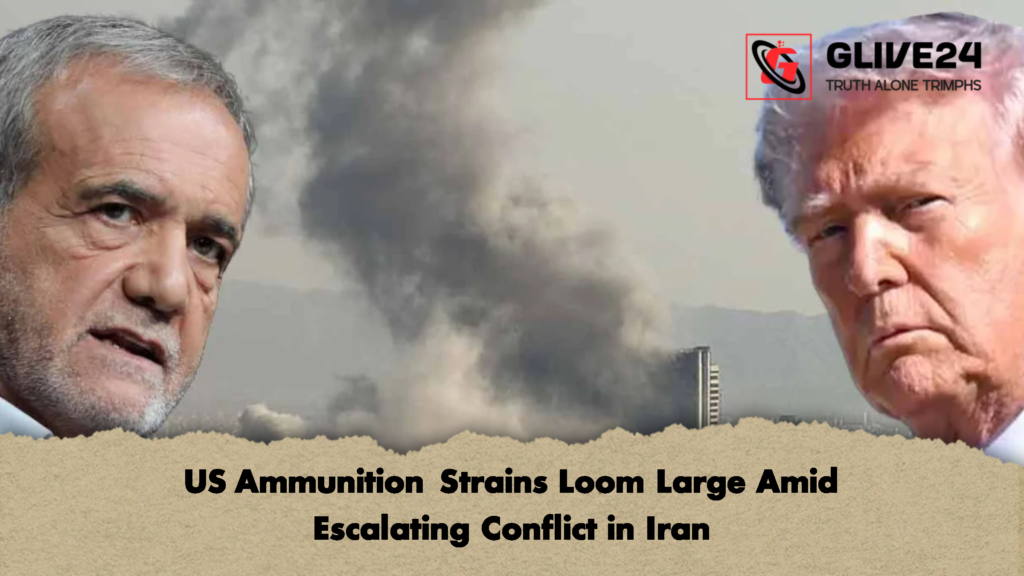
A sharp resurgence in American military operations against Iran has ignited a fierce strategic debate over the resilience of the United States’ primary conventional weapons reserves. Following the recent termination of a temporary ceasefire, the Pentagon has resumed intense aerial and missile strikes. However, defence analysts warn that this renewed campaign exposes Washington to heightened vulnerabilities elsewhere, as five continuous months of warfare have severely depleted its frontline missile stockpiles.
If the bombardment continues at its current operational tempo, the strain on American munitions will reach critical thresholds. Prominent think tanks, including the Center for Strategic and International Studies (CSIS), estimate that it could take more than three years for the US defence industrial base to replenish missile reserves to pre-war levels. Military strategists interviewed by American network CNN have expressed profound concerns that these depleted stockpiles could critically compromise the United States’ ability to deter or respond to simultaneous geopolitical crises in the Indo-Pacific, particularly concerning potential confrontations with China or North Korea.
Structural Pressures on Advanced Munitions
The scale of the expenditure has been immense. Since the early phases of the Iranian conflict, the US armed forces have launched thousands of precision-guided missiles to conduct long-range strikes and neutralise enemy air defence systems. The rate of tactical consumption has vastly outpaced the domestic manufacturing capacity, creating a dangerous deficit in key weapon systems.
The scope of this munitions depletion is detailed below, highlighting the current inventory status of the US military’s most critical missile systems:
| Missile System Type | Estimated Percentage Expended (As of Ceasefire) | Average Monthly US Procurement Rate | Projected Procurement Deliveries for 2026 |
| THAAD Ballistic Missile Interceptors | ~50% | Negligible / Discontinued | Zero Forecasted Deliveries |
| Patriot Air Defence Interceptors | ~50% | 20 Units Per Month | Under Severe Strain |
| Tomahawk Cruise Missiles | ~30% | 15 Units Per Month | Under Severe Strain |
Mark Cancian, a senior defence analyst at CSIS and a retired Marine Corps Colonel, warned that the current pace of operations threatens to degrade regional deterrence. He noted that if the intensity observed over recent days persists, it will draw down inventories to a point that introduces a higher level of risk to the Indo-Pacific theatre. This sentiment was echoed by Michael O’Hanlon, the director of foreign policy research at the Brookings Institution, who observed that US stockpiles are indisputably lower than defence planners would prefer.
Industrial Stagnation and Funding Bottlenecks
The crisis is not merely confined to the physical absence of hardware; it extends to deep structural issues within the defence supply chain and legislative deadlock in Washington. Elaine McCusker, a former acting Comptroller for the Pentagon and now a senior fellow at the American Enterprise Institute (AEI), pointed out that re-stocking timelines for highly sophisticated systems must be measured in years rather than months, typically requiring two to five years for full replacement.
Remarkably, financial relief has not arrived swiftly. Retired Two-Star General John Ferrari, also affiliated with the AEI, revealed that since the outbreak of hostilities, Congress has failed to allocate a single additional dollar to fund the replacement of expended missiles. This budget inertia leaves the Pentagon to absorb the astronomical costs of a major theatre campaign within its pre-existing baseline allocations.
Administrative Interventions and International Licensing
In response to the mounting pressure, President Donald Trump invoked the Defence Production Act in June to bypass bureaucratic red tape and accelerate missile assembly lines. The Pentagon has since secured expanded manufacturing contracts to fortify the domestic defence industrial base. Furthermore, during the NATO summit in Turkey, the Trump administration announced international licensing agreements allowing foreign allies, including Germany and Ukraine,