
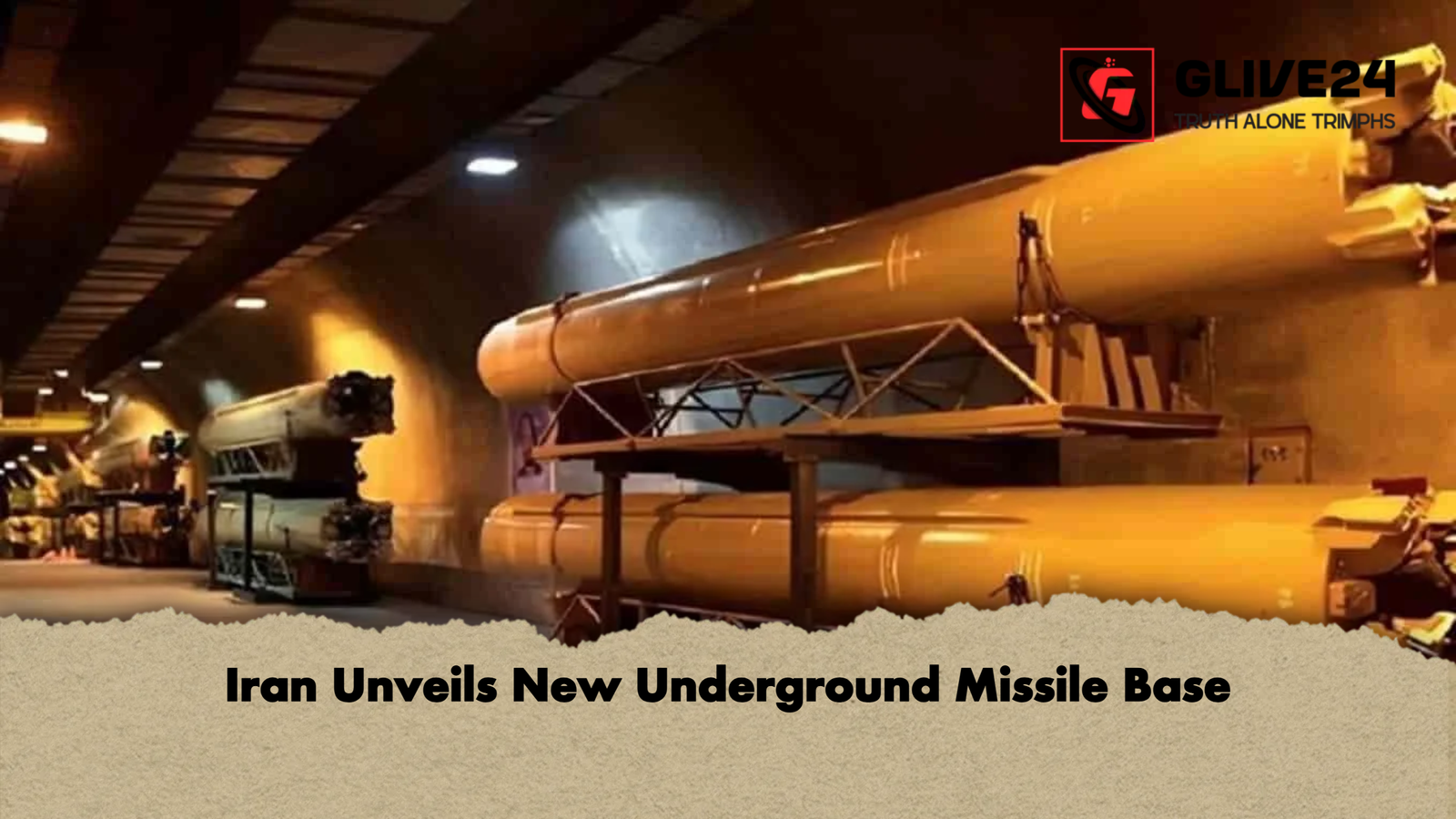
Iran has publicly revealed a newly constructed underground missile base, a move widely interpreted by defence analysts as a significant enhancement of the country’s military posture and a calculated strategic signal amid heightened tensions with the United States and its regional allies. The announcement was made on Wednesday, 4 February, by the Islamic Revolutionary Guard Corps (IRGC), underscoring Tehran’s intent to project both deterrence and operational readiness.
The unveiling ceremony was attended by several senior military figures, including the Chief of Staff of Iran’s Armed Forces, Major General Abdolrahim Mousavi, the head of the IRGC Aerospace Force, Brigadier General Saeed Majid Mousavi, and other high-ranking commanders. During their visit, officials inspected the base’s infrastructure, missile deployment systems, logistical arrangements, and overall readiness for rapid response operations. State media footage highlighted reinforced underground tunnels, concealed launch platforms, and command-and-control facilities designed to function even under sustained attack.
In a speech delivered at the site, Major General Mousavi stated that Iran had undertaken a comprehensive reassessment of its military doctrine following what he described as a twelve-day confrontation with Israel last June. According to him, Iran’s strategy has evolved beyond a purely defensive stance. “We are now strengthening our offensive and deterrent capabilities in parallel,” he said, adding that the armed forces are focused on conducting large-scale, rapid operations, applying asymmetric warfare techniques, and neutralising adversaries’ advanced military planning.
Military experts note that underground missile bases have long been a cornerstone of Iran’s defence strategy. Typically carved into mountainous terrain or deep underground, these facilities are designed to withstand aerial bombardment and missile strikes. Their concealment complicates enemy surveillance and pre-emptive attack planning, while their dispersed launch capabilities enhance Iran’s ability to retaliate swiftly in the event of hostilities. Such bases are also seen as a force multiplier, allowing Iran to preserve strategic assets even under intense military pressure.
The announcement comes as the United States has reportedly increased its military presence in the region, deploying additional warships, aircraft carriers, and troops. Although diplomatic engagements remain on the agenda, international observers warn that a breakdown in negotiations could significantly raise the risk of armed confrontation. Iran’s Supreme Leader, Ayatollah Ali Khamenei, has cautioned that any direct US attack on Iran would likely trigger a wide-ranging regional conflict, further destabilising an already volatile Middle East.
Below is a summary of the key strategic characteristics of Iran’s underground missile bases:
| Feature | Description |
|---|---|
| Location | Mountainous regions or deep underground sites |
| Primary Purpose | Protection from air and missile strikes |
| Strategic Advantage | Concealment and rapid launch capability |
| Military Significance | Enhanced deterrence and retaliatory capacity |
| Regional Impact | Complicates adversaries’ strategic planning |
Overall, the unveiling of this underground missile base represents more than the introduction of a new military facility. It reflects Iran’s broader strategic messaging, its assessment of regional power dynamics, and its determination to signal resilience and preparedness to the United States and other Western powers.




Comments