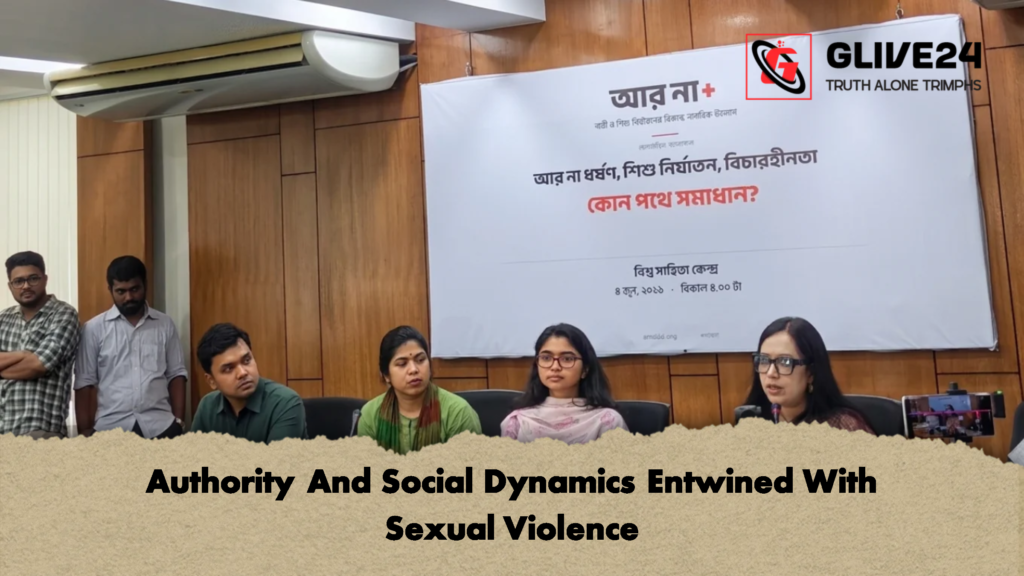
The Member of Parliament for the Brahmanbaria-2 constituency, Rumeen Farhana, has asserted that power dynamics are intricately and inextricably linked to every occurrence of sexual assault. Speaking at a civil society forum, she stated that perpetrators of rape are invariably backed by economic strength, social privilege, or political influence, or otherwise derive a sense of authority from gender structures. She noted that societal biases inherently facilitate rapid and unverified finger-pointing towards female victims, whereas male perpetrators are rarely subjected to immediate accountability under identical circumstances.
Table of Contents
The Socio-Political Dimensions of Sexual Violence
On the afternoon of Thursday, 4 June 2026, a round-table discussion titled “No More Rape, Child Abuse, Impunity: Which Path to a Solution?” was convened at the Bishwo Shahitto Kendro in Dhaka. The event was organized by “Ar Na+”, a civic initiative dedicated to combating violence against women and children. During her address, Rumeen Farhana highlighted an alarming trend in Bangladesh based on data recently published across mainstream media outlets, which documented over 118 rape cases within a single month, with the vast majority of the victims being young children.
The lawmaker criticized the selective public and institutional attention allocated to these crimes. She observed that while certain high-profile cases enter the political spotlight, countless other incidents remain completely unnoticed. Specifically, she referenced the recent child rape and murder case in Pallabi, which drew extensive mobilization from political parties. Farhana argued that justice should not depend on a crime gaining social media traction or becoming politically expedient, emphasizing that a robust rule of law requires every single victim to receive equal state priority.
“Power is deeply embedded in the execution of rape. A perpetrator is either economically dominant, socially influential, or politically protected. In other instances, the individual feels empowered solely due to their gender identity. Our society remains structured in a manner where a girl is swiftly and needlessly blamed, while a boy is rarely questioned with the same degree of urgency,” stated Member of Parliament Rumeen Farhana.
Educational and Structural Deficiencies in Prevention
Farhana identified three pillars critical to eradicating sexual violence: comprehensive education, public awareness, and swift judicial enforcement. She noted that the national curriculum fails to provide adequate instruction regarding adolescence, biological changes, and reproductive health. Due to a lack of accurate information, young boys frequently rely on unreliable or distorted external sources. The lawmaker urged families and media institutions to actively dismantle the deep-rooted cultural taboos surrounding sex education.
Furthermore, she stressed that household upbringing must instil the fundamental principle that the accountability for sexual harassment or assault lies entirely with the perpetrator, never the victim. She advocated for teaching children about safe and unsafe physical boundaries while reinforcing the understanding that sexual violence is a severe criminal offence. Farhana condemned the persistent societal tendency to scrutinise a victim’s attire, movements, or companions, stating that public inquiry must focus strictly on the motives and actions of the criminal.
Addressing the issue of abuse within religious boarding institutions, Farhana noted that marginalised families send their children to madrasas with complete trust, viewing them as centres for moral and spiritual development. When abuse or sodomy occurs in such environments, it constitutes both a severe criminal act and a profound breach of trust, which explains the heightened level of public anxiety surrounding these specific reports.
Technical Challenges and Institutional Accountability
The round-table discussion also featured contributions from medical professional and political commentator Dr Tasnim Jara, who resonated with the perspective that sexual assault and child abuse cases are rarely addressed systematically unless they trigger widespread public outrage or become viral across media platforms. She emphasised the urgent need to transition away from reactive, outrage-driven responses towards permanent institutional accountability and consistent regulatory monitoring systems.
Dr Tasnim Jara further noted that alongside modifications to the judicial framework, it is practically impossible to enforce existing laws effectively without enhancing the baseline operational capacity of law enforcement personnel, forensic investigators, and auxiliary state agencies. She identified the severe shortage of skilled forensic staff and specialised diagnostic laboratories as a major structural bottleneck that continually delays legal proceedings.
Key Policy Proposals for Judicial and Investigation Reform
| Proposed Initiative | Operational Objective | Target Institutional Bottleneck |
| Capacity Enhancement | Strengthening the operational capabilities of police units, forensic investigators, and medical examination boards. | Ensures standard, uncompromised collection of forensic evidence at local precinct levels. |
| Forensic Resource Allocation | Directing state funding to train skilled forensic personnel and establish specialised diagnostic laboratories. | Minimises bureaucratic backlogs and prevents delays during active judicial proceedings. |
| Centralised Digital Tracking | Implementing a national digital dashboard to systematically monitor the real-time progress of all rape and abuse trials. | Provides visibility on case progression and allows institutional oversight. |
| Institutional Accountability | Tracking the exact duration taken to resolve each criminal case from filing to final verdict. | Explicitly isolates institutional delay points and holds individual departments accountable. |
The civic dialogue included active participation from a diverse group of lawyers, journalists, and political representatives. Notable speakers who shared observations included lawyer and journalist Manzur Al Matin, the Secretary General of the Rashtra Sangskar Andolan, Syed Hasib Uddin Hossain, and the Senior Joint Convenor of the National Citizens’ Party (NCP), Samanta Sharmin.
Additional perspectives were presented by Arif Sohel, a representative of the political platform Gana Biplobi Udyog; Nazifa Jannat, spokesperson for the Network for People’s Action (NPA); Umama Fatema, former leader of the Anti-Discrimination Student Movement; and Naim Ahmad, Convenor of the Justice and Democratic Party (Address: JDP). The participants collectively urged immediate structural reforms across the legislative, executive, and judicial branches to end institutional impunity and establish definitive safety standards for women and minors.