
Khabor Wala Desk
Published: 1st July 2026, 3:43 PM
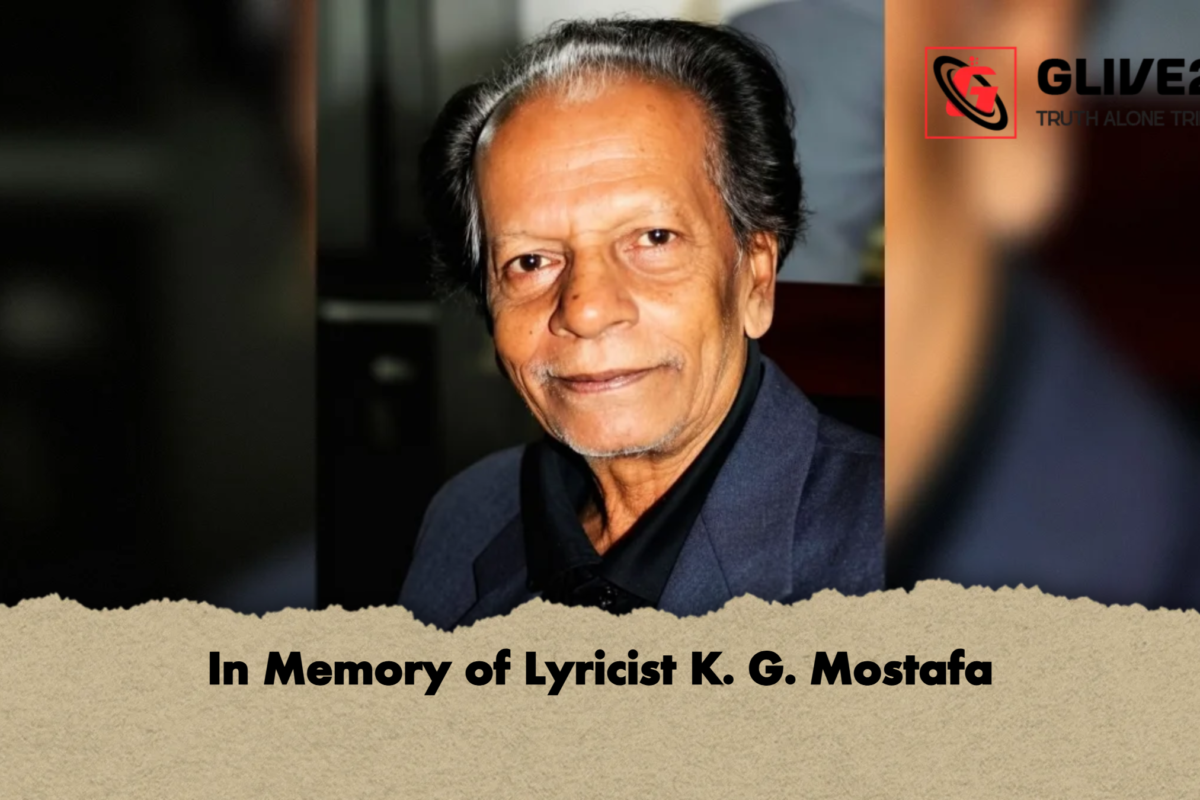
K. G. Mostafa is one of those few lyricists in the world of Bengali music who, through their creations, have carved a permanent place in the hearts of generation after generation. While widely acclaimed as the creator of countless timeless songs, he was also a successful journalist, columnist, poet, editor, and cultural activist.
Table of Contents
He was born on July 1, 1937, in Begumganj, Noakhali district. In 1960, he obtained his Master’s degree in Bengali Language and Literature from the University of Dhaka.
His journey in journalism began in 1958 as an apprentice at the Dainik Ittehad. In the same year, he joined Dainik Mazlum as an assistant editor and served there until the newspaper closed down. Later, in 1968, he joined the weekly Janata as an assistant editor. In 1970, he was appointed as the Press Secretary to the veteran politician Kafiluddin Chowdhury. Around the same time, the Pakistan Public Service Commission nominated him for the first-class Radio Service, but he did not join the job due to the outbreak of the Great Liberation War.
After independence, he held key journalistic responsibilities at Dainik Ganakantha, Dainik Swadesh, and Dainik Janapad. Alongside these roles, he edited the entertainment monthly magazine Nupur.
In 1976, under a special arrangement formed for journalists of defunct newspapers, he joined the BCS (Information) cadre. He began his career as an assistant editor at the Department of Films and Publications (DFP) and was later promoted to Editor and Senior Editor. He retired from government service in 1996.
His contribution to the world of government publications was also outstanding. He efficiently served as the editor of:
Nabarun (a children’s magazine)
Purbachal (a literary monthly)
Saptahik Bangladesh Sangbad (a weekly newspaper)
Sachitra Bangladesh Additionally, he worked as the managing editor of Agradoot, the mouthpiece of Bangladesh Scouts.
His poems began appearing in various newspapers across the country during his student days. From 1960 onwards, he wrote numerous popular songs for cinema, radio, and television. He penned well over a thousand songs. Masterpieces like “Tomare Legechhe Eto Je Bhalo, Chand Bujhi Ta Jane” and “Ami Nei Bhabtei Byathay Mon Bhore Jay” continue to resonate deeply with the emotions of Bengali music lovers today.
His songs were voiced by the subcontinent’s legendary singer Talat Mahmood, as well as almost all the renowned vocalists of Bangladesh. His lyrical poetry expressed love, nature, humanity, and the subtle nuances of life in simple yet profound language.
At one point, he also ventured into filmmaking. He worked as an assistant director for the films Mayar Sangsar, Adhikar, and Goli Theke Rajpath.
He moved effortlessly across various branches of literature, including poetry, songs, rhymes, essays, and prose. A book titled Ekjon K. G. Mostafa (An Individual Named K. G. Mostafa) has been published detailing his life and creative works. Furthermore, he enriched Bengali literature by authoring several books of poetry, rhymes, and prose.
Alongside his professional career, he was a member of the National Press Club, the editor of Kobitapotro and Sahitya Bangladesh, an expert manuscript editor, and was even involved in homeopathic medicine. He was honored with numerous awards and accolades for his lifelong contributions to literature, journalism, and music.
This multi-talented personality passed away on May 8, 2022. However, the songs he penned still live on as an eternal melody of love, memory, and emotion in the hearts of people.
We pay our deepest tribute to the memory of the legendary lyricist, poet, journalist, and cultural activist K. G. Mostafa.

Comments